
Last updated October 30, 2026
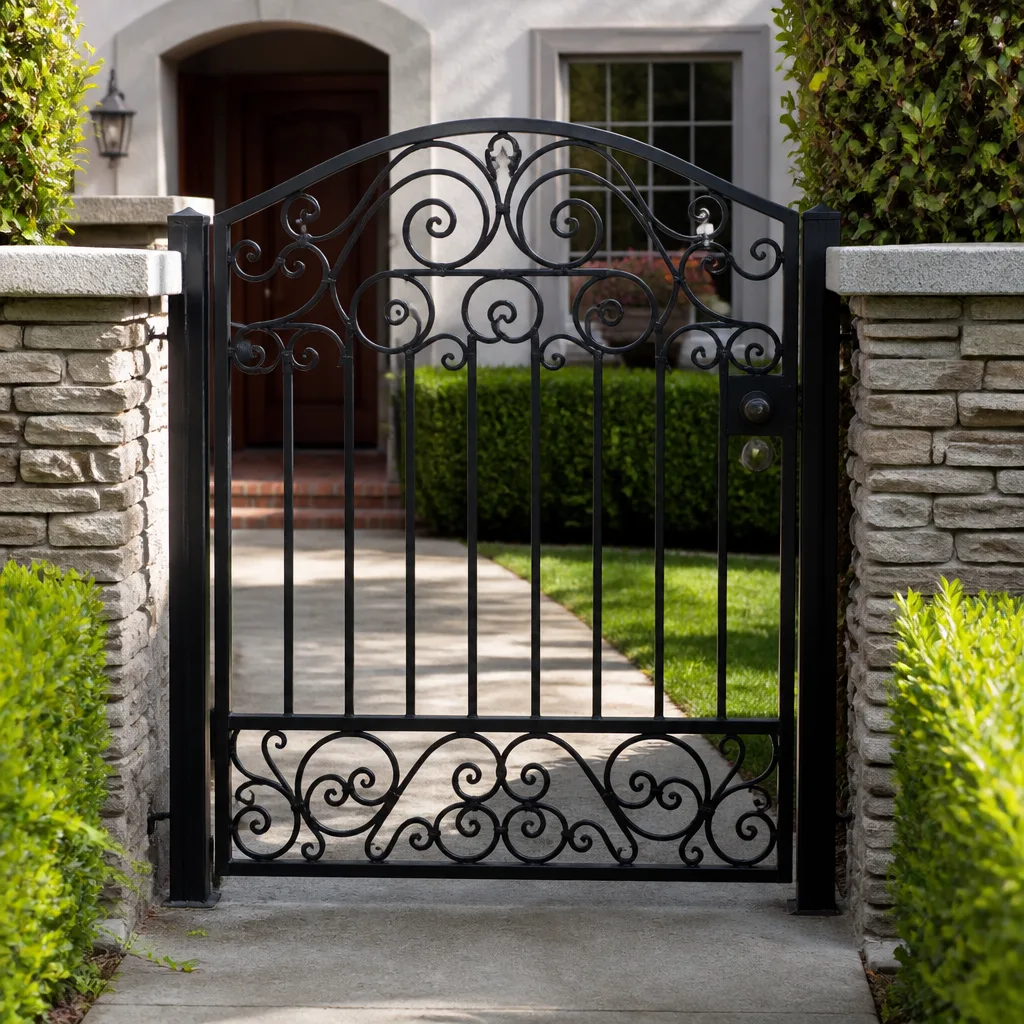 Wrought iron
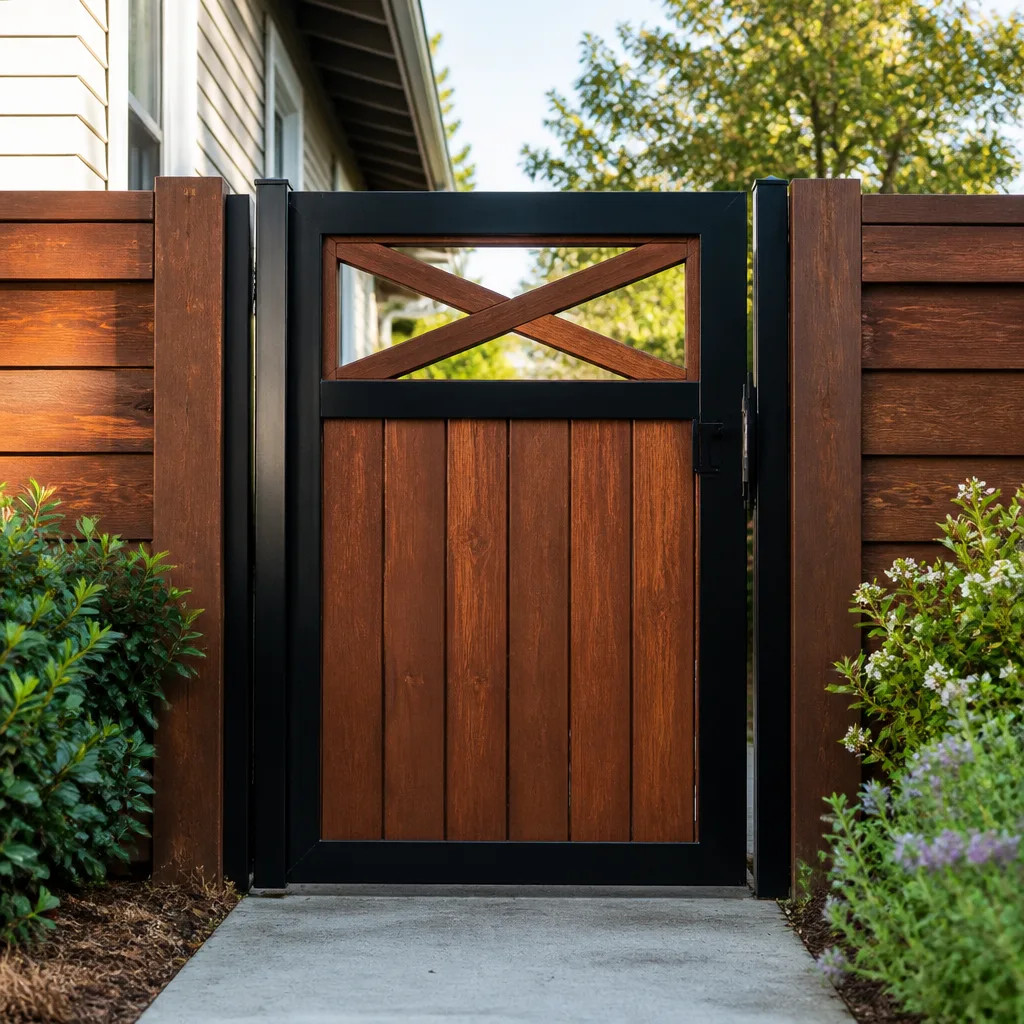 Wood & steel frame
 Farm & ranch
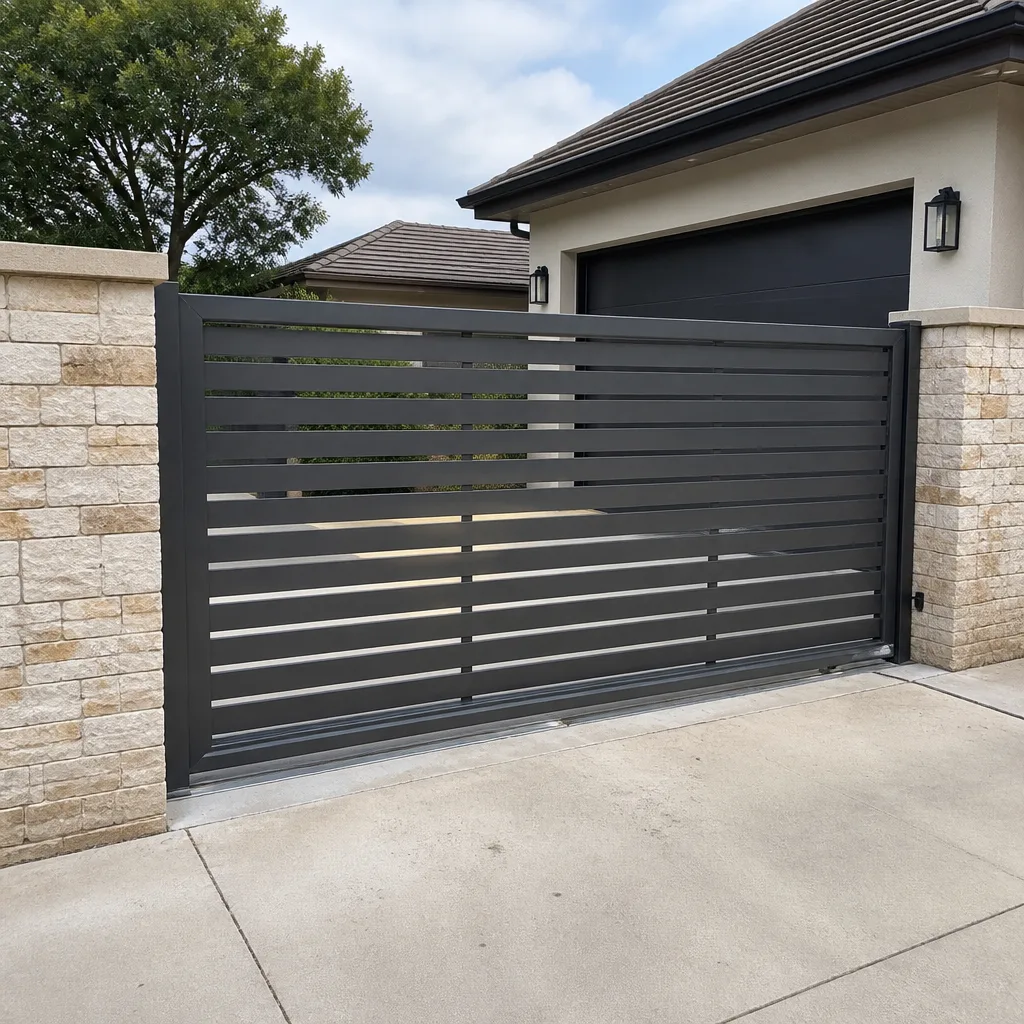 Sliding driveway gates
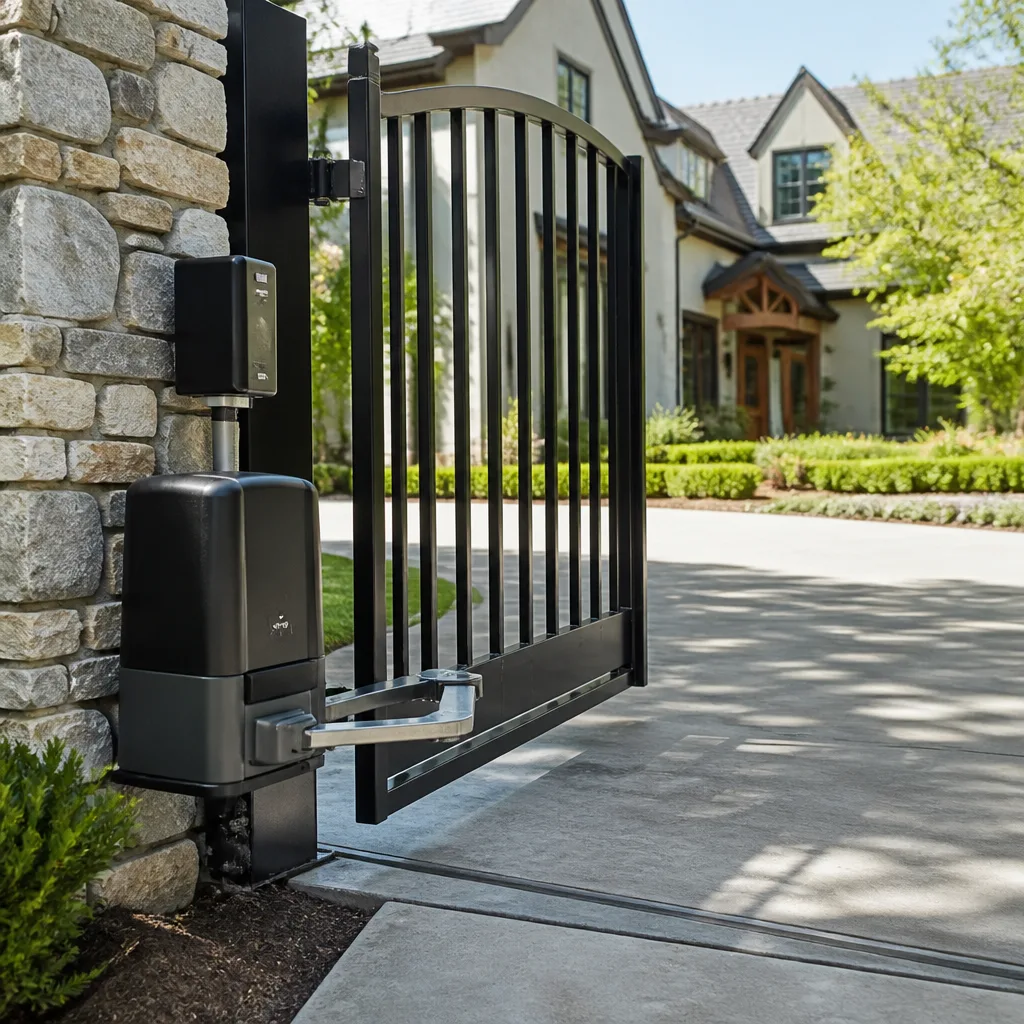 LiftMaster operators
Free on-site gate assessment - hinges, posts, and your LiftMaster or Nice gate operator checked before anything is quoted
The assessment is free and the quote is the invoice.
Get your free estimateGate Repair Maintenance Checklist for Fontana Homeowners
Fontana’s ambient dust is fine enough to infiltrate sealed gear boxes. Most homeowners find out when the grinding starts, which is already $300 past where a $12 can of compressed air would have helped. This guide is not a generic “lubricate and tighten” list. It is a maintenance calendar built specifically for Fontana conditions: abrasive particulates blown off the San Gabriel Valley floor, daily temperature swings that routinely exceed 50°F, and hard water deposits from municipal irrigation that seize hinge pins faster than any coastal climate. You will learn exactly what to check monthly, quarterly, and annually, how to protect control boards from Inland Empire dust, and what documentation to keep so a technician can diagnose failure patterns instead of guessing. If you own an automated gate in Fontana, this is the maintenance manual that matches your environment, and when problems exceed your comfort level, our Gate Repair services are available.
Quick Answer
A Fontana gate maintenance checklist should prioritize three local threats: fine dust infiltration into motors and control boards, hard water scale on moving metal parts, and battery degradation accelerated by summer heat above 85°F. Perform a visual hinge and track inspection monthly, clean control boards and gear boxes quarterly, and replace backup batteries every 12 to 18 months, with more frequent checks from June through September. Document every inspection in a log so repair technicians can spot failure patterns before a gate jams, shorts, or stops responding, and consult our Gate Repair Troubleshooting: Common Problems and How to Fix Them guide for early warning signs.
Styles & brands we work with
Table of Contents
- Fontana Monthly Gate Maintenance Tasks
- Quarterly Deep-Cleaning Protocol for Dust and Hard Water
- Annual Gate Inspection and Battery Replacement Schedule
- Protecting Gate Control Boards from Inland Empire Dust
- Hard Water Deposit Protocol for Hinges, Rollers, and Strike Plates
- Battery Backup Maintenance for Fontana’s Summer Heat
- Keeping a Gate Maintenance Log That Actually Helps Repairs
- Common Mistakes to Avoid
Fontana Monthly Gate Maintenance Tasks
A monthly walkaround takes 15 minutes and catches the failures that become $600 motor replacements. Fontana’s dust load is the primary driver of premature wear, so most of these checks involve looking for grit where it should not be and removing it before it acts as a grinding compound. Walk the gate through a full open-close cycle while standing on the hinge side, listening for changes in pitch that indicate friction.
Listen Before You Look
Stand next to the gate with the remote in hand. The first three seconds of movement tell you more than a visual inspection. A smooth electric hum means the motor is working within spec. A rasping sound, a rhythmic scrape, or a high-pitched whine means metal is contacting metal, usually because dust has worked into a bearing surface or a roller has begun to seize. Write down the sound in your maintenance log, even if it disappears. Intermittent noise is the earliest warning of a failing gearbox bearing, and it will come back.
Monthly Checklist
- Hinge pins: Look for rust streaks, gray paste, or a white crust. The white crust is calcium from Fontana irrigation water. Treat it with the hard water protocol below, not just WD-40.
- Rollers and track: Run a gloved finger along the bottom track. You are checking for grit accumulation, small stones, or compacted dust berms that force the gate to ride higher than designed.
- Photo eye lenses: Wipe each lens with a dry microfiber cloth. Fontana dust carries a slight static charge and clings to optical surfaces. A dirty photo eye causes phantom “obstruction detected” faults that never log an error code.
- Strike plate and latch: Open and close the gate manually if possible. The latch should seat without force. Hard water scale builds on strike plate edges and makes the operator push harder, which increases amp draw on the motor and shortens its life.
- Wire chase and conduit: Walk the fenceline. Look for conduit that has pulled away from posts, exposed low-voltage wire, or irrigation spray heads that have been redirected onto the gate. Water and dust mixed create an abrasive slurry that eats through insulation faster than dry dust alone.
- Gate position stops: Confirm the gate stops at the same point every cycle. A gate that drifts further each week indicates a limit switch issue, not a structural problem. Catching this early prevents a gate from jumping its track.
If your gate is a LiftMaster or FAAC unit, the monthly check is identical, but the failure modes differ slightly. LiftMaster residential operators tend to show limit drift first. FAAC hydraulic operators show fluid weep or pressure loss before mechanical failure. The brand does not change what you check; it changes what you are most likely to find.
Quarterly Deep-Cleaning Protocol for Dust and Hard Water
Quarterly maintenance is where Fontana homeowners diverge from every national gate checklist you have ever read. The standard advice from coastal climates is “rinse with a garden hose.” In Fontana, that is actively bad advice. Rinsing with municipal water leaves behind mineral deposits as it evaporates, and it drives fine dust deeper into seams and electrical enclosures, where it bakes into a concrete-like layer during the next hot afternoon.
What works in Fontana is a dry cleaning first, followed by targeted wet cleaning of specific components, followed by an immediate drying step. This protocol is what we have seen prevent more gate failures than any single product you can buy.
Step 1: Dry Particulate Removal
- Close the gate completely and disconnect the operator from power if the unit has a service disconnect switch. Battery backups on LiftMaster and FAAC units should be switched off so stored energy does not surprise you.
- Use compressed air at 30 to 40 PSI with a narrow nozzle. Blow out the gear box housing, around the motor case, and along the bottom edge of the control board enclosure. Hold the nozzle at least six inches back. You are removing dust, not forcing it deeper.
- Vacuum the bottom track with a shop vac fitted with a crevice tool. Do not use a leaf blower. It redistributes dust across the entire gate and blows abrasive particles into sealed areas that were clean.
- Wipe down the exterior of the operator housing, the arm, and the hinge brackets with a dry microfiber cloth. If the cloth comes away gritty, repeat until it comes away clean.
Step 2: Targeted Hard Water Removal
The white crust on hinges, strike plates, and roller pins is calcium carbonate and magnesium residue from Fontana’s municipal water supply. It is mechanically similar to sandstone in its abrasive effect. Do not use vinegar on painted or powder-coated surfaces; it etches finishes. Use a purpose-made calcium remover or a diluted citric acid solution applied with a small brush, then wipe away within 60 seconds and dry thoroughly. The goal is to dissolve the scale, not soak the bearing.
Step 3: Lubrication After Cleaning Only
Applying lubricant over dust creates lapping compound. Never lubricate a dirty hinge. After the cleaning steps, apply a dry-film PTFE lubricant to hinge pins and a silicone-based lubricant to rollers. Avoid heavy greases on Fontana gates; they capture dust and form a black paste that accelerates wear. Mighty Mule and Ghost Controls operators sold for residential use often specify a light machine oil on the drive screw, but check your specific model’s manual before applying anything.
Annual Gate Inspection and Battery Replacement Schedule
Once a year, the gate needs a full systems check that goes beyond what you can see. This is the inspection that catches failing capacitors, cracked solder joints on control boards, and batteries that have quietly degraded below useful capacity. If you keep a maintenance log, this is the time to review it for patterns: a gate that has needed hinge tightening twice in eight months is telling you the post has shifted, not that the bolts are loose.
Annual Task List
- Bolt torque check: Every accessible bolt on hinges, post brackets, operator mount, and track should be checked with a torque wrench, not just a hand wiggle. Fontana’s temperature swings expand and contract metal enough to work bolts loose over a 12-month cycle.
- Control board visual inspection: Remove the cover and look for swollen capacitors, scorch marks, or a fine dust layer bridging terminals. Dust that becomes damp from dew or irrigation spray can create a conductive path between components. This is a leading cause of “ghost” gate activations in the Inland Empire.
- Battery load test: Disconnect the charger, trigger a full open-close cycle on battery power alone, and time it. If the gate moves noticeably slower than on AC power, the battery is past its useful life. Replace it even if the system has not yet thrown a low-battery code.
- Gearbox oil inspection: If your operator has an oil-filled gearbox (common on FAAC hydraulic units and some BFT models), check the oil level and look for milky contamination. Milky oil means water intrusion, which turns into internal rust.
- Safety edge and photo eye test: Trigger each safety device under load. Place an obstruction in the gate’s path and confirm the gate reverses or stops. Test photo eyes with the gate both opening and closing. A safety system that fails the annual test is a liability, not just a repair item.
- Post integrity check: Push firmly against the gate and watch the hinge posts. Any visible flex means the post foundation is shifting. In Fontana’s expansive clay soil, posts move seasonally as moisture levels change. A shifting post changes gate geometry and accelerates roller and hinge wear.
We service nine major gate automation brands at Estate Gate Repair home, and the annual inspection is the single highest-value service call a Fontana homeowner can make. It costs far less than an emergency repair, and it usually prevents one.
Protecting Gate Control Boards from Inland Empire Dust
The control board is the brain of your gate, and in Fontana it lives in a hostile environment. Inland Empire dust is finer than coastal dust. It contains pulverized granite and silica particles from the San Gabriel and San Bernardino mountains, and those particles are small enough to pass through the louvers on many operator enclosures. Once inside, they settle on circuit boards and create two problems: thermal insulation that raises component temperatures, and hygroscopic bridging that conducts electricity when humidity rises or dew forms.
How Dust Kills a Control Board
A control board covered in a fine dust layer runs 10 to 20 degrees hotter than a clean board. Elevated temperature accelerates capacitor aging and degrades solder joints over time. The dust itself is not usually conductive when dry, but Fontana has enough overnight dew and irrigation overspray that dust on a board can become a thin mud film. That film creates leakage currents between traces on the board, which causes unpredictable behavior, intermittent faults, and false obstruction signals that never reproduce when a technician visits.
Cleaning and Protection Protocol
- Power down completely: Disconnect AC power and battery backup. A live board should never be cleaned.
- Use compressed air first: Blow the board clean with a can of electronics-grade compressed air at 35 PSI or less. Hold the can upright to avoid propellant spray. Work from top to bottom of the board.
- Brush stubborn deposits: If the dust is caked, use a soft anti-static brush to loosen it, then blow again. Never use a regular paintbrush; it carries static charge and can damage ICs.
- Cleaning solution only if needed: If there is visible contamination beyond dust, use a purpose-made electronics cleaner that evaporates without residue. Never use water, WD-40, or household cleaners on a control board.
- Add a breathable dust filter: If the enclosure has vents, install a piece of open-cell foam filter material over the interior side of each vent. This traps the dust before it reaches the board. Replace the filter quarterly.
- Check the enclosure seal: The gasket around the control board enclosure door should sit flat and compress evenly. If it has hardened or cracked, the seal is no longer effective. Even a small gap admits enough dust to coat a board in a single Fontana summer.
For LiftMaster, FAAC, BFT, and Linear operators, the control board location varies, but the dust risk does not. If you are unsure where your board is located or uncomfortable opening the enclosure, Electric Gate Repair in Camp Pendleton North covers this exact service, and the same protocol applies across the region. The work requires no special tools, but it does require care and a clean environment.
Hard Water Deposit Protocol for Hinges, Rollers, and Strike Plates
Fontana’s municipal water supply is hard. That means calcium and magnesium dissolved in the water precipitate out wherever the water evaporates. On gate hardware, this creates a white, crusty buildup that acts like fine-grit sandpaper every time the gate moves. Hinge pins that were smooth when installed become rough after a single irrigation season if sprinkler heads spray anywhere near the gate.
Where Hard Water Damage Happens First
- Bottom hinge pin: This is the lowest point on a gate leaf, and the first place irrigation water collects and evaporates. The white crust you see there is calcium carbonate that has built up layer by layer.
- Strike plate and latch: The latch mechanism faces the street, and many Fontana landscapes run sprinkler heads near the gate opening. Scale on the strike plate prevents the latch from seating, which forces the operator to push against resistance on every close cycle.
- Roller axles and track wheels: Scale accumulates where the roller meets the axle, increasing rolling resistance. The motor draws more current to compensate, which shortens motor life and can trip the operator’s safety overload.
- Keypad and key switch housings: Scale builds on the edges of outdoor access control devices and can eventually prevent keys from inserting or keypad buttons from depressing fully.
The Protocol
- Dry brush first: Use a stiff nylon brush to remove as much loose scale as possible without scratching the metal. Do not use wire brushes on finished surfaces.
- Apply a calcium remover: Use a commercial calcium, lime, and rust remover designed for metal surfaces. Apply it with a small brush or cloth, not by spraying. Keep it away from electrical components and painted surfaces, and rinse within 30 to 60 seconds.
- Dry immediately: The drying step is what makes the difference in Fontana. Towel-dry the treated area, then aim a fan or use compressed air to dry crevices. Leaving any moisture behind just restarts the deposition cycle.
- Protect the surface: A dry-film lubricant or a light coat of corrosion inhibitor protects the metal from the next round of water. Reapply after each quarterly cleaning.
- Redirect irrigation: The most effective long-term fix is to prevent water from reaching the gate in the first place. Adjust or replace sprinkler heads that spray onto the gate, and consider a drip line conversion for the strip nearest the fence. If you cannot redirect the water, the quarterly hard water protocol is not optional.
The same hard water that affects your gate hardware also affects the operator’s external components. A linear arm on a Linear model or a drive screw on a Mighty Mule unit will develop scale if irrigation overspray reaches it. Clean these parts with the same protocol, but be extremely careful to keep the calcium remover away from the motor housing seals.
Battery Backup Maintenance for Fontana’s Summer Heat
Fontana’s summer afternoons routinely pass 85°F, and gate operator battery compartments often exceed 100°F because they are enclosed in metal housings that absorb direct sun. Sealed lead-acid batteries, which most gate operators use for backup power, degrade approximately three times faster at sustained temperatures above 85°F than they do at 70°F. A battery that would last three years in a coastal climate may fail in 12 to 18 months in Fontana.
What Heat Does to Gate Batteries
Heat accelerates the internal chemical reactions that produce power, but it also accelerates the side reactions that degrade the battery’s plates and dry out the electrolyte. The result is a battery that reads healthy on a voltage meter but cannot deliver the current required to move a heavy gate. The first sign is usually a gate that works fine on AC power but moves slowly or not at all during a power outage, which is exactly when you need the backup.
Battery Maintenance Schedule
- June through September: Check battery voltage and visual condition monthly. Look for bulging cases, corrosion on terminals, or a sulfur-like odor. Any of these means the battery has been cooked and needs replacement.
- October through May: Quarterly checks are sufficient. Focus on terminal corrosion and connection tightness.
- Annual load test: Even a battery that looks clean may have lost capacity. Run a full open-close cycle on battery power alone and time it against the gate’s normal speed. A 15-second cycle that takes 30 seconds on battery power is a battery at end of life.
- Replace every 18 months in Fontana: This is more aggressive than the manufacturer’s typical 2 to 3 year guidance, but the heat here changes the math. An 18-month replacement cycle costs about $40 to $60 for a typical gate battery and prevents the midnight failure that takes out your gate’s security function during the first heat wave.
Battery Replacement Notes
Always replace the battery with the same chemistry and capacity specified by the operator manufacturer. LiftMaster and FAAC operators each have specific battery requirements, and using an incompatible battery can damage the charging circuit. If your operator uses a lithium battery, the heat tolerance is better, but the replacement interval still shortens in direct-sun enclosures. Consider adding a shade structure or heat shield over the operator housing if it sits in full afternoon sun.
Keeping a Gate Maintenance Log That Actually Helps Repairs
The greatest advantage you can give a repair technician is a written history of your gate’s behavior. Without it, the technician is working blind: seeing the gate for the first time, operating it five or six times, and making a diagnosis from a snapshot. With a log, the same technician sees evidence of a bearing that has been degrading for four months or a limit switch that has been drifting for six weeks.
What to Log
- Date and time of each observation: Not just maintenance work. Log odd noises, slow operation, intermittent failures, and anything that “feels” different. The pattern matters more than any single event.
- Weather conditions: Note temperature, high wind, rain, or dust events. Fontana’s Santa Ana wind days put exceptional dust loads on gates, and correlating a fault with a wind event helps a technician know where to look first.
- Specific sounds: “Grinding noise from lower hinge” is far more useful than “gate making weird noise.” Describe the sound, the location, and whether it occurs on open, close, or both.
- Work performed and parts used: Every cleaning, lubrication, bolt tightening, and battery replacement. Include product names if you have them.
- Photographs: A photo of a hinge with scale, a control board with dust, or a track with grit buildup takes ten seconds and gives the technician a before-and-after reference.
- 07/15, 6:40 AM, 78°F: Gate made a short grinding squeak during first open of the day. Gone by second cycle.
- 08/02, 4:15 PM, 96°F: Gate slow to close. Took about 5 seconds longer than normal. Battery age: 12 months.
- 09/11, 7:00 AM, 73°F: Heavy dust on operator housing after overnight wind. Cleaned with dry microfiber. Noted dust inside track.
- Lubricating dirty hinges: Applying lubricant over Fontana dust creates a grinding paste that accelerates wear faster than leaving the hinge dry. Always clean before you lubricate, and use dry-film products that do not attract dust.
- Washing the gate with a garden hose: Hose water drives dust into electrical enclosures and leaves hard water deposits on every metal surface when it dries. Dry cleaning with compressed air is the correct first step; water is a last resort for specific non-electrical components only.
- Ignoring intermittent faults: A gate that faults once and then works normally for three days has not healed itself. The fault will return, and the root cause will be more expensive to fix then. Log the event and check the obvious culprits: dirty photo eyes, loose connections, battery voltage.
- Waiting until the battery dies to replace it: A gate battery that fails during an outage leaves your property unsecured precisely when you most need the gate. Proactive replacement on an 18-month cycle costs less than an emergency callout.
- Testing safety devices without load: A photo eye that works when you wave a hand in front of it is not the same as a photo eye that reverses a moving gate under power. Annual safety testing should be done with the gate in motion and an actual obstruction in its path.
- Skipping the post check: Fontana’s expansive soil moves posts seasonally, and a shifting post changes every clearance on the gate. Tightening a loose hinge bolt without addressing the underlying post movement is a temporary fix that masks a structural issue.
- Using the wrong lubricant: Heavy grease on a Fontana gate is a dust magnet. WD-40 is a solvent, not a lubricant, and it strips any protective film. Use dry-film PTFE for hinges and silicone spray for rollers, nothing else.
A Format That Works
Keep it simple. A spiral notebook in the garage or a notes app on your phone works equally well. Use one line per observation: date, time, temperature, event. For example:
This log format is what we recommend because it gives a repair technician something impossible to obtain otherwise: a longitudinal view of your specific gate in your specific environment. For Gate Repair in Camp Pendleton North and across the region, the homes with maintenance logs see faster diagnoses and fewer repeat service calls.
Common Mistakes to Avoid
See the difference
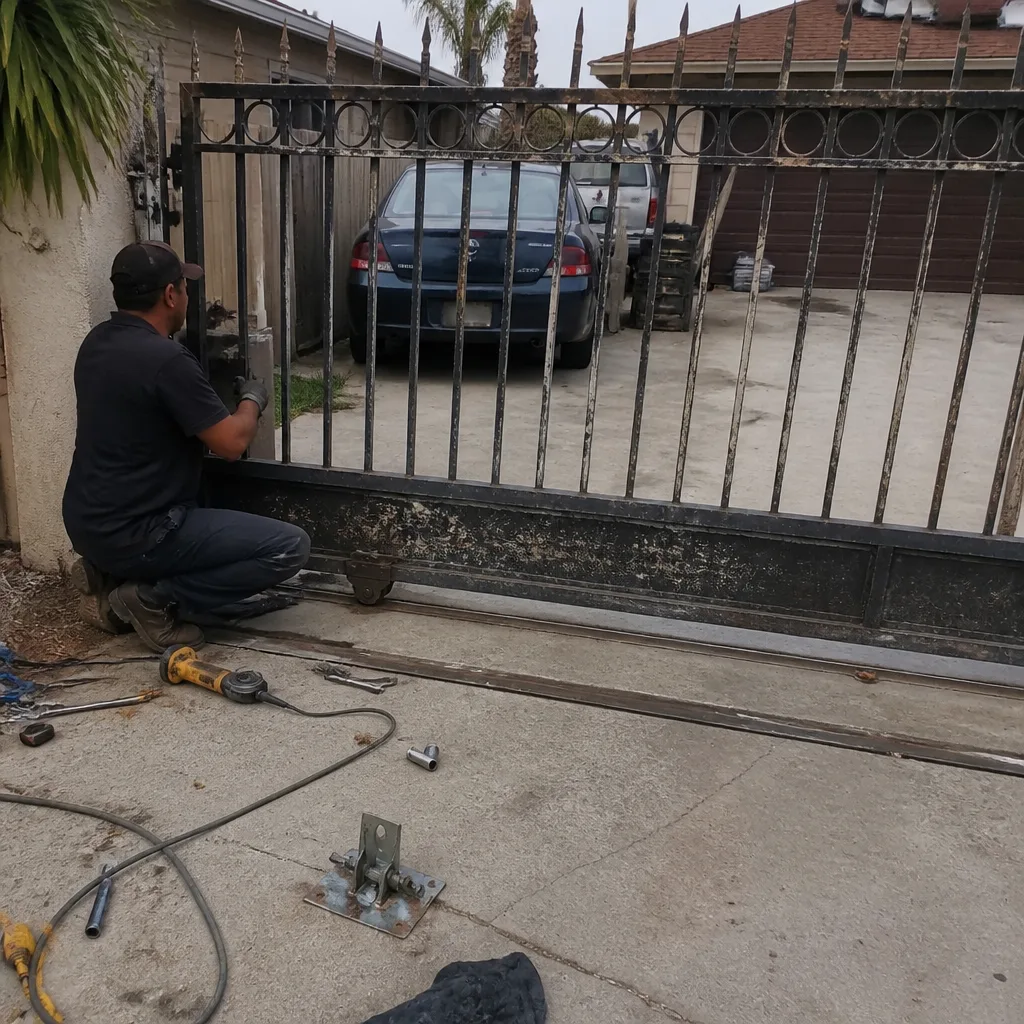 Before
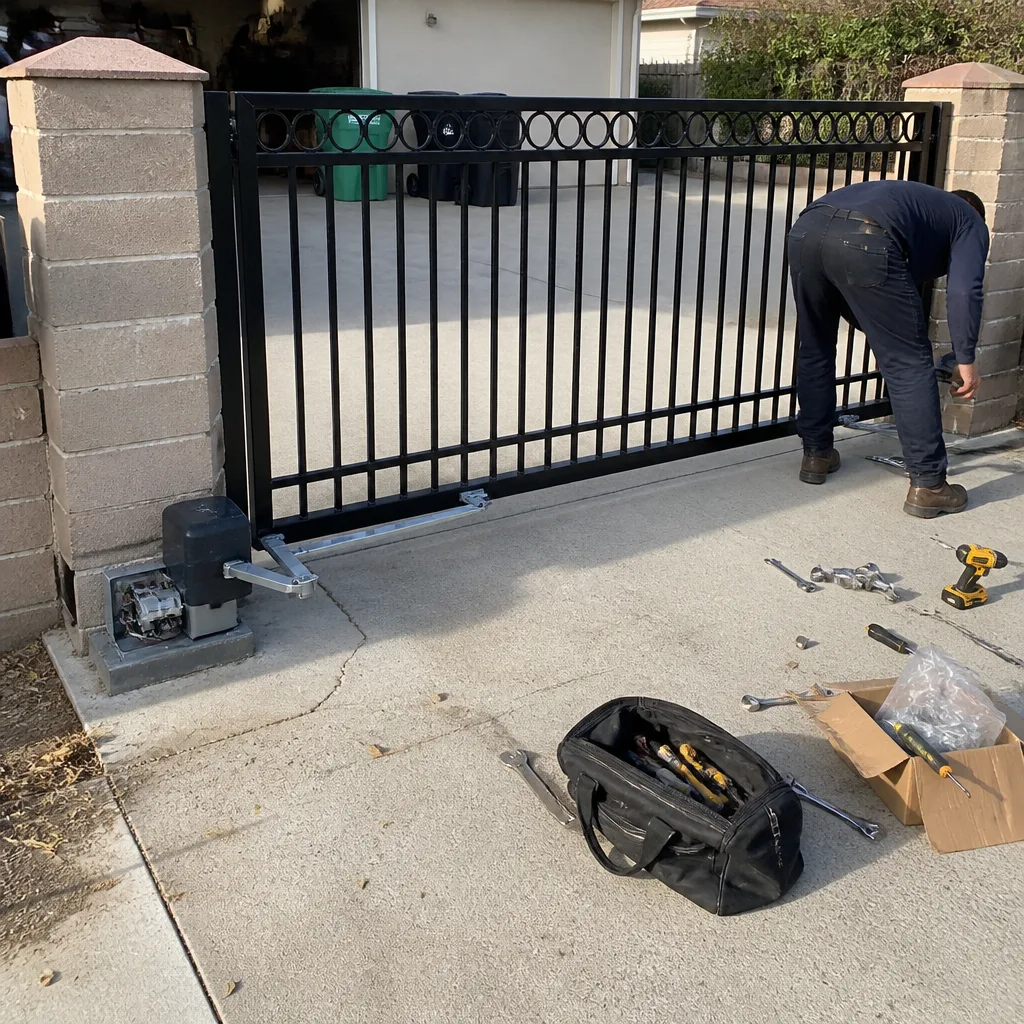 After
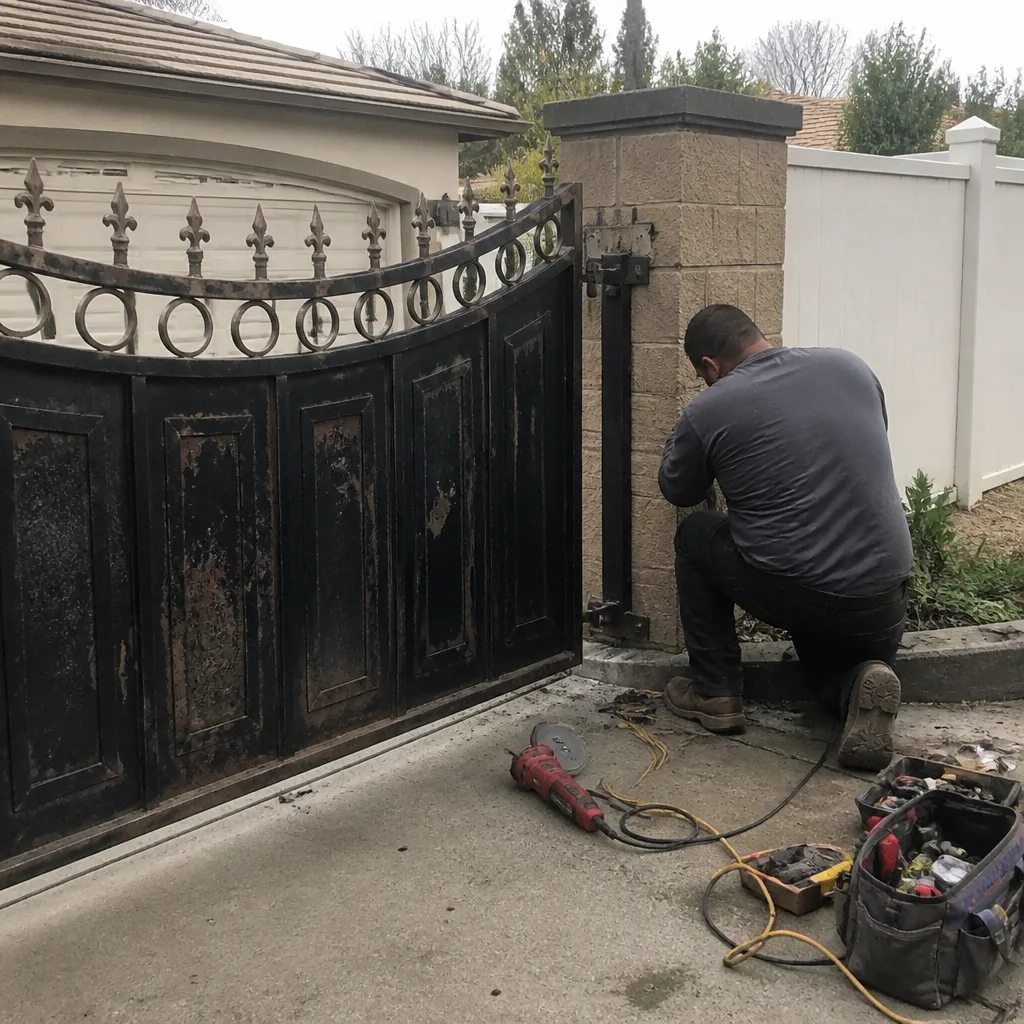 Before
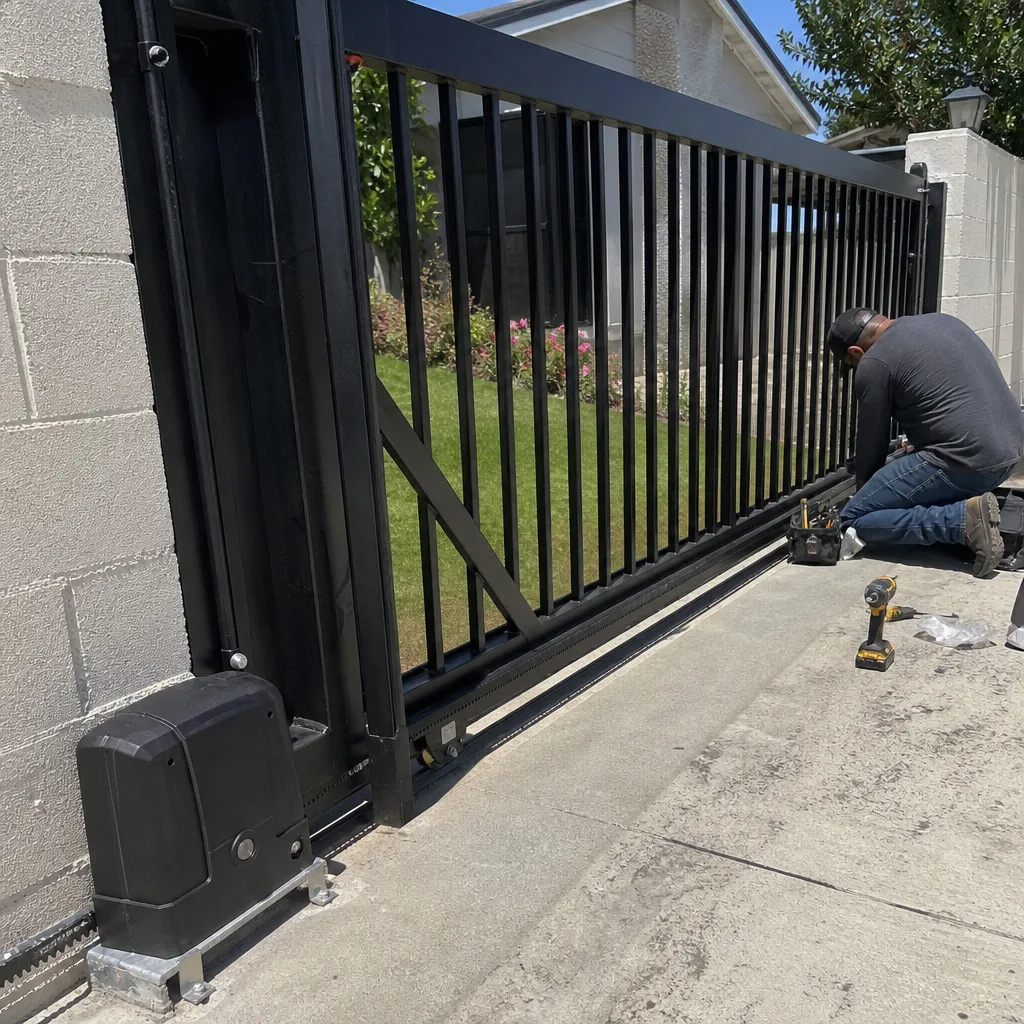 After
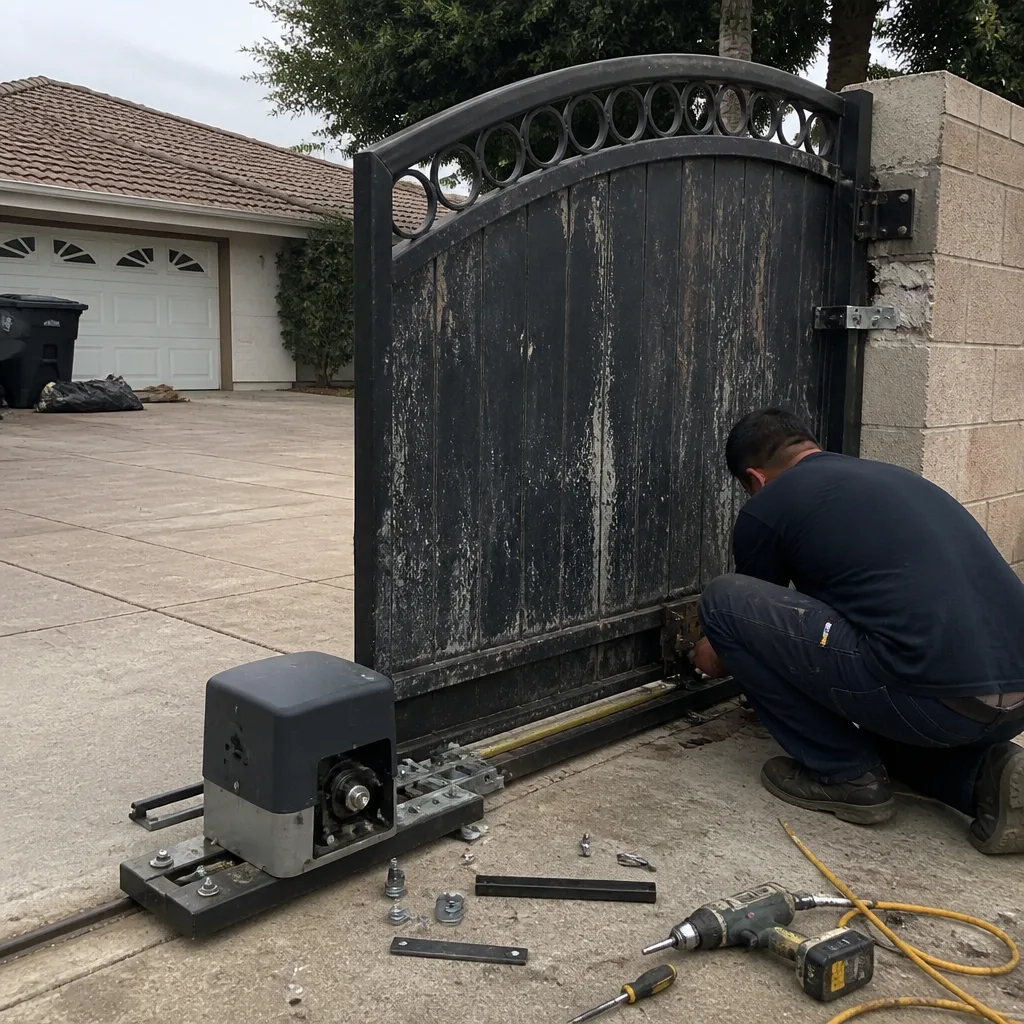 Before
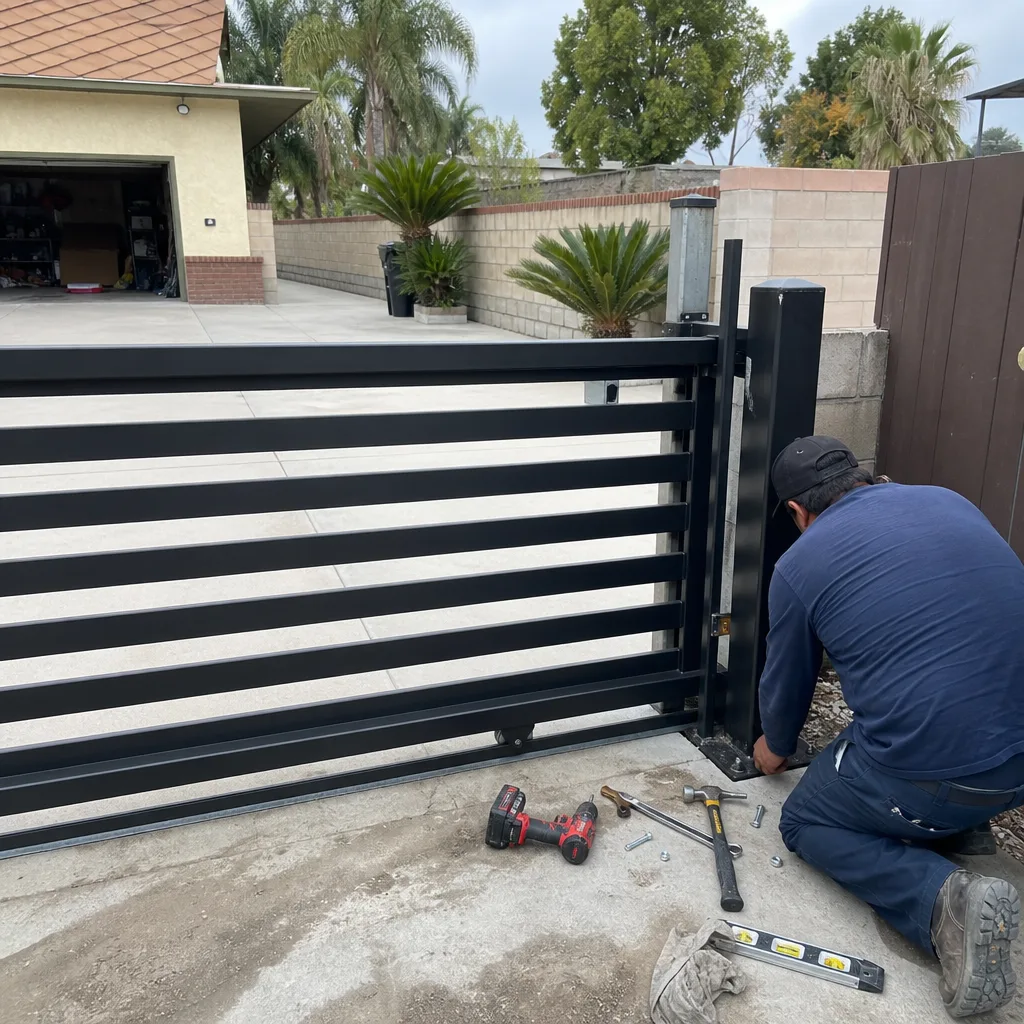 After
When to Call a Professional
Most of the maintenance tasks in this guide are safe for a careful homeowner with basic tools. Some are not. If you find a cracked control board, a swollen capacitor, a seized gearbox, or a gate that has jumped its track, stop working on it. A gate leaf is heavy, and a spring-loaded or motor-driven gate under tension can cause serious injury if released improperly. High-tension components and electrical systems should be handled by someone who works on gates every day. If the gate is sparking, smoking, or making a loud grinding noise while the motor runs, disconnect power at the breaker and leave it alone. Estate Gate Repair offers free estimates in Fontana, and we work on the brand you already have. If you are not sure what you are looking at, call (866) 893-2220, describe what you see, and we will tell you honestly whether it is a DIY fix or a service call.
Frequently Asked Questions
In Fontana’s dust and heat, you should perform a basic monthly walkaround, a quarterly deep clean that includes hard water removal, and a full annual inspection that includes battery load testing, bolt torque, and safety system verification. The monthly check takes 15 minutes and the quarterly clean takes about an hour. If that sounds like a lot, remember that an emergency gate repair in Fontana frequently costs several hundred dollars and usually follows months of skipped maintenance; see Gate Repair Permits, Codes & Inspections in CA: What You Need to Know for regulatory requirements.
Grinding usually means dust or hard water scale has infiltrated a bearing or gear surface and is acting as an abrasive. In Fontana, the dust is fine enough to get past seals and into sealed gearboxes, and the first symptom is often a grinding sound that appears briefly and then fades. Clean the hinge pins and track thoroughly, remove any white calcium buildup, and apply a dry-film lubricant. If the grinding persists after cleaning, have the gearbox inspected before it fails. Call (866) 893-2220 for an exact diagnosis, and estimates are free.
DIY monthly and quarterly maintenance costs about $30 to $60 per year for compressed air, microfiber cloths, dry-film PTFE lubricant, silicone spray, and a calcium remover. An annual professional inspection typically costs between $85 and $175 in Fontana depending on gate type and operator brand. Battery replacement adds $40 to $60 every 18 months. Compared to an emergency repair that often runs $250 to $600 for a motor, gearbox, or control board failure, the maintenance math favors the checklist every time.
Yes, if you are comfortable working with electronics and you follow the power-down protocol: disconnect AC power, switch off the battery backup, and use only compressed air and an anti-static brush. If the board shows scorch marks, swollen capacitors, or green corrosion, do not attempt to clean it. Those symptoms indicate component failure, not dust. A damaged board is an electrical hazard, and a gate repair specialist should replace it.
We service nine major gate automation brands including LiftMaster, FAAC, BFT, Linear, Viking, Ghost Controls, DoorKing, Elite, and Mighty Mule. If you do not know what brand your gate is, that is not a problem. Our technicians identify and repair across competing manufacturers, so you do not need to find a brand-specific service provider. This is what we do all day, every day, and Gate Installation in Camp Pendleton North is the same team if you eventually decide to replace the system.
Yes. A full gate installation includes the operator, the power run from your electrical panel to the gate location, and the safety system, which includes photo eyes and safety edges. These are not optional add-ons; they are part of a code-compliant installation. The work is measured, ordered, and scheduled rather than done same-day, because it involves trenching, conduit, and permitting in many jurisdictions. Call (866) 893-2220 and we will come out, take measurements, and give you a written price before any work begins.
The Bottom Line
Fontana gates fail differently than gates anywhere else. The dust is finer, the heat is harsher, and the water is harder, which means the maintenance that works in other climates does not always work here. The checklist that matters is the one built around those local conditions: monthly listening and visual checks, quarterly dry-cleaning and calcium removal, annual battery load tests and bolt torque checks, and a written log that gives a technician the history needed to diagnose faster. If this guide helps you catch one hinge before it seizes or one battery before it dies, it has paid for itself many times over. When a problem is beyond what you want to handle yourself, Estate Gate Repair is the gate-only specialist that works on the brand you already have. Call (866) 893-2220 for a free estimate, and the price will be quoted and agreed before any work starts.
Written by the team at Estate Gate Repair, serving Fontana since 2015. Explore more guides & resources on gate maintenance and repair.