
Last updated October 30, 2026
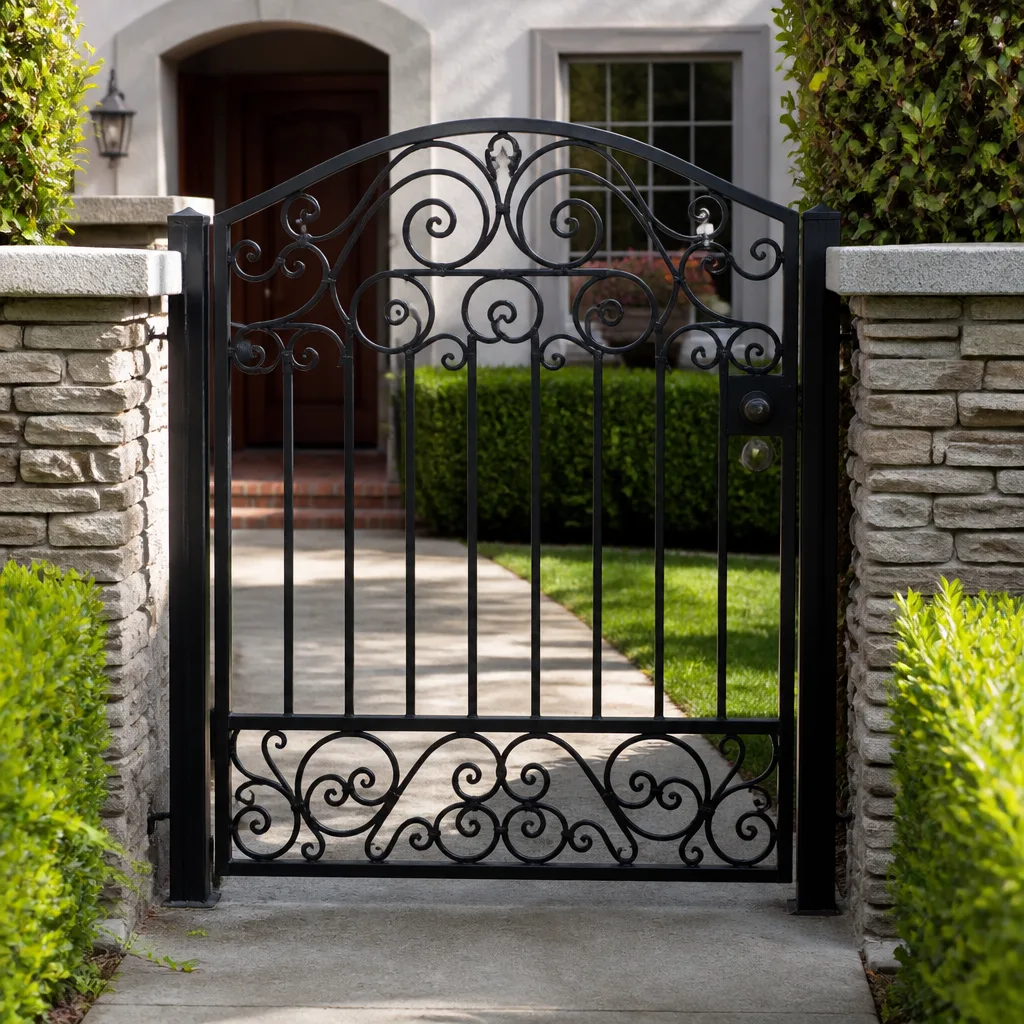 Wrought iron
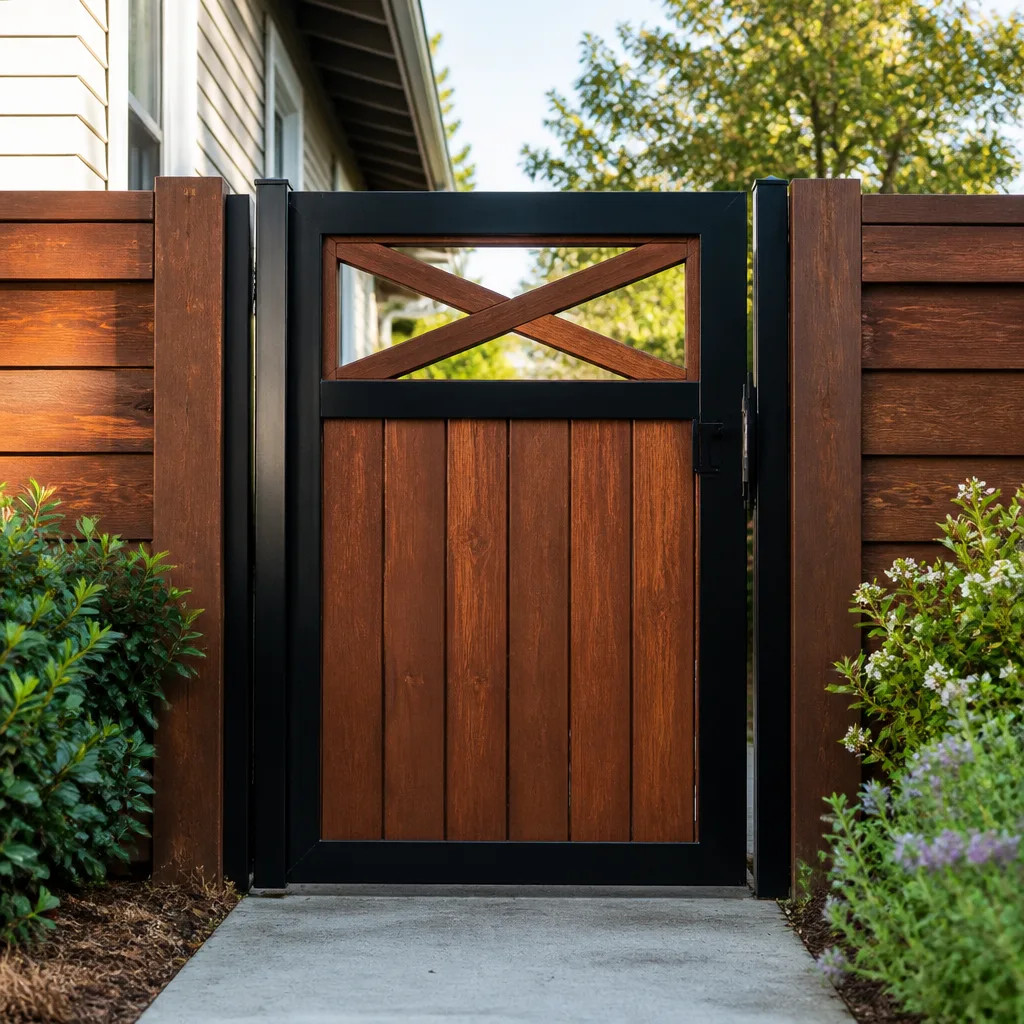 Wood & steel frame
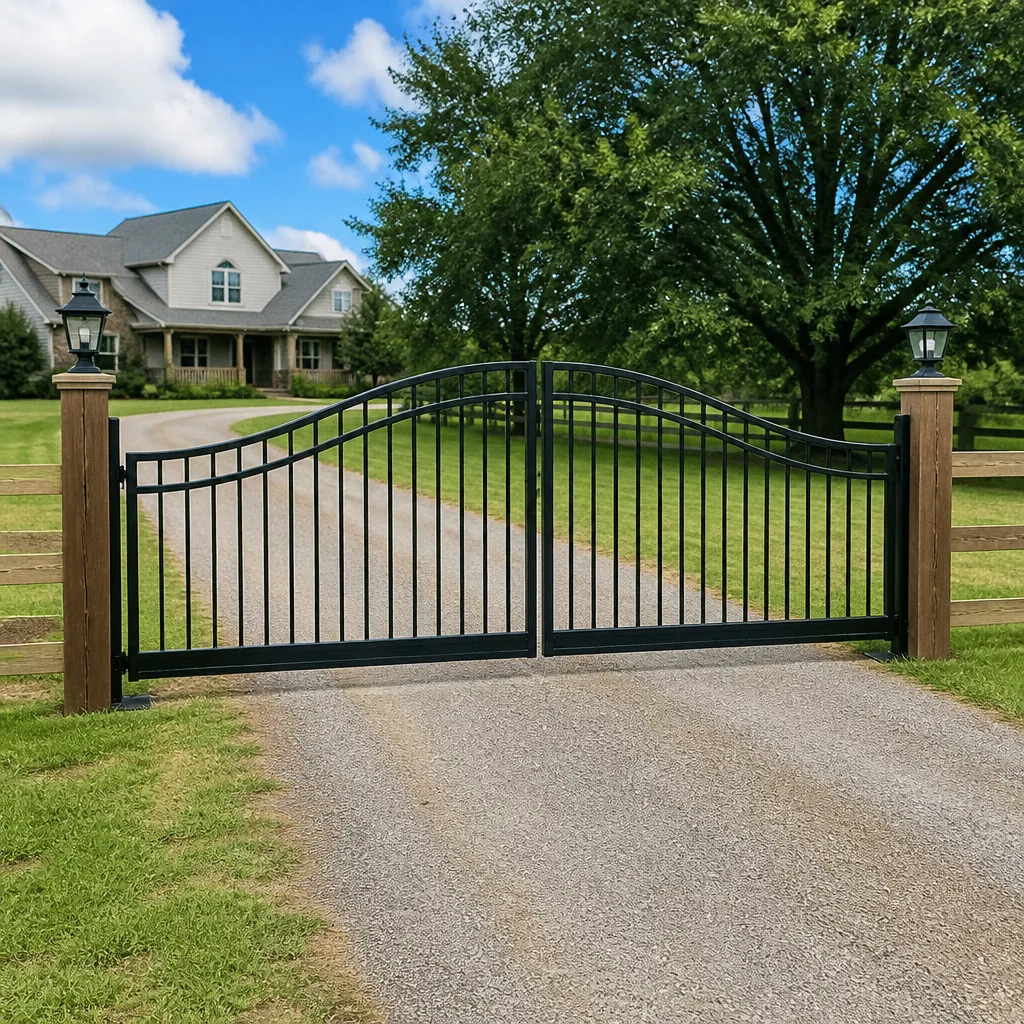 Farm & ranch
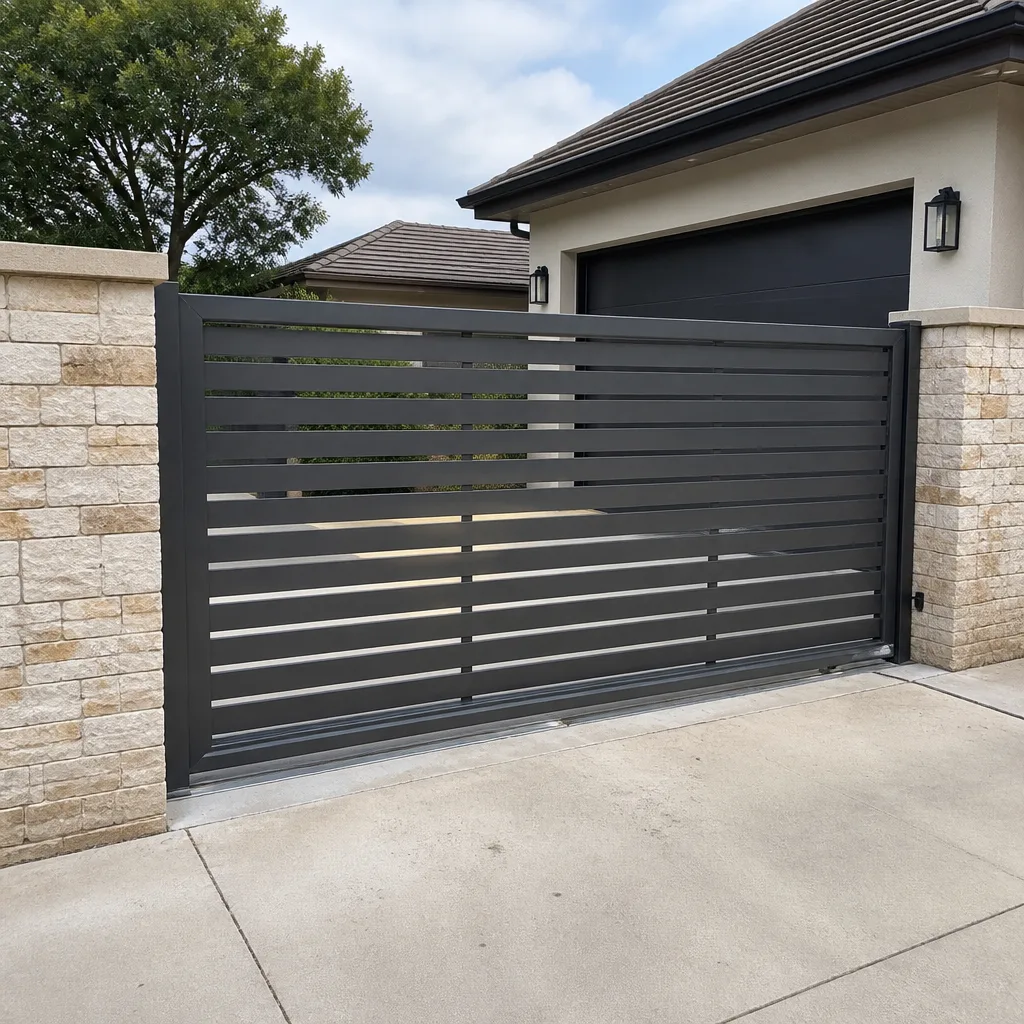 Sliding driveway gates
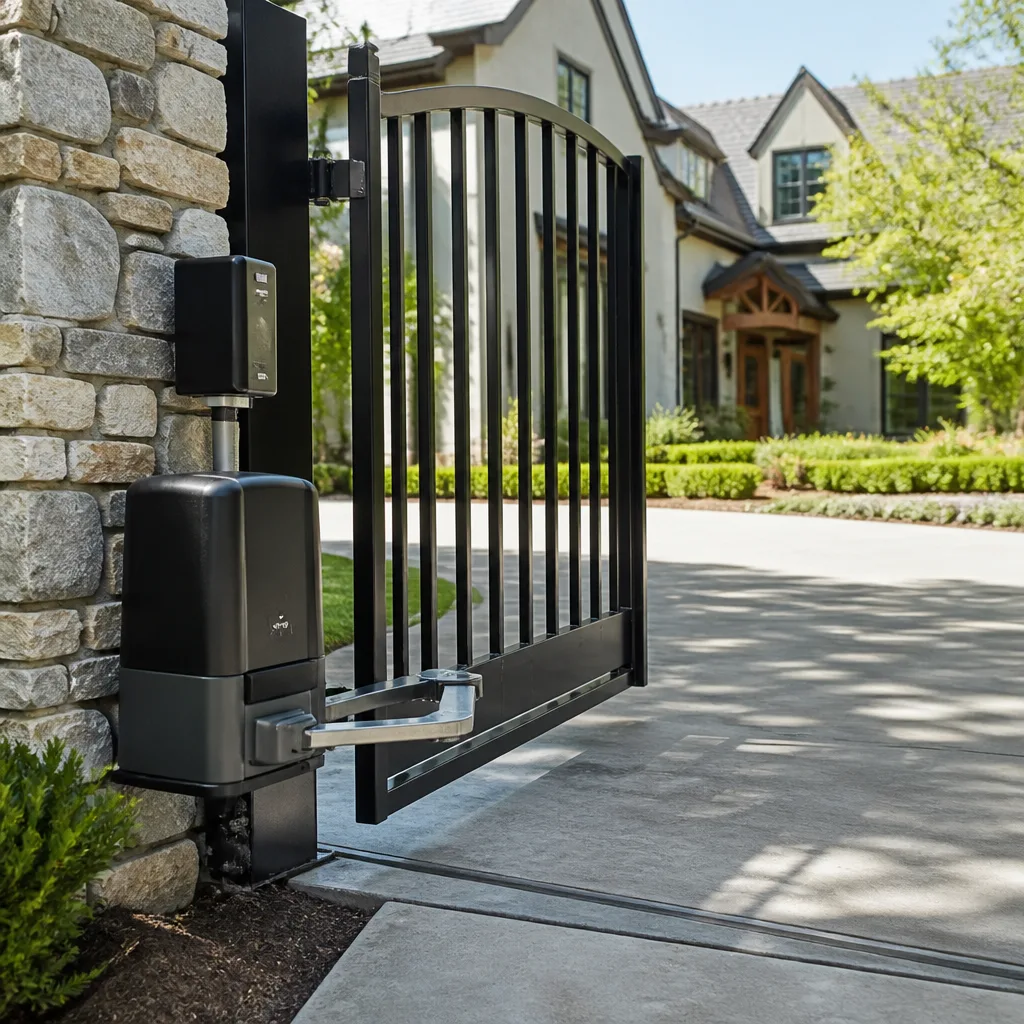 LiftMaster operators
Free on-site gate assessment - hinges, posts, and your LiftMaster or Nice gate operator checked before anything is quoted
The assessment is free and the quote is the invoice.
Get your free estimateDIY vs Professional Gate Repair: The Fontana Homeowner’s Decision Guide
Adjusting a gate’s travel limits yourself can save $150. Touching the same control board without understanding the 24V AC circuit can destroy a $600 operator, void the warranty, and in rare cases involving older systems, create a UL 325 entrapment violation that puts your household at legal risk. That’s the uncomfortable gap most “DIY gate repair” advice conveniently skips over. This guide, written from years of Gate Repair work across Fontana, draws the line precisely: which fixes are genuinely yours to make, which belong to a technician, and how to tell the difference before you pick up a screwdriver.
Quick Answer
Gate repair in Fontana splits into three layers: mechanical maintenance you can safely handle yourself (hinge lubrication, minor alignment, remote reprogramming, battery swaps), electrical and automation work that requires a trained technician (circuit boards, motors, safety sensors), and structural work that requires both a technician and possibly a permit (post replacement, gate re-hanging, new operator installation). The DIY-versus-professional decision is not about how handy you are. It’s about correctly identifying which layer your problem lives in.
Styles & brands we work with
Table of Contents
- The Three-Category Framework: What’s Yours, What’s Ours, What’s Permitted
- Repairs That Are Safe and Practical for Homeowners
- Repairs That Require a Trained Technician
- Repairs That Require Both a Technician and a Permit
- Tools and Skill Floor for Legitimate DIY Gate Work
- Why Gate Automation Carries Risk Categorically Different from Other Home Repairs
- The Hidden Cost of a Failed DIY Attempt
- Using Error Codes and Manufacturer Documentation Before You Call
- Common Mistakes to Avoid
- When to Call a Professional
- Frequently Asked Questions
- The Bottom Line
The Three-Category Framework: What’s Yours, What’s Ours, What’s Permitted
Every gate problem in Fontana falls into one of three buckets. Most homeowners get into trouble because they treat all three as the same bucket. The first bucket is mechanical and low-voltage maintenance: hinge lubrication, tightening bolts, aligning a sagging gate leaf, replacing remote batteries, reprogramming a remote, cleaning photo-eye lenses. These are genuinely accessible to a careful homeowner with basic tools and patience. The second bucket is electrical and automation repair: anything involving the circuit board, motor, capacitor, limit switches, safety sensor wiring, or power supply. You do not open this bucket. The third bucket is structural or code-driven work: replacing a gate post, re-hanging a gate that’s pulled away from its hinges, installing a new operator, or adding safety edges. This work often involves permits in Fontana, and doing it wrong creates liability you do not want to own.
The framework works because it aligns effort with consequence. A mechanical fix gone wrong typically costs you time and maybe a $12 hinge. An electrical fix gone wrong can cost you a $600 control board, a warranty, and the gate’s UL 325 compliance. That’s the asymmetry you need to respect.
Repairs That Are Safe and Practical for Homeowners
Let’s be precise about what you can do without calling anybody. These are the repairs we tell Fontana homeowners to try first, because they’re low-risk and solve a surprising number of service calls.
- Hinge lubrication: A gate that’s grinding or sticking usually has dry hinges. Use a lithium-based grease or a silicone spray, not WD-40. WD-40 is a solvent that will strip whatever lubrication is left. Work the gate back and forth as you apply it.
- Bolt tightening: Gates are heavy, and they vibrate. Hinge bolts, bracket bolts, and operator arm fasteners loosen over time, especially on gates facing Fontana’s Santa Ana winds. Take a socket set to every visible fastener once every six months.
- Minor alignment: If your gate leaf droops a half inch and drags on the ground, the fix is often a hinge adjustment, not a new gate. This requires a helper, a level, and patience. It’s a two-person job.
- Remote reprogramming: Lost remotes, new remotes, or remotes that stopped working after a power outage are programming issues, not repair issues. The process is specific to your operator brand, and the instructions are in your manual. LiftMaster, FAAC, BFT, and Linear all publish step-by-step reprogramming guides online.
- Battery swaps: Remote batteries, keypad batteries, and the backup batteries in some gate operators are homeowner-replaceable. If your gate works from the wall button but not the remote, check the remote battery before anything else.
- Photo-eye cleaning: In Fontana’s dust and pollen seasons, safety sensor lenses cloud over fast. A soft cloth and glass cleaner fix more “gate won’t close” complaints than any component replacement.
None of these tasks involves opening a control box, touching live wiring, or adjusting anything that affects entrapment protection. That’s the line, and it’s a bright one.
Repairs That Require a Trained Technician
Here’s the hard part for a lot of Fontana homeowners to accept: the moment the problem involves the operator’s brain or its power supply, you stop being a repairman and start being a liability. We’re not protecting our trade. We’re protecting you from a category of failure that behaves differently from anything else in your house.
If your gate opens but won’t close, or closes halfway and reverses, or makes a grinding sound from the motor housing, you’re in the automation layer. The first thing a technician does is pull the error code from the control board and match it to the manufacturer’s fault table. That’s diagnostic work that assumes familiarity with these specific boards: LiftMaster’s LA400 and LA500, FAAC’s 400 and 750 series, BFT’s Deimos and Phobos, Linear’s DUAL series. We see homeowners swap out motors when the fault is a $30 limit switch, and we see homeowners replace limit switches when the board has a bad relay. Both end up costing more than a service call.
The technical floor for this work is not “handy.” It’s knowing how 24V AC behaves differently from 110V, understanding why transformers fail, and being able to test a capacitor without discharging it across your hand. It’s also having the patience to trace wiring through a conduit that’s been in the Fontana sun for fifteen years and has the insulation cracked inside the jacket.
Repairs That Require Both a Technician and a Permit
Some gate work in Fontana crosses from “repair” into “construction.” The city’s building department treats certain gate projects as structural work, which means permits and inspections. The cases that typically trigger this:
- Post replacement: A gate post that has rotted at the base or cracked from the gate’s weight is not a repair, it’s a reinstallation. The post is set in concrete, and the concrete has to be engineered to carry the gate’s weight plus wind load.
- Gate re-hanging: If the gate has pulled away from the hinges or the post is leaning, re-hanging the gate means resetting the geometry, which means the post is the actual problem.
- New operator installation: Adding an electric operator to a gate that was previously manual changes the gate’s entrapment profile. UL 325 becomes the governing standard, and it’s not optional.
- Safety edge addition: Retrofitting a safety edge or photoelectric sensor is code-driven work that must be done to spec. Under-sized wire or an incorrectly mounted sensor creates the exact hazard the code exists to prevent.
If a contractor tells you none of this work requires a permit in Fontana, call the city’s building division and ask. They’ll tell you. And they’ll tell you what happens if the work was done without one and something goes wrong.
Tools and Skill Floor for Legitimate DIY Gate Work
If you want to do the first bucket properly, you need the right tools and an honest assessment of your skill level. Here’s the list we give Fontana homeowners who ask us what they should own before attempting basic gate maintenance.
- A basic socket and wrench set: Gates use fasteners from 10mm to 19mm, along with the occasional SAE bolt on older American-built gates. A mid-range set from any hardware store covers it.
- A torque wrench: Gate hinge bolts have torque specs. Over-tightening strips threads; under-tightening lets the gate sag. This is the single most under-owned tool among DIY gate repairers.
- A four-foot level and a helper: Alignment work without a level is guesswork, and without a helper it’s dangerous. Gates are heavier than they look. A driveway gate in Fontana’s newer developments can weigh 300 to 600 pounds.
- Lithium-based grease and silicone spray: Both are cheap. Neither is optional for hinge and roller maintenance.
- A multimeter, but only if you’re staying low-voltage: Testing remote batteries and keypad wiring is fine with a basic multimeter. Testing anything inside the control box is not.
If you don’t own a torque wrench and have never adjusted a hinged load under tension, skip the alignment work. Call someone who does it every week. The $150 to $250 for a service call in Fontana is less than the cost of a bent hinge pin, a split post, or a gate that drops on someone’s foot.
Why Gate Automation Carries Risk Categorically Different from Other Home Repairs
Here’s the part most DIY gate articles won’t tell you. Patching drywall, replacing a faucet, even wiring a new light switch: when you get those wrong, you get an ugly wall, a leak, or a breaker that trips. The failure is contained. Gate automation is different because the failure isn’t contained. It’s mechanical force in motion, powered by electricity, governed by a safety standard written in blood.
UL 325 governs automatic gate operators in the United States. It exists because people have been crushed, pinned, and killed by gates that didn’t reverse when they should have. The standard mandates entrapment protection: photo eyes, safety edges, force sensors, or a combination. When a homeowner opens the control box and starts adjusting force settings or bypassing a sensor that’s been causing nuisance reversals, they’re not just breaking a gate. They’re disabling a life-safety mechanism. In Fontana, where many homes have automated driveway gates facing busy residential streets, the kid on the bicycle or the delivery driver approaching the gate doesn’t know you adjusted the reversal threshold up because the gate kept stopping for no reason.
The other layer is electrical. Gate operators run on low-voltage DC at the motor, but the transformer and often the board see 110V AC from the house. Inside that box, both voltages coexist. A slip with a screwdriver that drifts from the low-voltage side to the line-voltage side is a trip to the emergency room. We’re not saying this to scare you away from all gate work. We’re saying it so you understand why the second bucket is different from the first. It’s not a harder version of the same task. It’s a different category of task.
The Hidden Cost of a Failed DIY Attempt
Let’s model this out, because the math is what actually changes minds. Here’s what a typical failed DIY gate automation repair looks like in Fontana.
A homeowner notices the gate is reversing halfway through its travel. They assume the force setting is too low. They open the control box, find the force adjustment potentiometer, and crank it up. The gate starts closing fully again. Two days later, the motor burns out because the real problem was a failing capacitor, and the higher force setting masked it until the motor destroyed itself. The service call that would have been $180 to diagnose and $40 to replace the capacitor becomes $600 to $900 for a new motor, plus the original diagnosis. That homeowner saved nothing by touching the board. They tripled the repair bill.
And here’s the part nobody budgets for: the warranty. LiftMaster, FAAC, BFT, and Linear all state in their documentation that unauthorized modification or repair voids the operator warranty. Opening the board and adjusting settings is modification. If that board fails six months later and the manufacturer’s service rep sees tool marks on the adjustment pots, that’s a denial. The hidden cost isn’t just the part you broke today. It’s the warranty coverage you lost for the parts that fail tomorrow.
Contrast this with the mechanical bucket. You lube the hinges with the wrong product, the gate gets sticky, you clean it off and re-lube with the right product. The cost of failure is a tube of grease and an hour. That’s a reasonable risk. The asymmetry is the whole point.
Using Error Codes and Manufacturer Documentation Before You Call
The smartest DIY move in gate repair is not picking up a wrench. It’s picking up the manual. Your gate operator has a fault-finding system built into it, and reading the error codes before you call a technician can cut a two-hour diagnostic into a 45-minute parts swap. Here’s how to do real diagnostic work yourself without opening anything dangerous.
- Find your operator’s brand and model number. The plate is on the side of the motor housing or the control box, not on the gate itself. Write it down. This number is the single most useful piece of information you can give a technician.
- Pull the error code. Most current operators flash a code on the board or beep a sequence when a fault occurs. Count the flashes or beeps. LiftMaster boards use a blinking diagnostic LED. FAAC boards display codes on an optional LCD or flash the status light in sequences. BFT and Linear both use LED flash sequences. Your manual has the table that decodes them.
- Look up the code in the manual or online. The manufacturer documentation will tell you what the code means: “obstruction detected,” “motor overheat,” “photocell fault,” “limit switch failure.” That narrows the problem from “my gate is broken” to “my gate is hitting an obstruction or thinks it is.”
- Check the simple explanations first. If the code is an obstruction or photocell fault, clean the photo eyes, check for debris in the track, and clear anything leaning against the gate. A surprising number of Fontana service calls are resolved by removing a pile of leaves from the photo-eye path.
- Call with the information, not just the symptom. When you call a gate repair company, having the brand, model number, and error code ready means the technician can bring the right parts on the first trip. That’s the difference between a one-visit repair and a two-visit repair with a parts-order delay in between.
This is the gate repair version of reading the check-engine light instead of guessing what’s wrong under the hood. It’s diagnostic work that requires zero mechanical skill, and it’s the single biggest time-saver available to Fontana homeowners.
Gate Repair Costs in Fontana: What to Expect
Before you decide between DIY and professional, it helps to know what the professional option actually costs. These are the ranges we see across Fontana’s gate repair market, from the older ranch-style homes south of the 10 to the newer developments up against the foothills.
Common gate repair price ranges in Fontana:
- Service call and diagnosis: $75 to $150, depending on the company and distance.
- Hinge lubrication and minor alignment: $100 to $200 if done as part of a maintenance visit.
- Remote reprogramming: $50 to $100 if you bring the gate operator info and it’s a simple re-sync.
- Photo-eye replacement: $150 to $350 installed, depending on brand and whether it’s a wired or wireless sensor.
- Limit switch replacement: $75 to $200 in parts and labor, depending on the operator.
- Circuit board replacement: $250 to $600, with the board itself representing most of that cost.
- Motor replacement: $500 to $1,200, including labor and the motor assembly.
- Full operator replacement: $1,500 to $4,500, depending on the operator, gate weight, and whether safety edges need to be added.
The decision math changes once you know these numbers. If the problem is a remote that stopped working, the DIY path costs $3 for a battery and five minutes of your time. If the problem is a circuit board, the DIY path costs whatever a replacement board costs plus the risk of installing it wrong, which typically lands you at the same price as having hired someone, minus the warranty. In the middle ground, where problems are hard to classify, the diagnostic fee is cheaper than the cost of guessing wrong.
Common Mistakes to Avoid
- Adjusting force settings to fix a reversing gate. A gate that reverses mid-travel is telling you something. Raising the force threshold masks the symptom until the motor or the obstruction sensor fails completely. This is the single most common DIY mistake we see in Fontana.
- Using WD-40 on hinges. WD-40 is a water displacer, not a lubricant. It strips existing grease and leaves the hinge drier than before. Use lithium grease or silicone spray.
- Replacing the operator when the remote just needs reprogramming. A gate that works from the wall button but not the remote is a programming problem, not a hardware failure. Replacing the operator for this problem is like replacing a car because the key fob battery died.
- Ignoring a gate that’s sagging. A sagging gate puts strain on the hinges, the post, and the operator’s motor. The longer it sags, the more expensive the fix gets. What starts as a $100 alignment becomes a $3,000 post replacement if ignored for a year.
- Buying parts before identifying the operator brand. Gate operator parts are brand-specific. A LiftMaster limit switch does not fit a FAAC operator. If you don’t know your brand and model number, you cannot order the right part.
- Skipping the permit on structural work. Fontana’s building department does not consider post replacement a “repair.” If the post is set in concrete, it’s construction. Unpermitted structural gate work becomes a disclosure problem when you sell the house, and a liability problem if the gate fails.
- Opening the control box without disconnecting power. The transformer inside a gate operator’s control box carries line voltage. You don’t know which terminal is hot, and neither does a multimeter held by someone who isn’t sure what they’re testing. Turn the breaker off, or don’t open the box.
When to Call a Professional
Call a professional when the problem is in the control box, the motor, the wiring, or the structure. Call a professional when the gate is heavy enough to hurt someone and the fix involves load-bearing hardware. Call a professional when you’ve pulled the error code and it points to a board fault, a motor fault, or a sensor fault. And call a professional when you’ve already attempted the DIY fix and the gate is worse than when you started. None of this is a failure of competence. It’s correct categorization. Estate Gate Repair offers free estimates in Fontana. Call (866) 893-2220 and explain what the gate is doing. We’ll tell you which bucket you’re in, even if the answer is “you can do this one yourself.”
Frequently Asked Questions
Most gate repairs in Fontana run between $100 and $600, with circuit board and motor replacements on the higher end and hinge lubrication and remote reprogramming on the lower end. The specific cost depends on your operator brand, the part that failed, and whether the problem is mechanical or electrical. Call (866) 893-2220 for an exact quote. Estimates are free.
You can fix your electric gate yourself only if the problem lies in the low-voltage layer: remote batteries, keypad batteries, photo-eye cleaning, or remote reprogramming. Anything involving the control board, motor, capacitor, limit switches, or power supply should be handled by a trained technician. The line is not your skill level. It’s the voltage level plus the entrapment-safety layer.
A full gate installation includes the gate leaf or leaves, posts set in concrete, hinges, the operator if the gate is automated, safety sensors or edges, and the electrical run from your panel to the operator. In Fontana, this work typically requires a permit for the post settings and the electrical connection. The price depends on gate size, operator brand, and whether the job is a replacement or a first-time installation.
Yes. Electrical and automated gate work in Fontana includes the power run from the breaker panel to the operator, plus installation and wiring of entrapment protection like photo eyes and safety edges. This is not side work. It’s the core of what electric gate repair involves, and it’s the part of the job where the UL 325 compliance requirements are strictest.
We work on the brand you already have. Our technicians are experienced on LiftMaster, FAAC, BFT, and Linear systems, among others, so you don’t need to know who made your operator before you call. We identify the brand, pull the error code, and diagnose the fault regardless of manufacturer. Brand-agnostic diagnostics is the whole point of being gate-only specialists.
That depends on the problem and our current schedule. Some repairs, like a gate stuck open with a fault code we can identify over the phone, can be scheduled quickly. Call (866) 893-2220 and describe the symptom. If it’s a diagnostic visit, we’ll tell you before we dispatch that the visit includes a diagnosis and a parts list with a written price before any work starts.
The Bottom Line
The DIY-versus-professional decision is a categorization problem. Mechanical maintenance is yours. Electrical and automation repair is a technician’s. Structural and code-driven work is a contractor’s, and in Fontana, sometimes a permit office’s. The homeowner who saves the most money is not the one who does the most work. It’s the one who reads the error code, knows which bucket the problem lives in, and calls at the right time with the right information. That’s how a $180 diagnosis stays a $180 repair instead of becoming a $900 motor replacement with a voided warranty attached. For more on what we do, see our Estate Gate Repair home page or our guide to gate repair. When in doubt, call (866) 893-2220. We’ll tell you if you need us. That’s the honest answer, and we give it every day.
Written by the team at Estate Gate Repair, serving Fontana since 2015.
See the difference
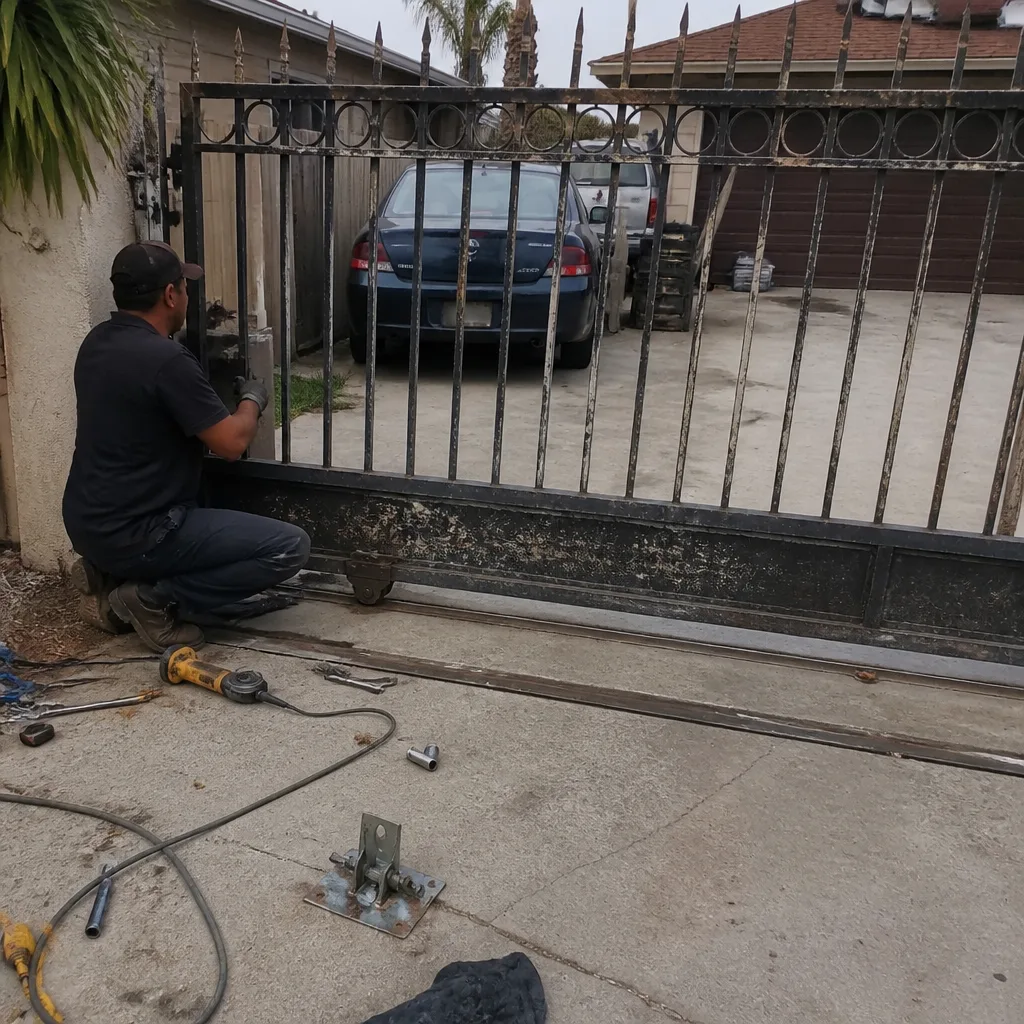 Before
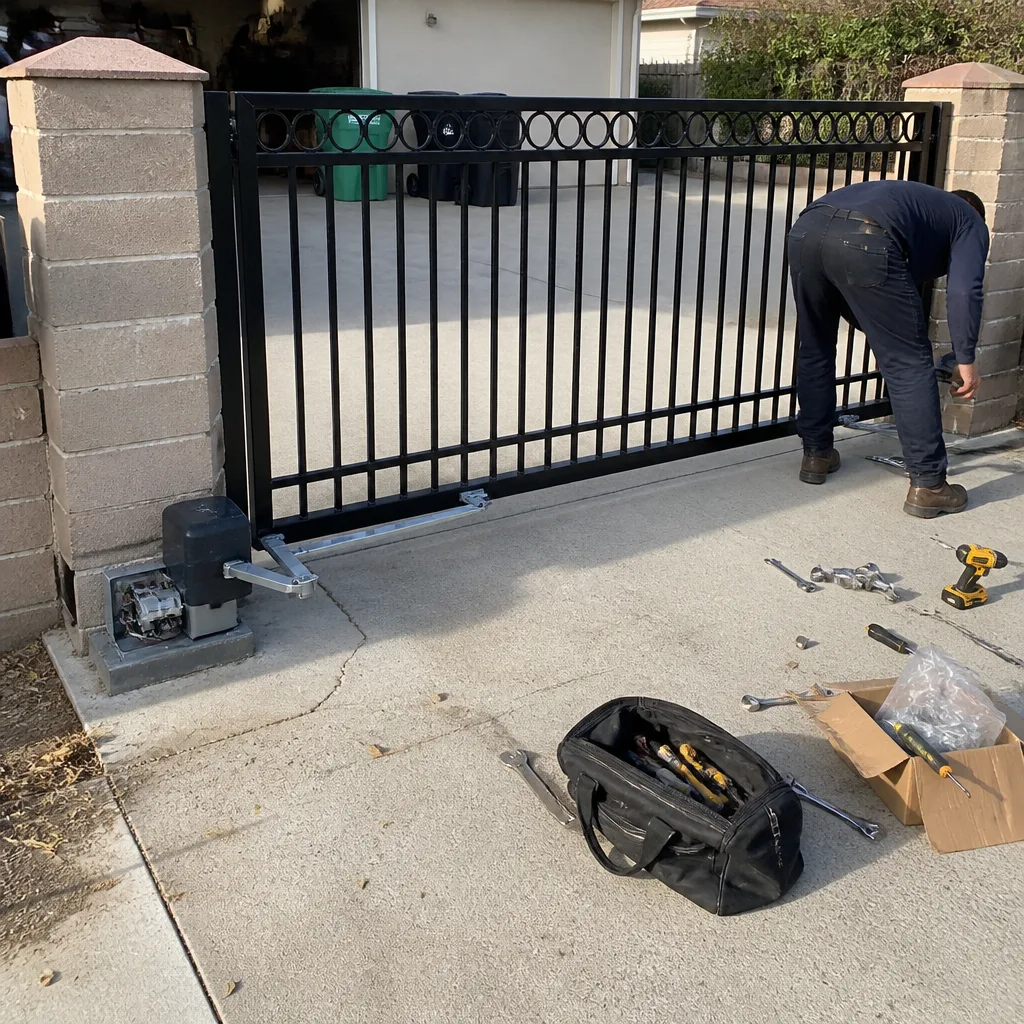 After
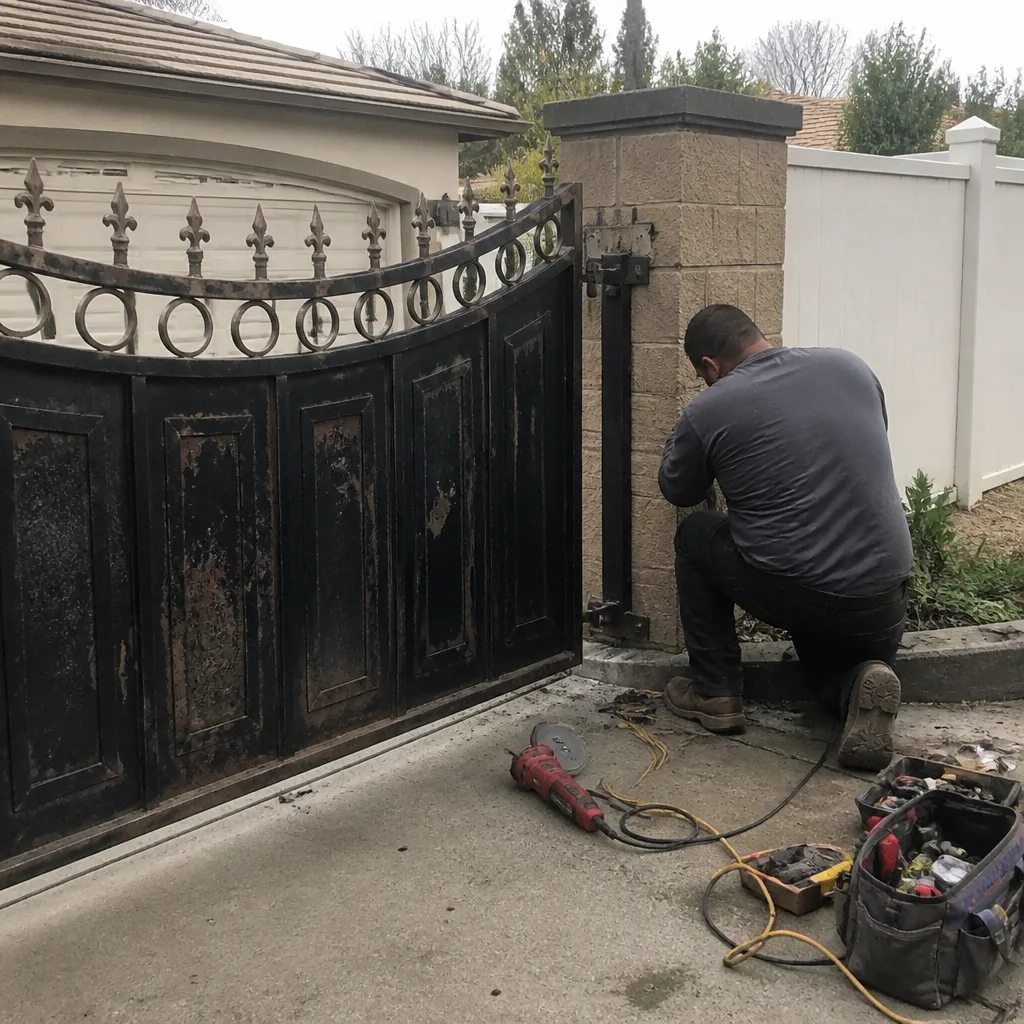 Before
 After
 Before
 After