
Last updated October 30, 2026
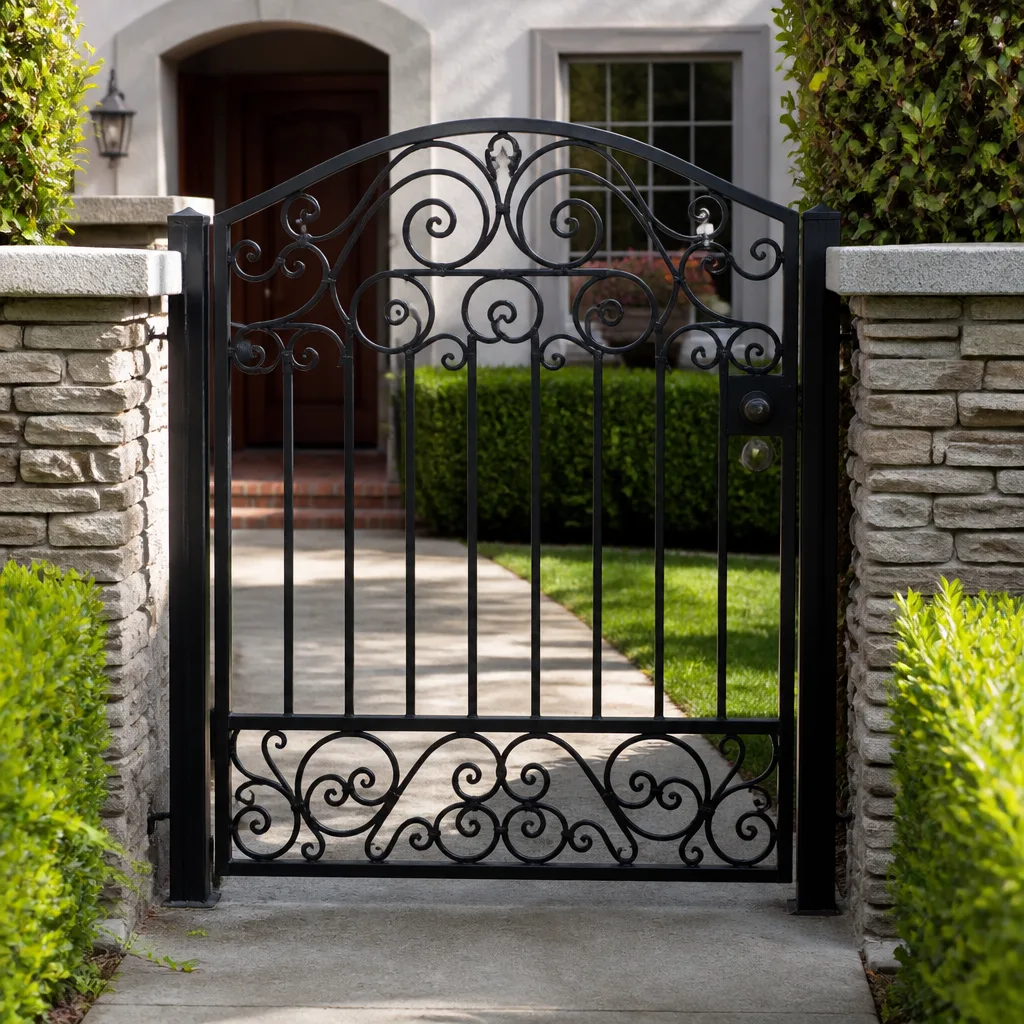 Wrought iron
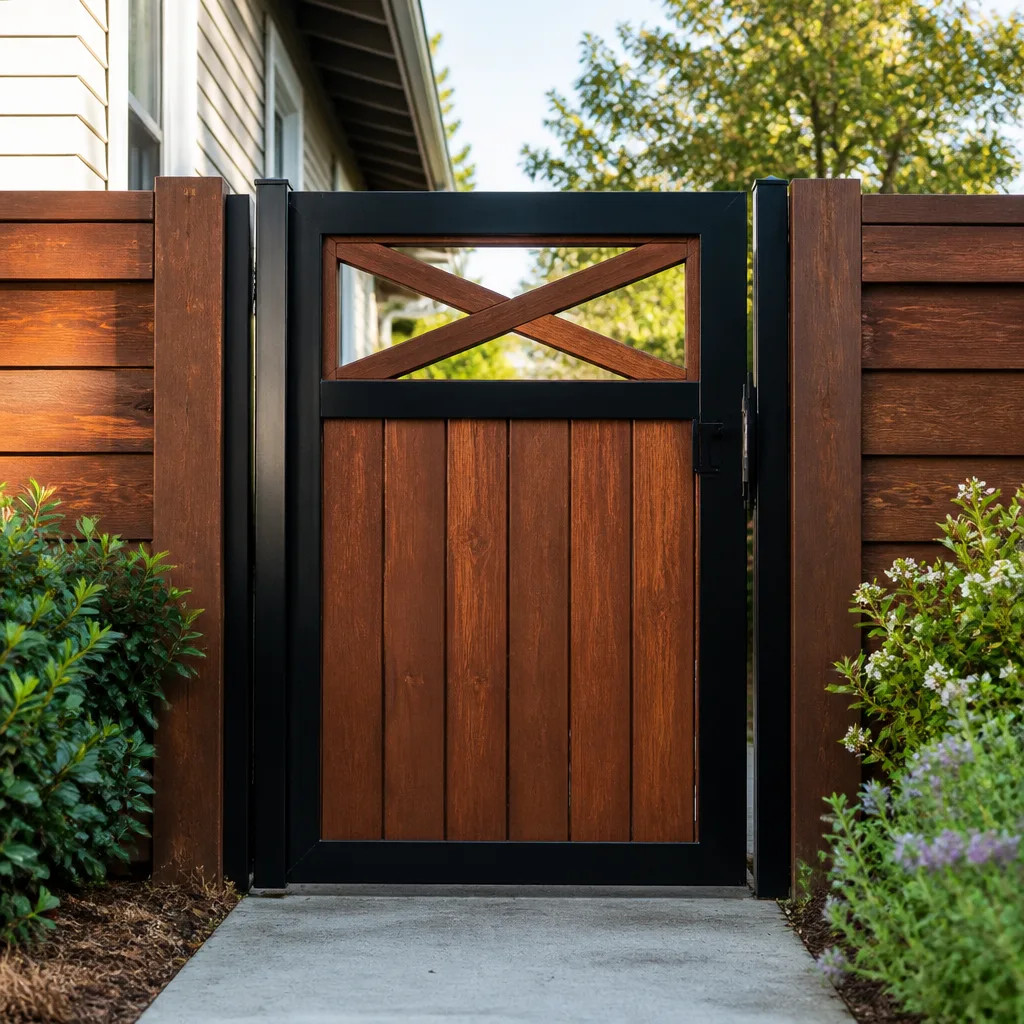 Wood & steel frame
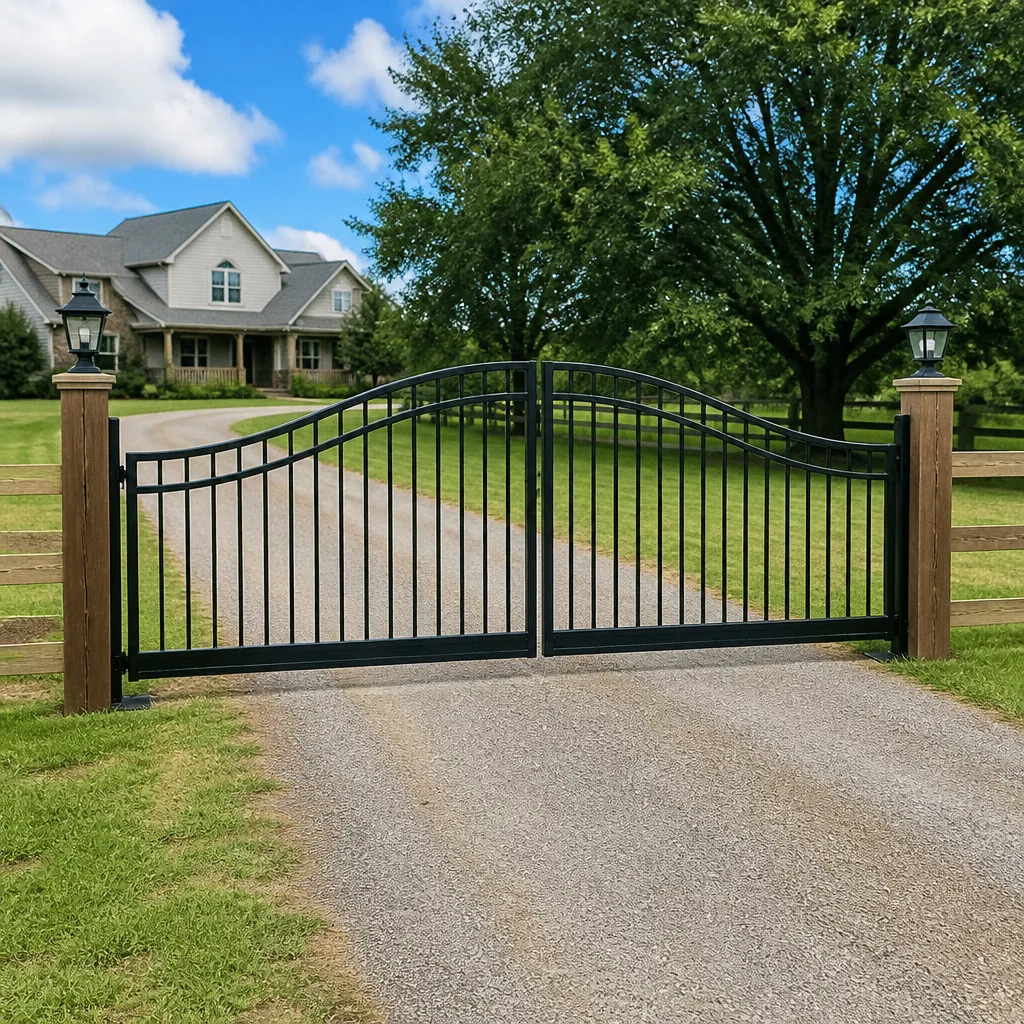 Farm & ranch
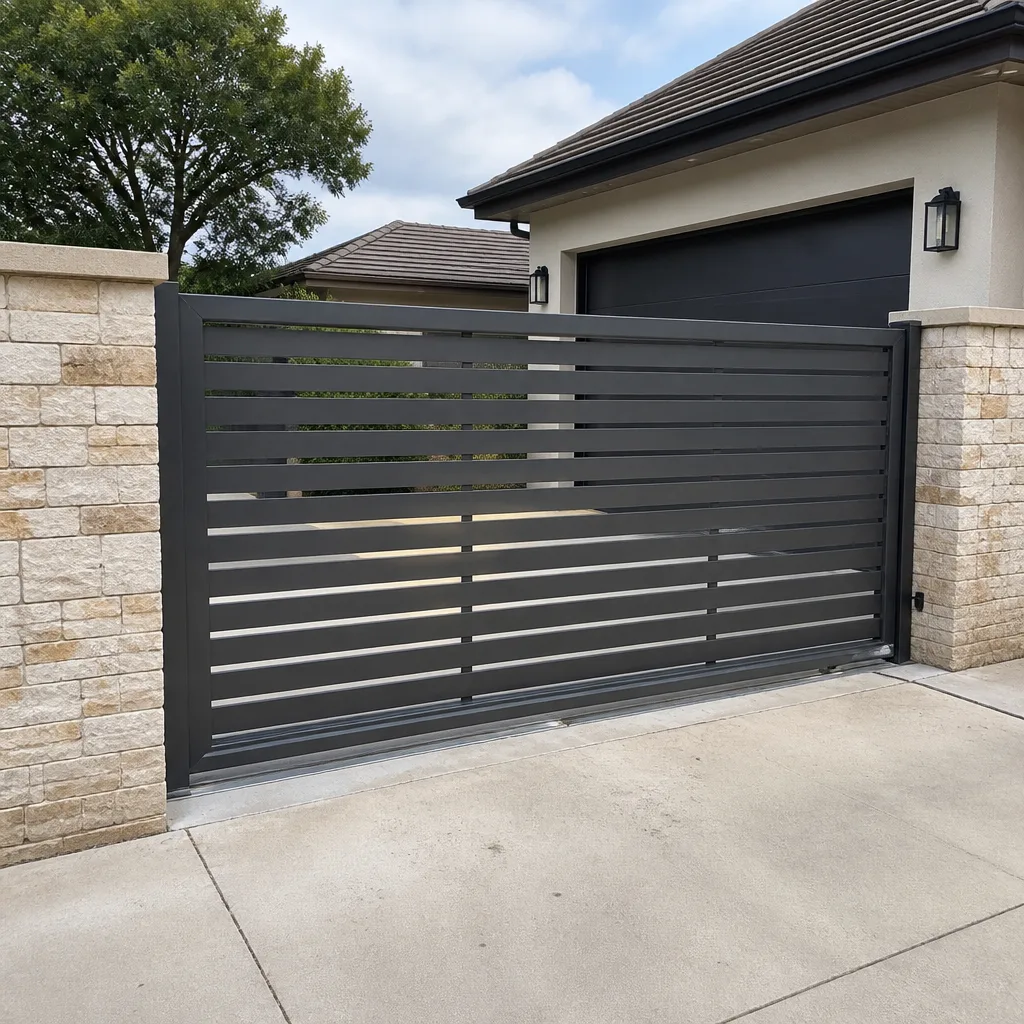 Sliding driveway gates
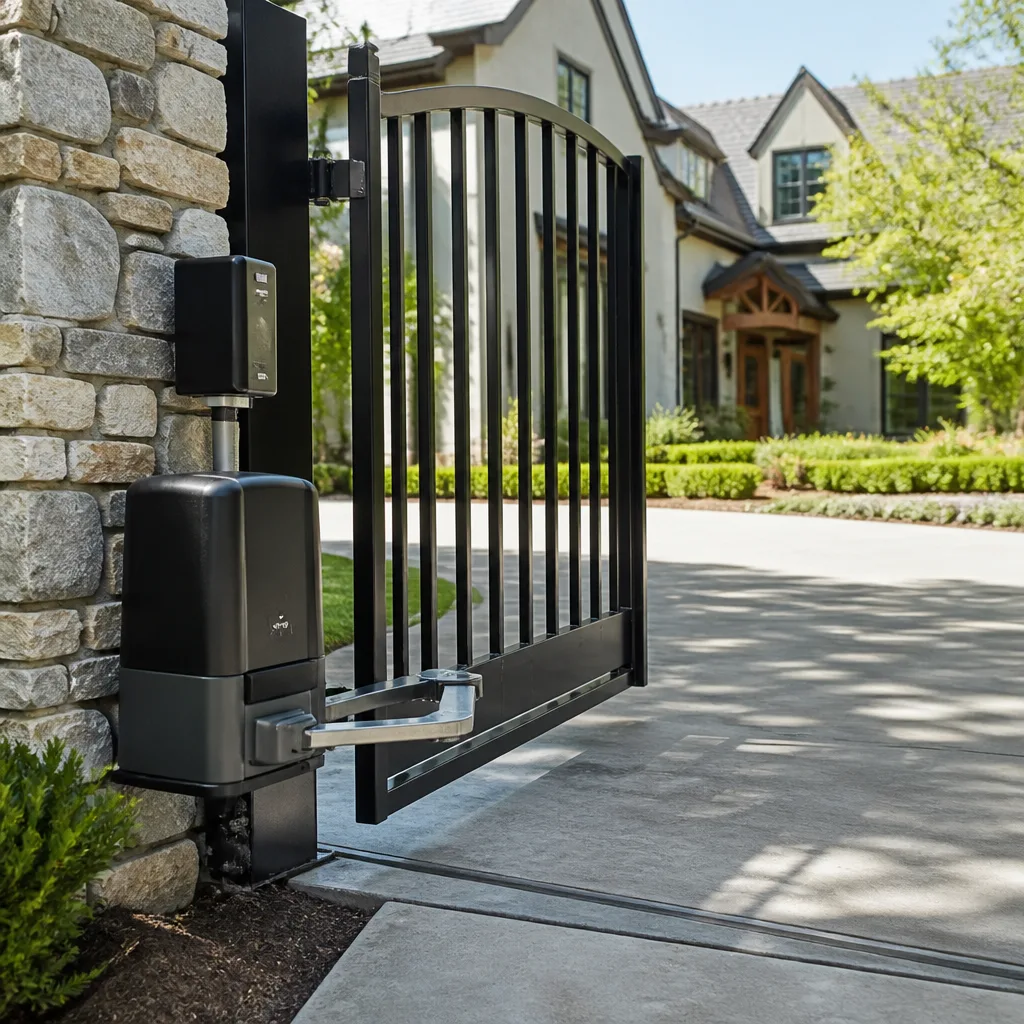 LiftMaster operators
Free on-site gate assessment - hinges, posts, and your LiftMaster or Nice gate operator checked before anything is quoted
The assessment is free and the quote is the invoice.
Get your free estimateThe Complete Gate Repair Guide for Fontana Homeowners
Fontana’s summer heat routinely pushes past 105°F, and that single fact explains more gate failures in this city than any other variable. Most repair guides assume a mild coastal climate where a gate operator might last fifteen years without complaint. In Fontana, the same unit often shows serious degradation in half that time. This guide explains why, what to check before you call anyone, and how to make repair decisions that actually hold up in the Inland Empire. For more guides & resources, visit our blog.
Quick Answer
Our Gate Repair services in Fontana require a different approach than coastal California because extreme heat, fine dust, and occasional seismic activity accelerate wear on motors, circuit boards, and mechanical hardware. A systematic inspection of the operator, hinges, track alignment, and safety sensors identifies most failures in under an hour. Repairs typically cost less than replacement when the gate’s structure remains sound and the operator is under ten years old.
Styles & brands we work with
Table of Contents
- How Fontana’s Climate Damages Gates Differently
- Signs Your Gate Needs Repair
- The Inspection Checklist a Specialist Runs Before Quoting
- Gate Brands Commonly Installed in Fontana and Their Failure Patterns
- Repair vs. Replacement: A Decision Matrix for Fontana Properties
- How Unpermitted Gate Installations Affect Repairs
- What You Can Safely Check Yourself
- Common Mistakes to Avoid
- When to Call a Professional
- Frequently Asked Questions
How Fontana’s Climate Damages Gates Differently
Gate failures in Fontana follow patterns we rarely see in coastal service areas. The combination of sustained heat, low humidity, and fine particulate dust creates a specific set of problems that generic maintenance schedules simply don’t account for.
Heat is the primary stressor. Gate operator motors generate their own heat during operation, and when ambient temperatures exceed 100°F, internal temperatures climb well past what manufacturer cooling systems were designed to handle. Lubricants thin out and migrate away from bearing surfaces. Capacitors, which are temperature-sensitive components on control boards, degrade faster. We regularly open operator housings in Fontana and find circuit boards with heat discoloration, swollen capacitors, and solder joints that have begun to crack from repeated thermal cycling.
Dust is the second major factor. Fontana sits in a basin where fine particulate matter settles on everything. When Santa Ana winds kick up, that dust becomes abrasive and actively works its way into gate tracks, hinge pins, and limit switch housings. Coastal gates deal with salt corrosion, which is a different failure mode entirely. Fontana gates deal with mechanical abrasion, and the damage shows up as accelerated wear on nylon rollers, scored track surfaces, and limit switches that fail because contact points get fouled with grit.
Seismic micro-activity adds a third variable. Fontana’s proximity to the San Andreas and San Jacinto fault systems means the ground shifts in small increments regularly. Over years, these micro-movements knock gate posts out of plumb, misalign tracks, and stress weld joints. A gate that operated smoothly when installed can develop binding and motor strain without any obvious cause, purely from accumulated ground movement.
Signs Your Gate Needs Repair
Most gate failures announce themselves gradually before the gate stops working entirely. Catching these early warning signs in Fontana matters more than in milder climates because the environmental stressors that cause them only compound over time.
Watch for these specific indicators:
- Slower operation in the afternoon. If your gate opens noticeably slower on hot days, the motor is struggling against heat-induced resistance in the mechanical components. This is an early sign that bearings, hinges, or the operator itself need attention before a full failure occurs.
- Grinding or squealing sounds. Noise means lubrication has failed somewhere. In Fontana’s dry air, factory lubricant dries out faster than manufacturers anticipate, and once metal contacts metal without protection, wear accelerates quickly.
- Gate reversing mid-cycle. When a gate starts closing and then reverses unexpectedly, the obstruction sensors or the force settings are misaligned. Dust accumulation on sensor lenses is a common Fontana-specific cause.
- Visible sag on the gate leaf. A gate that no longer sits level strains its hinges and the operator every time it cycles. Left unaddressed, sagging causes cascading damage that turns a hinge replacement into a full rebuild.
- Intermittent remote failures. If your remote works sometimes and not others, the issue may be heat-related drift in the receiver circuitry. This gets worse over time and typically indicates the control board needs evaluation.
Any one of these signs warrants a professional inspection. Ignoring them in Fontana’s environment means paying for a bigger repair later.
The Inspection Checklist a Specialist Runs Before Quoting
A legitimate gate repair quote in Fontana should never be given sight unseen. Before any pricing is discussed, a qualified technician needs to evaluate the complete system. This is the checklist we follow on every Fontana gate service call, as detailed in The Complete Guide to Gate Repair in Fontana.
- Post integrity and plumb. The technician checks both gate posts for vertical alignment and signs of movement. In Fontana, seismic settling often shifts posts, and any repair that ignores post alignment will fail prematurely.
- Hinge condition and load distribution. Each hinge is inspected for wear, looseness, and whether the gate’s weight is evenly distributed. Uneven loading is the root cause of most operator motor failures.
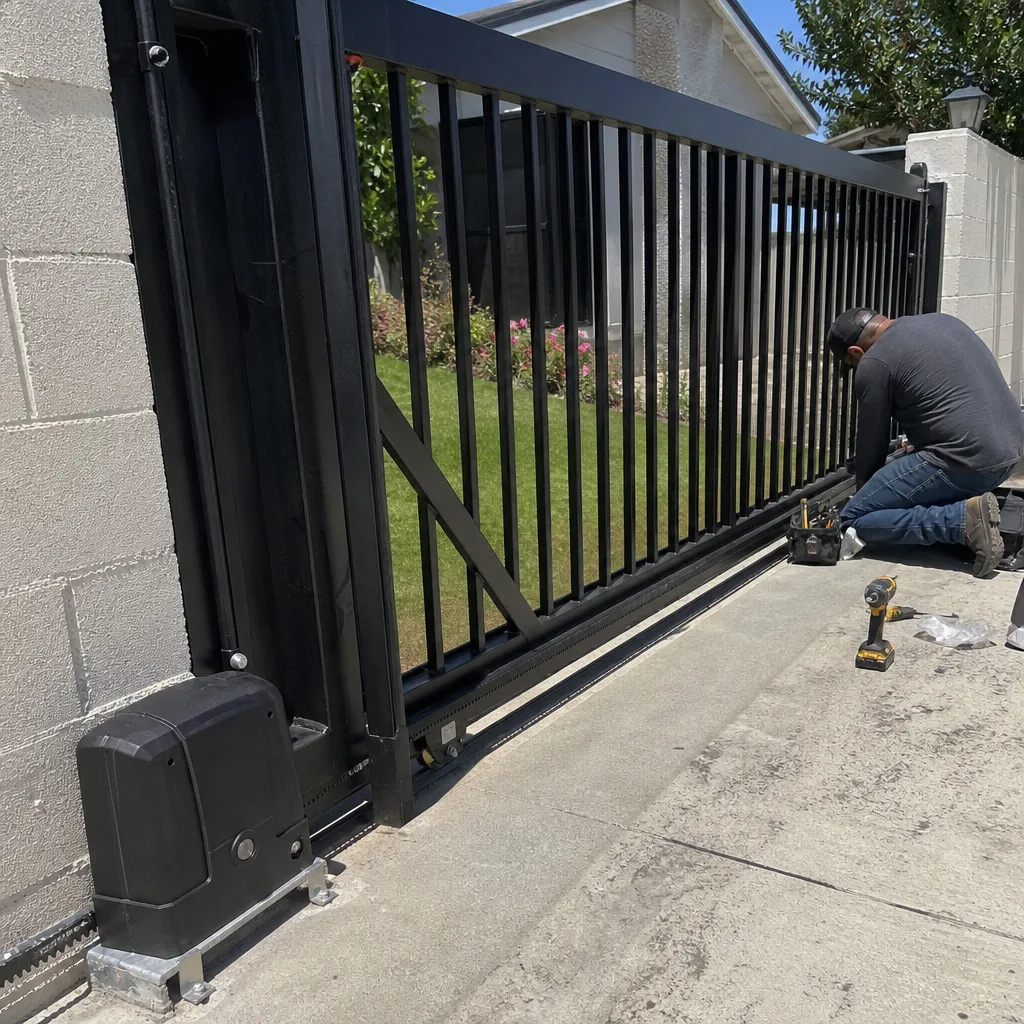
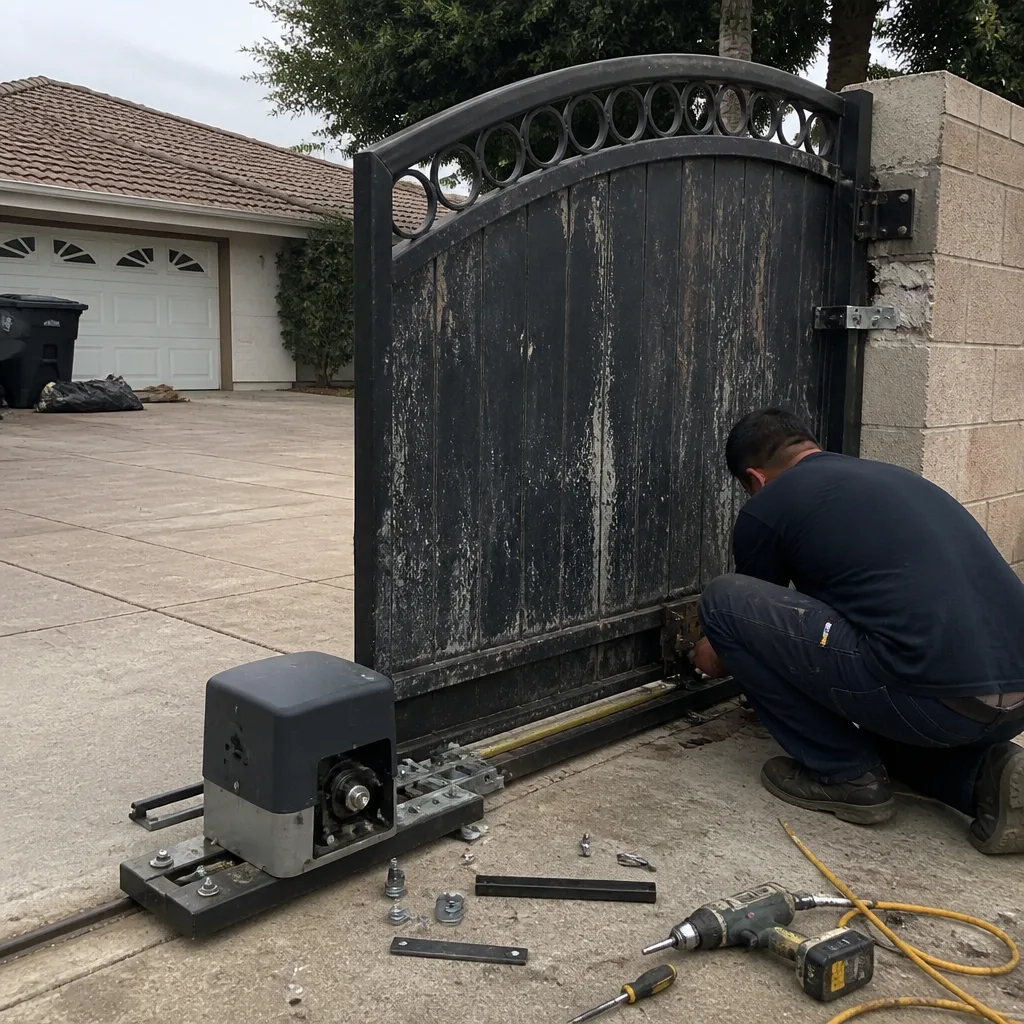
- Track alignment (for sliding gates). Sliding gates require precise track alignment. The technician checks for bends, debris buildup, and roller wear along the entire track length.
- Operator motor function. The motor is run through multiple cycles while the technician listens for abnormal sounds, checks operating temperature, and verifies that it’s drawing appropriate current.
- Control board inspection. The board is examined for heat damage, swollen capacitors, burned traces, and loose connections. In Fontana, heat-related board failures are common enough that this step is never skipped.
- Safety sensor verification. Photo eyes and edge sensors are tested for proper alignment and function. This is both a safety check and a code compliance issue.
- Limit switch setting. The technician verifies that open and close limits are set correctly, preventing the motor from overrunning and straining against hard stops.
- Remote and keypad testing. All access devices are tested to confirm they’re communicating properly with the receiver.
Only after this full evaluation should a repair quote be provided. If someone quotes you a gate repair in Fontana without looking at the system, that price is a guess, not an estimate.
Gate Brands Commonly Installed in Fontana and Their Failure Patterns
Fontana’s housing stock spans decades, which means gate operators on the road range from original equipment on 1990s tract homes to modern smart-enabled systems on newer construction. Knowing which brand you have matters because each has distinct failure patterns in this climate.
Linear operators show up frequently in older Fontana subdivisions. These units are generally durable mechanically, but the control boards suffer in sustained heat. We see capacitor failures and relay degradation in Linear boards that have been in Fontana service for eight to ten years. The good news is that parts remain widely available.
BFT systems are more common on larger lot estates and custom properties. BFT’s hydraulic operators handle heavy gates well, but hydraulic fluid degrades faster in Fontana’s heat than the manufacturer’s service intervals assume. Owners of BFT systems should check fluid condition annually, not every two years as the manual suggests.
Viking operators appear on many mid-range residential and light commercial gates. The brand’s gear-driven swing arms are solid, but the limit switch assemblies are vulnerable to dust intrusion. In Fontana, we regularly replace Viking limit switches that have failed from grit buildup, even when the rest of the operator remains serviceable.
Ghost Controls systems are a newer entrant and popular with DIY installers. In our experience, Ghost Controls units perform well when installed correctly, but heat stress on the control module is a recurring issue when the unit is mounted without shade protection. Any Fontana homeowner with a Ghost Controls operator should verify that the control housing is shielded from direct afternoon sun.
The practical takeaway: brand matters for parts availability and known failure patterns, but no brand is immune to Fontana’s specific environmental stresses. A gate repair specialist who works on electric gate systems from multiple manufacturers can diagnose your specific unit regardless of brand.
Repair vs. Replacement: A Decision Matrix for Fontana Properties
DIY vs Professional Gate Repair: The Fontana Homeowner’s Decision Guide explains why the repair-versus-replace calculation in Fontana differs from what generic guides suggest, because property types across the city vary so widely. A decision that makes sense for a Hunter’s Ridge tract home may be wrong for a Lytle Creek estate property.
Here’s how we evaluate the decision for different Fontana property contexts:
- Tract homes with single swing gates. When the operator fails and the gate structure remains sound, repair is almost always the right call. Replacement operators for these gates are relatively inexpensive, installation is straightforward, and the existing gate hardware can typically be reused. Repair makes sense up to about 60% of replacement cost.
- Large lot estates with custom gates. Custom iron gates on North Fontana estate properties are expensive to replace, often costing more than the operator itself. Here, the threshold shifts. Repairing or rebuilding the operator, replacing mechanical components, and even addressing structural issues makes financial sense even when repair costs approach replacement cost of the operator alone, because the gate leaf itself is a major investment worth preserving.
- Sliding gates on canyon properties. Sliding gates in Fontana’s foothill areas face constant dust and debris loading. When track damage is extensive and the operator is more than ten years old, replacement of both track and operator is often cheaper than repairing multiple failing components sequentially.
- Older operators with obsolete parts. Some operators installed in Fontana twenty-plus years ago simply no longer have parts available. When sourcing components requires scrounging used parts, replacement becomes the practical choice regardless of the gate structure’s condition.
The threshold at which replacement beats repair isn’t a fixed percentage. It depends on the gate’s structural value, parts availability for the existing operator, and whether repairing now prevents a more expensive failure later. A specialist who does gate installation as well as repair can give you an honest comparison without a bias toward one solution.
How Unpermitted Gate Installations Affect Repairs
Fontana’s older neighborhoods contain a significant number of gates that were installed without permits. This is common throughout the Inland Empire, particularly for gates added in the 1980s and 1990s when enforcement was less consistent. Unpermitted installations create specific complications for repairs.
The core issue is safety compliance. City code requires automatic gates to meet current safety standards, specifically for obstruction detection and force limits. An unpermitted gate installed decades ago often lacks photo eyes, edge sensors, or modern control logic. When a repair technician works on such a gate, there’s a liability question: does repairing the existing system make the technician responsible for bringing it to code?
The practical answer is that responsible repair work includes bringing safety systems up to current standards as part of any significant repair. When we service a Fontana gate with missing or non-functional safety equipment, the repair scope includes adding or replacing those components. It’s not optional, and it protects both the homeowner and the technician.
Unpermitted installations also sometimes involve substandard structural work, undersized operators, or electrical runs that don’t meet code. When repairs expose these conditions, additional work may be necessary. The good news is that Fontana’s building department is generally cooperative with homeowners seeking to legalize existing gates, provided safety standards are met.
What You Can Safely Check Yourself
Gate systems involve high-tension components, heavy moving parts, and electrical circuits. Some checks are safe for homeowners. Others are not. Here’s where the line sits.
Safe checks anyone can perform:
- Clear debris from the gate path. Remove rocks, branches, and accumulated dirt from the track area and swing path. In Fontana, wind-blown debris is a constant issue, and simply keeping the path clear prevents many operational problems.
- Clean photo eye lenses. Wipe the sensor lenses with a dry cloth. Dust accumulation on safety sensors is a leading cause of gate reversal issues in Fontana.
- Visually inspect hinges and welds. Look for obvious cracks, loose bolts, or visible sagging. If you see something concerning, take a photo before calling a technician so you can describe the issue accurately.
- Check for adequate clearance. Confirm the gate isn’t binding against the ground, the post, or vegetation. In areas where Fontana’s soil shifts, ground contact can develop over time.
What you should not attempt yourself:
- Any work on torsion springs or counterbalance mechanisms. These components are under extreme tension and can cause serious injury if mishandled. This work requires specialized tools and training.
- Opening the operator housing. Gate operators contain capacitors that can hold a charge even when the unit is unplugged. Circuit board work is not a DIY project.
- Adjusting safety parameters. Force settings, obstruction sensitivity, and limit switches interact with safety compliance. Incorrect adjustments can create a hazard the next time someone or something is in the gate’s path.
The responsible split: do the visual inspections and cleaning, call a professional for anything involving springs, motors, or circuit boards.
Common Mistakes to Avoid
- Ignoring slow operation because the gate still works. A gate that moves slower than it did a year ago is telling you something. Every week of continued operation under strain shortens the life of the motor and mechanical components, and in Fontana’s heat, that degradation happens faster than you’d expect.
- Lubricating without cleaning first. Spraying lubricant onto dusty components creates an abrasive paste that accelerates wear. Fontana’s dust load means you must wipe surfaces clean before any lubrication is applied.
- Replacing the remote before checking the receiver. When remotes fail intermittently, the problem is often the receiver board or its antenna connection, not the handheld unit. Replacing the remote first wastes money and doesn’t fix the underlying issue.
- Adjusting the gate to compensate for a shifted post. When a gate starts binding because a post has moved, adjusting hinges or limit switches masks the problem while strain continues to build. The post needs to be reset or the gate re-leveled at the hinges.
- Choosing a repair company based on price alone. Gate repair quotes vary based on what’s included. A lower price often means skipped diagnostics, used parts, or no safety system upgrade. The cheapest quote frequently becomes the most expensive repair.
- Delaying safety sensor replacement to save money. Operating a gate without functioning obstruction sensors is a liability that far exceeds the cost of replacement. If the sensors don’t work, the gate shouldn’t operate automatically, period.
When to Call a Professional
Some gate problems are obvious failures, but others require professional judgment. Call a gate specialist when you notice any of these conditions: the gate makes grinding sounds during operation, moves unevenly or jerks, reverses without an obstruction, fails to respond to remotes or keypads reliably, or shows visible sag or misalignment. Any electrical symptom, burning smell, or tripped breaker associated with the gate operator also warrants immediate professional attention.
The value of a specialist is diagnosis accuracy. A gate that won’t open could be a failed capacitor, a stripped gear, a misaligned sensor, or a dead motor. Guessing wrong wastes time and money. Estate Gate Repair offers free estimates in Fontana. Call (866) 893-2220 to schedule an inspection.
Frequently Asked Questions
Gate repair costs in Fontana typically range from $150 for basic sensor or limit switch repairs to $800 or more for control board replacement or motor rebuilds. The exact cost depends on the operator brand, the specific failed component, and whether structural work is needed. Call (866) 893-2220 for an exact quote after a system inspection. Estimates are free.
Same-day repair availability depends on the parts needed and current scheduling. Common failures like limit switches, sensor alignment, and remote programming are often resolved in a single visit. Less common parts may require ordering, especially for older operators. Call (866) 893-2220 to describe your issue and get a realistic timeline.
We service equipment from nine major gate automation manufacturers including BFT, Linear, Viking, and Ghost Controls. Our diagnostic approach is brand-agnostic, which means we identify the failure regardless of who manufactured the operator rather than steering you toward a replacement from a single brand. If you don’t know your gate’s brand, we’ll identify it during the inspection.
Given Fontana’s heat and dust levels, gates should receive a professional service inspection every twelve months. This includes cleaning, lubrication, electrical testing, safety system verification, and minor adjustments. Gates on unpaved or heavily landscaped properties may need more frequent attention due to higher dust and debris loads.
Yes. We provide gate installation services alongside repair work, which means the same team that diagnoses your existing system can install and configure a replacement when that’s the right call. This continuity matters for warranty support and ongoing maintenance, and you can learn more about our gate repair services for the broader Inland Empire region.
Yes, we repair unpermitted gates in Fontana. The repair scope will include bringing safety systems like photo eyes and edge sensors up to current standards, which protects you from liability and keeps the gate operating safely. Fontana’s building department is generally cooperative with homeowners addressing these situations proactively.
Yes. Sustained temperatures above 100°F accelerate lubricant breakdown, capacitor aging, and control board degradation in gate operators. In Fontana, operators that might last fifteen years in San Diego often require major component replacement at the eight to ten year mark. This isn’t a sales pitch; it’s a physical reality of operating electronics and mechanical systems in extreme heat.
The Bottom Line
Fontana’s climate punishes gate systems in ways that generic maintenance advice doesn’t address. Heat kills circuit boards. Dust destroys mechanical components. Seismic settling misaligns structures. The solution is not a different brand or a fancier operator; it’s a maintenance and repair approach calibrated to these conditions. Inspect annually, address early warning signs immediately, and choose a repair partner who understands the environment your gate operates in. If your gate shows any of the problems described in this guide, call (866) 893-2220 for a free estimate. A thorough inspection now costs less than the major failure that’s building.
Written by the team at Estate Gate Repair, serving Fontana since 2015.
See the difference
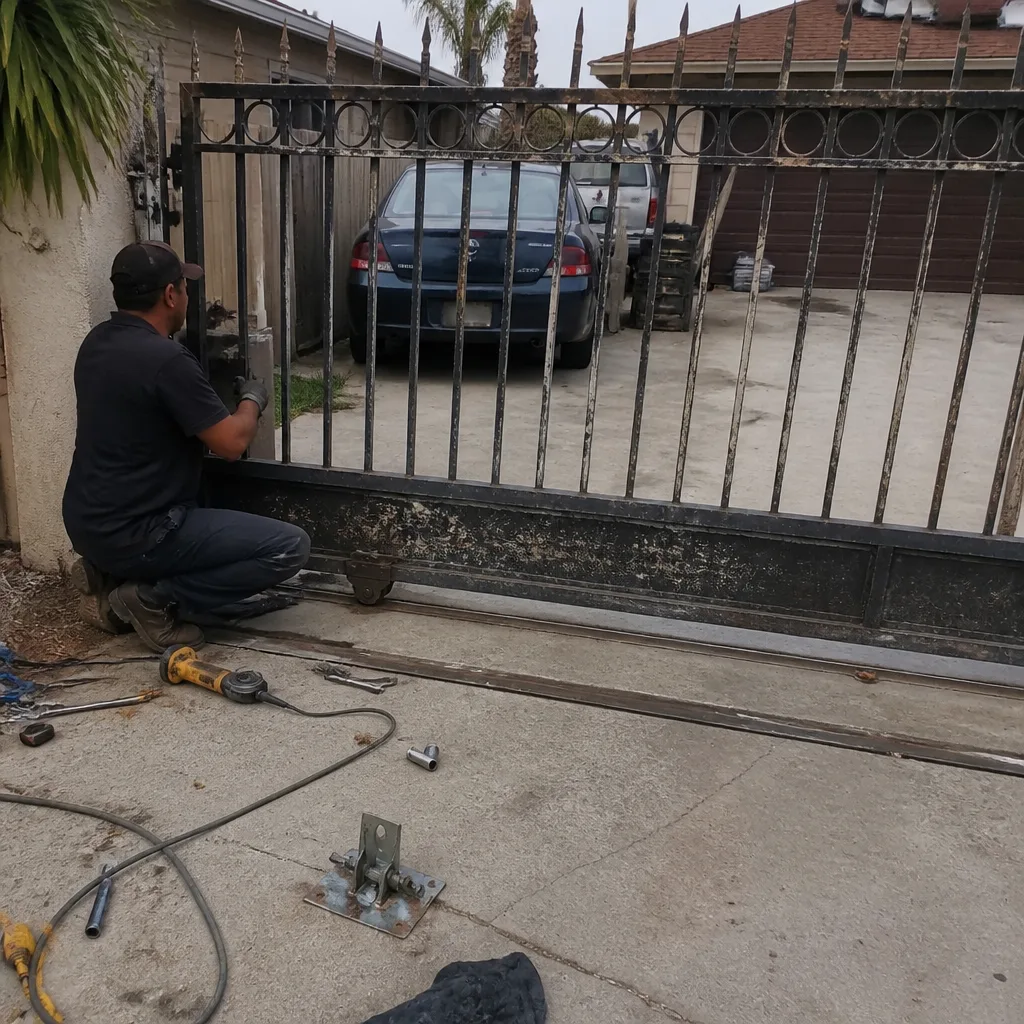 Before
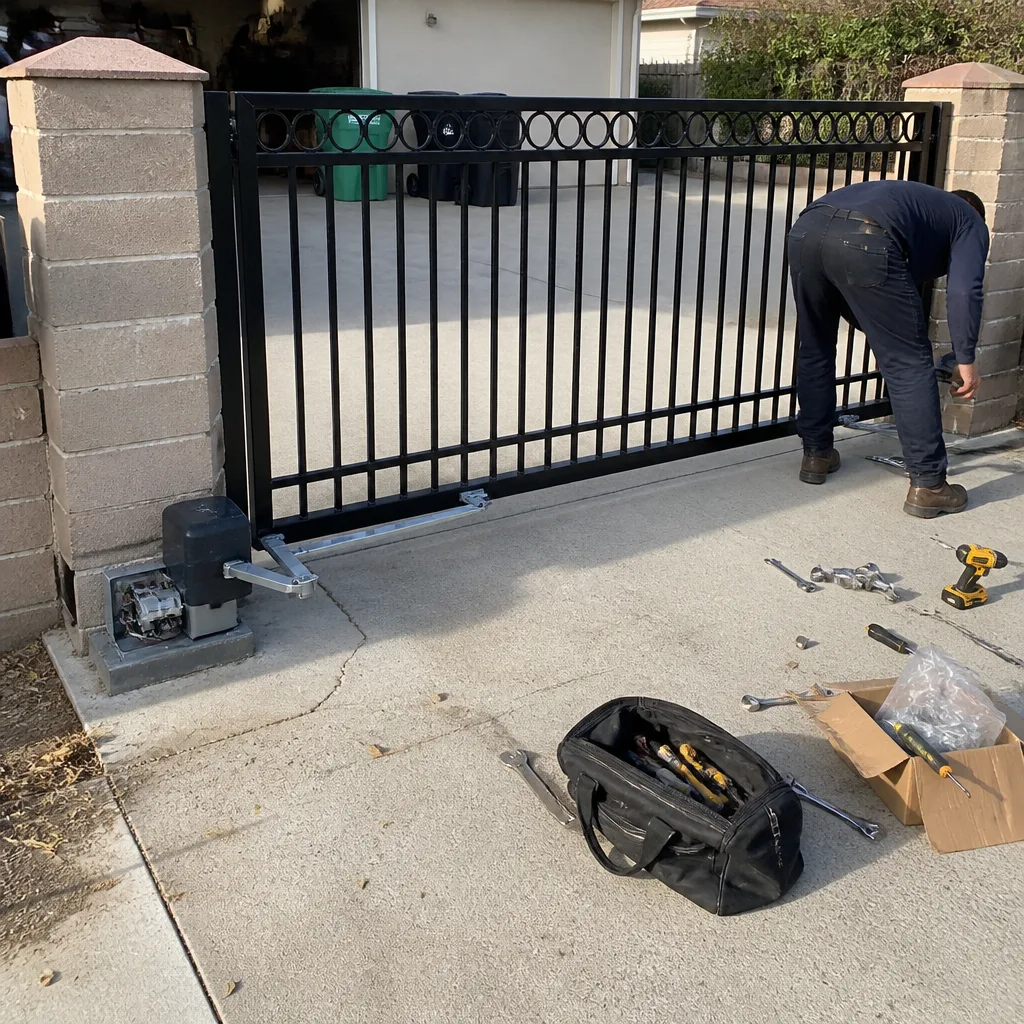 After
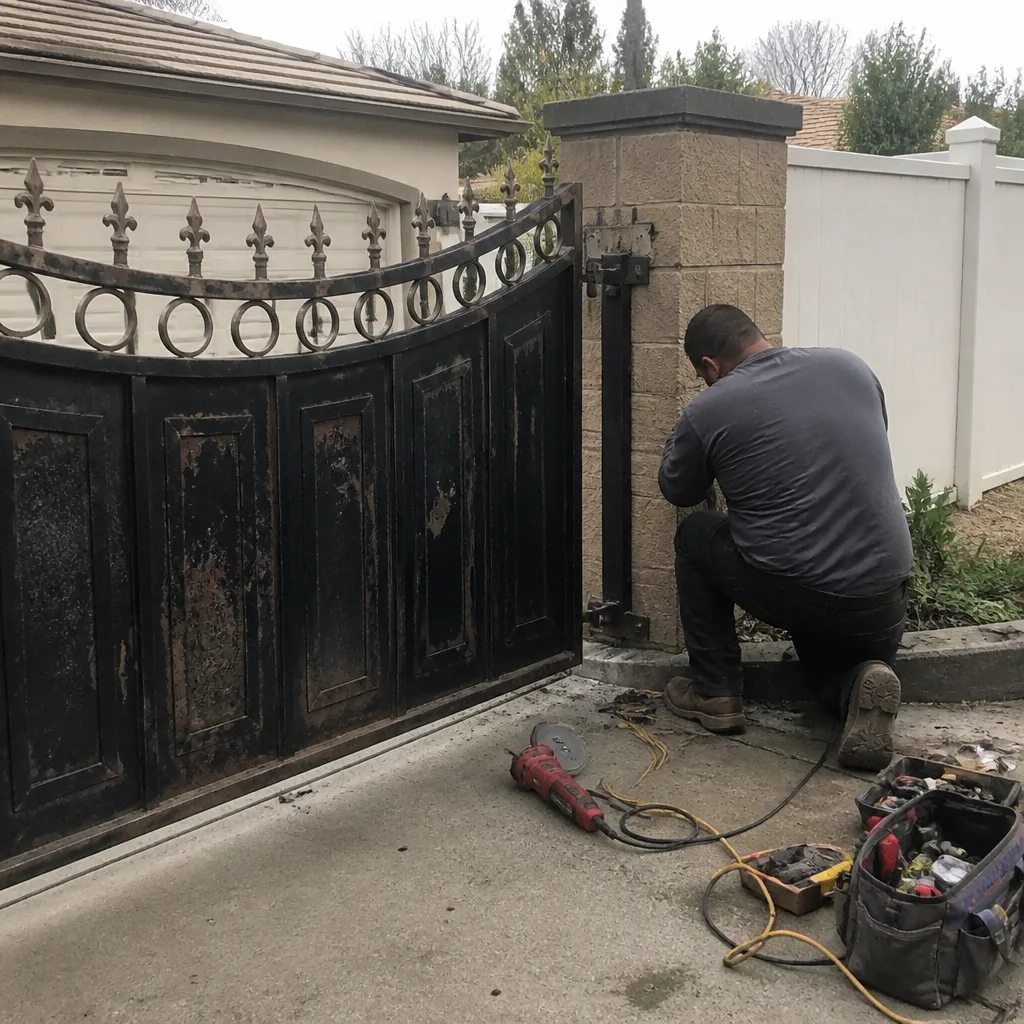 Before
 After
 Before
 After