
Last updated October 30, 2026
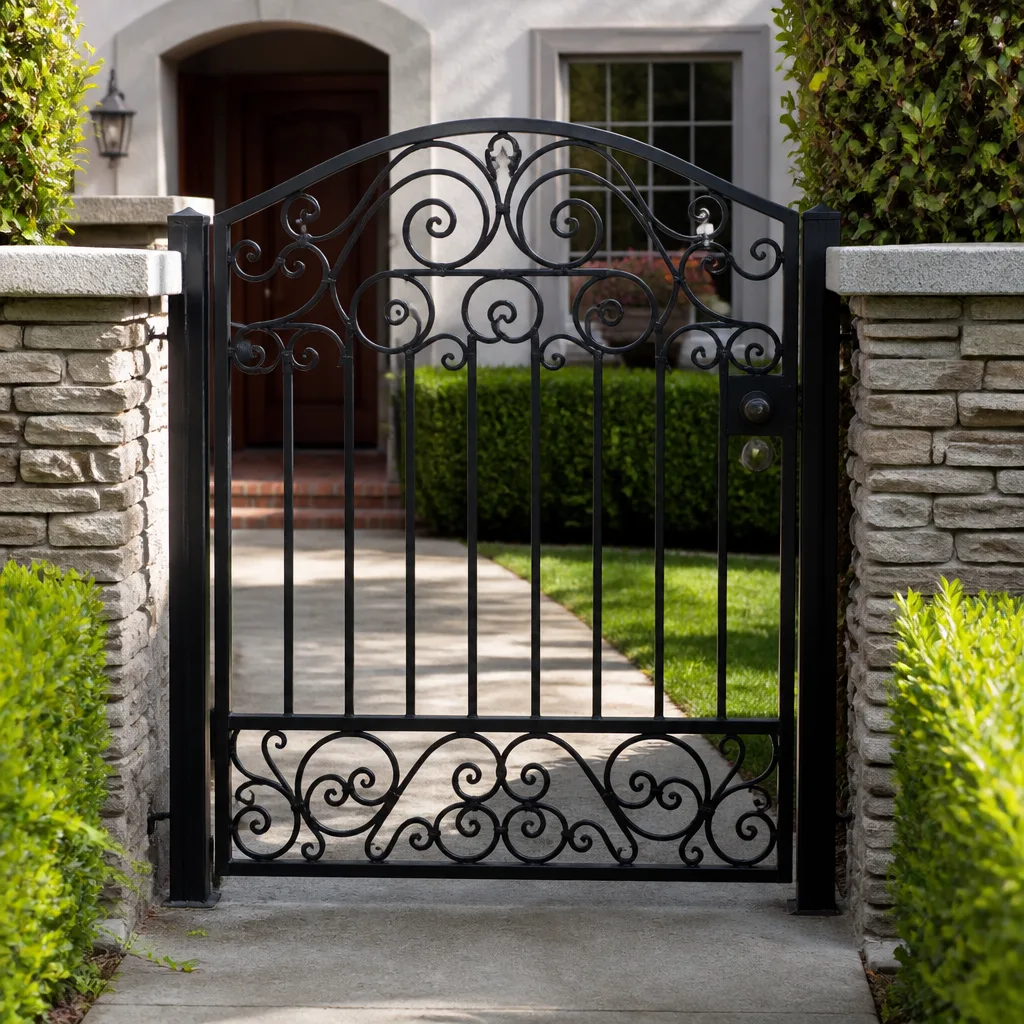 Wrought iron
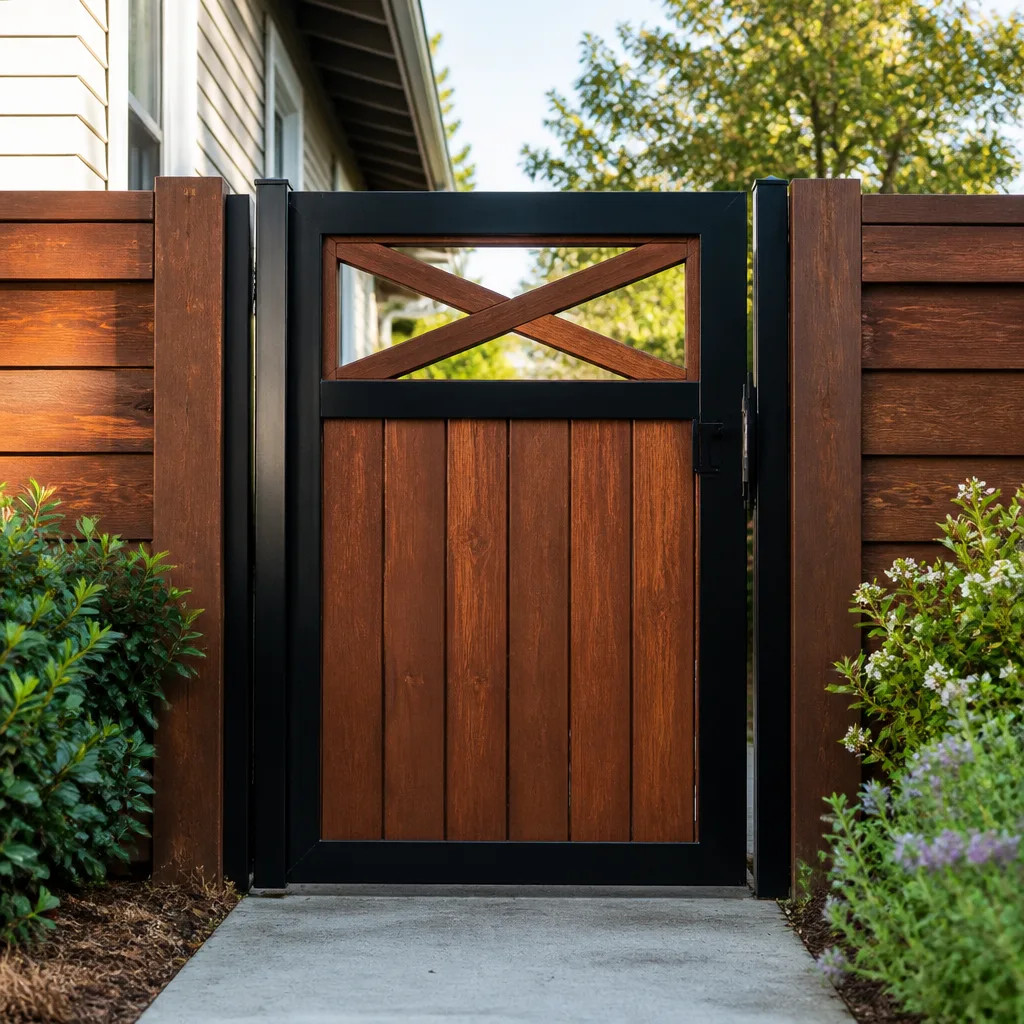 Wood & steel frame
 Farm & ranch
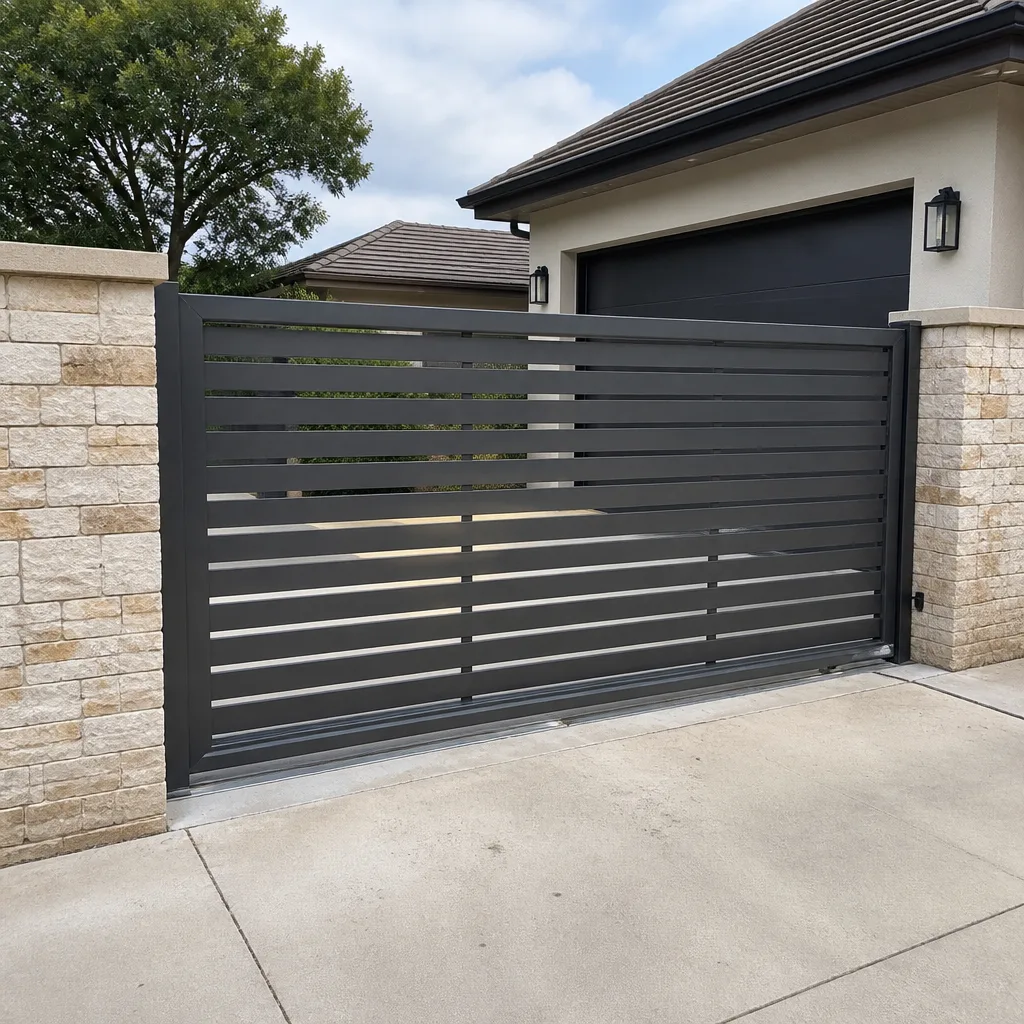 Sliding driveway gates
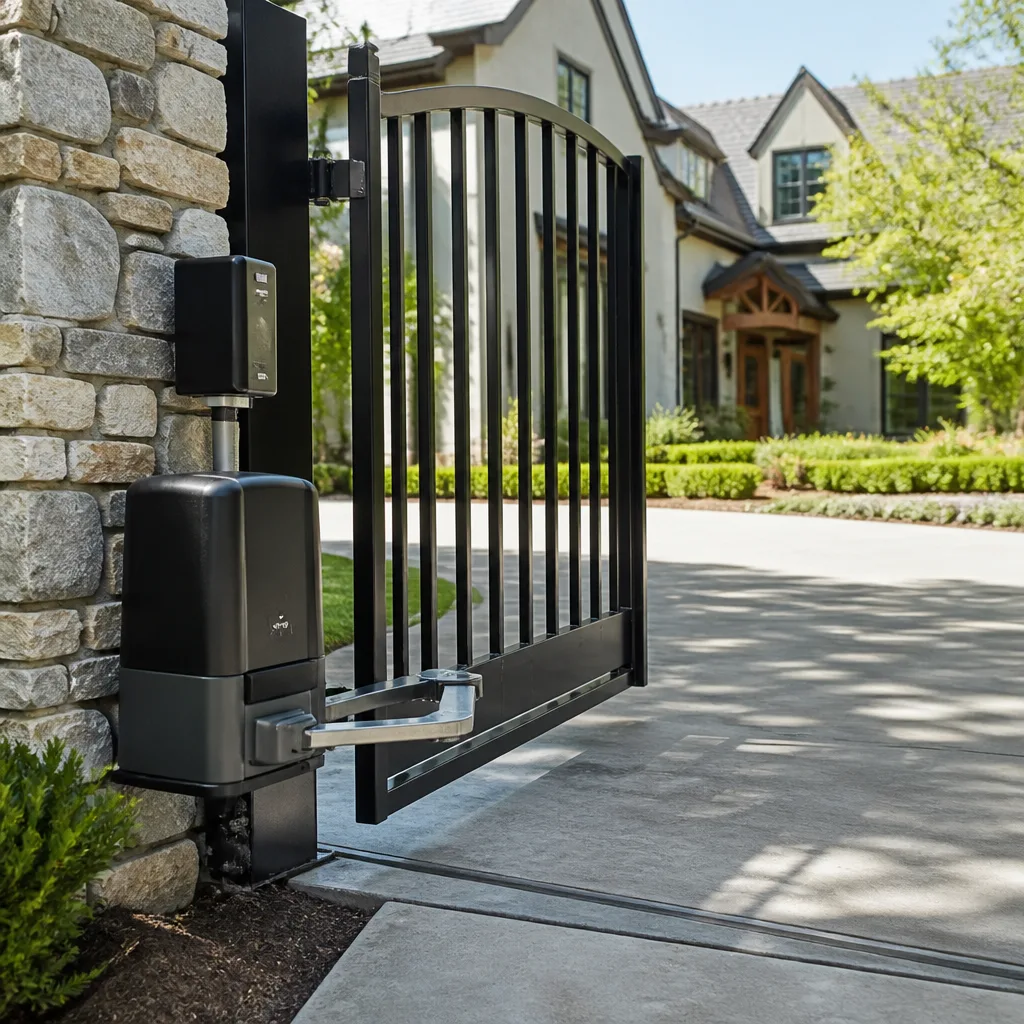 LiftMaster operators
Free on-site gate assessment - hinges, posts, and your LiftMaster or Nice gate operator checked before anything is quoted
The assessment is free and the quote is the invoice.
Get your free estimateSeasonal Gate Repair Care for Fontana: Year-Round Homeowner’s Guide
The single most common gate failure call we get in Fontana comes in October, not because anything broke that month, but because summer heat silently killed the battery backup, and the first power flicker of fall exposed it. Fontana doesn’t reward homeowners who follow generic seasonal gate maintenance advice written for places with snow and frost. You don’t need a four-season checklist here. You need a two-season battle plan built around what actually happens to gate hardware, motors, and control boards when temperatures climb past 95°F in July and when winter rain soaks the soil around your gate posts. This guide structures year-round gate care for Fontana around the climate you actually live in. By the time you finish reading, you’ll know exactly when to inspect, what to inspect, and what to do before a small problem becomes a locked-out emergency.
Styles & brands we work with
Quick Answer
Seasonal gate care in Fontana means doing a focused 20-minute inspection four times a year, with the two most critical checkpoints being late April before summer heat arrives and mid-October before the first fall power flicker exposes a heat-damaged battery. The most important tasks are testing your gate operator’s battery backup in spring, monitoring for thermal shutdown symptoms during heat waves above 95°F, replacing batteries in October, and applying rust inhibitor to hardware before the winter rain season. Homeowners who follow this calendar cut emergency Gate Repair calls by more than half.
Table of Contents
- Why Fontana’s Climate Punishes Gates Differently
- Pre-Summer Protocol: April Through May
- Peak Summer Monitoring: June Through September
- Fall Transition: October Through November
- Winter and Wet Season: December Through March
- A 20-Minute Seasonal Gate Maintenance Calendar
- Common Mistakes to Avoid
- When to Call a Professional
- Frequently Asked Questions
Why Fontana’s Climate Punishes Gates Differently
Fontana sits in the Inland Empire, which means summer is not a suggestion; it’s a sustained assault. Between June and September, daytime highs routinely exceed 90°F, and stretches above 100°F are common in July and August. Gate operators mounted on metal posts in direct sun can reach internal temperatures 30 to 40 degrees hotter than the air around them. That heat cooks capacitors, degrades solder joints on control boards, and shortens battery life dramatically. A battery rated for five years in a coastal climate might last three in Fontana.
Winter in Fontana is mild by most standards, but it’s wetter than homeowners expect. Between December and March, rain events saturate the ground, and that moisture works its way into gate post footings, hinge hardware, and the conduits that carry low-voltage wiring to keypads and loop detectors. Water plus metal equals rust, and rust plus a moving gate equals binding, grinding, and eventual motor strain. The rain doesn’t freeze, which is good news, but it does linger, and when the ground swells and contracts through wet-dry cycles, your gate’s alignment shifts slightly. That shift is what causes limit switches to drift and gates to stop short or overtravel.
What all this means is simple: your gate maintenance calendar should not resemble one written for Seattle or Phoenix. It should be built around Fontana’s two punishing seasons, with proactive work done in the mild shoulder months of April-May and October-November.
Pre-Summer Protocol: April Through May
The work you do in April and May determines whether your gate survives July. This is the window to catch problems while the weather is still cooperative and before a technician’s calendar fills with heat-related emergency calls. Plan for one thorough inspection session of about 45 minutes. Here’s what to cover.
Battery Load Test
If your gate operator has a battery backup, and most automated driveway gates in Fontana do, late spring is the time to test it. Unplug the operator or trip the breaker, then operate the gate on battery power alone. Count how many open-close cycles you get before the gate slows or stops. A healthy battery should deliver multiple full cycles without noticeable lag. If your gate struggles after one or two cycles, replace the battery before June. Heat accelerates battery degradation, and a battery that’s already weak in April will be dead by August. We work on Linear and Viking operators regularly, and both brands’ battery systems respond the same way to heat stress: they fail gradually, then all at once.
Capacitor Inspection
Capacitors are the gate operator components most vulnerable to heat damage. If your operator’s capacitor is bulging, leaking, or showing discoloration around the terminals, it’s failing. A failing capacitor causes sluggish gate movement, humming without movement, or intermittent operation. These are the exact symptoms that worsen as temperatures climb. Replacing a $30 capacitor in May is far cheaper than replacing a burnt motor in August.
Shade and Ventilation Assessment
Look at where your gate operator is mounted. Is it in direct afternoon sun? Operators mounted on west-facing posts absorb the worst heat of the day. If you can’t relocate the operator, consider adding a shade screen or vented cover that doesn’t block airflow. The goal is to keep the internal temperature of the control box below the point where circuit boards start degrading. We’ve seen Ghost Controls operators in Fontana shut down on thermal overload simply because the control box sat in direct sun for six hours with no ventilation. A simple shade structure or repositioned enclosure prevents that.
Track and Hinge Lubrication
Spring is the right time to clean and lubricate the mechanical components. Use a dry silicone spray on hinges, rollers, and track surfaces. Avoid heavy grease, which collects dust and grit, accelerating wear. Fontana’s dry summer air means any lubricant you apply now will stay clean longer, reducing friction when heat makes metal expand and tolerances tighten.
Peak Summer Monitoring: June Through September
During Fontana’s summer, the work shifts from proactive repair to active monitoring. You’re not doing heavy maintenance between June and September. You’re watching for symptoms and responding before failure. The key is knowing what thermal distress looks like on an automated gate.
Weekly Checks During Heat Waves Above 95°F
When the forecast calls for sustained heat above 95°F, spend five minutes per week running through this checklist:
- Listen for changes in motor pitch: A strained or whining motor during operation signals increased load, often from heat-expanded metal components.
- Watch gate speed: Any noticeable slowdown during peak afternoon heat, with normal speed returning in the evening, points to thermal derating. This is the operator protecting itself, but continued operation under these conditions shortens its life.
- Check for error codes: Many DoorKing and Viking operators display error codes or flashing LED patterns when they overheat. Know what your operator’s normal status lights look like so you can spot abnormal patterns.
- Feel the control box: If the enclosure is too hot to touch comfortably, the components inside are under stress. This is especially true for operators with battery backups; excessive heat damages batteries even when they’re not in use.
Thermal Shutdown: What It Looks Like
Thermal shutdown happens when an operator’s internal temperature sensor triggers a protective stop. Symptoms include a gate that operates normally in the morning, refuses to move in the afternoon, then works again after sunset. Many homeowners misinterpret this as an intermittent electrical problem, but it’s the operator doing exactly what it was designed to do: shutting down before heat destroys the motor windings or control board. The danger is disregarding it. Every thermal shutdown event stresses internal components. Repeated shutdowns across a Fontana summer can permanently damage an operator that would otherwise last years longer.
If you see thermal shutdown patterns, call a gate specialist before the next heat wave. The fix is often ventilation improvement, capacitor replacement, or a control board upgrade, none of which require replacing the entire operator. Our approach at Estate Gate Repair home is simple: diagnose first, replace only what’s needed.
Battery Monitoring During Heat Waves
Summer heat is the single biggest killer of gate operator batteries. A sealed lead-acid battery stored at 100°F loses capacity significantly faster than one stored at 75°F. If your operator has been through multiple Fontana summers, that battery is on borrowed time. Check battery voltage if you’re comfortable doing so, or have a specialist perform a load test. If your battery is more than three years old and has survived more than one full Fontana summer, plan to replace it in October, even if it’s still working now. The fall power flicker is coming, and that’s when weak batteries get exposed.
Fall Transition: October Through November
October is the most important month in the Fontana gate care calendar. The heat has broken, the first Santa Ana wind events are arriving, and the power grid is under stress. This is when gate failures spike across the Inland Empire, and almost all of them trace back to damage that occurred months earlier.
The October Battery Replacement Window
We recommend replacing gate operator batteries in October, not when they fail. A battery that made it through a Fontana summer has lost a meaningful portion of its capacity, even if it still tests acceptable. When the first power interruption hits in October or November, that degraded battery may not deliver enough current to operate the gate under load. Homeowners then face a locked gate and an emergency service call. Replacing the battery proactively in October costs the same as replacing it reactively, but without the urgency. For operators from Viking, Linear, Ghost Controls, or DoorKing, battery replacement is straightforward, and the parts are readily available.
Limit Switch Recalibration
Fontana’s soil expands when wet and contracts when dry. Over the course of a dry summer, the ground around your gate posts shifts slightly. That shift affects gate alignment, which affects where the limit switches trip. If your gate has started stopping short or overtraveling slightly, October is the time to recalibrate the limit switches. This is a precision adjustment that matters: a gate that overtravels by even a few inches stresses the motor and can damage the rack or chain. A gate that stops short leaves a gap that compromises security. We handle this as part of a full tune-up, but mechanically inclined homeowners can manage it with the operator’s manual.
Full Tune-Up Timing
October is the best month for a comprehensive gate tune-up in Fontana. The weather is mild, the ground is stable, and you’re ahead of the winter rain. A full tune-up should include: battery testing or replacement, limit switch calibration, hinge and track lubrication, bolt tightening, control board inspection, capacitor testing, and a full cycle test. Think of it as an annual physical for your gate. Homeowners who do this every October rarely experience emergency failures in winter or the following summer.
Winter and Wet Season: December Through March
Fontana winters are mild, but the rain is real, and it creates problems that surprise homeowners who assume their gate is fine because it never freezes. Water intrusion is the enemy here, and it works slowly enough that you won’t notice until the gate starts binding, grinding, or shorting.
Rust Inhibitor Application
December is the month to apply rust inhibitor to all exposed gate hardware: hinges, bolts, chain drives, track surfaces, and any raw metal on the gate frame. Fontana’s winter rain alternates with dry, warm periods, creating exactly the wet-dry cycle that accelerates oxidation. A quality rust inhibitor applied before the rain season prevents surface rust from getting established. If you already have surface rust, address it now with a wire brush and a rust converter before applying inhibitor. Hardware that’s heavily rusted should be replaced before it binds or breaks under load.
Drainage Checks Around Gate Posts
Walk around your gate posts after the first heavy rain. Look for standing water near the post bases or around the operator pedestal. Gate posts set in soil that doesn’t drain properly are subject to movement as the soil swells with moisture. That movement misaligns the gate, throws off the limit switches, and strains the motor. In severe cases, saturated soil can cause post lean. Fix drainage issues while they’re small: regrade the soil so water flows away from posts, add gravel drains around post bases, and clear any debris blocking drainage channels.
Loop Detector Performance After Ground Saturation
If your automated gate uses an in-ground loop detector for vehicle detection, pay attention to its performance during and after extended rain. Saturated ground changes the electrical characteristics of the loop, which can cause the detector to false-trigger or fail to detect vehicles. Symptoms after heavy rain include a gate that opens randomly with no vehicle present, or a gate that doesn’t open when a vehicle approaches the exit loop. These symptoms often resolve as the ground dries, but if they persist, the loop may need to be re-tuned or replaced. This is a specialized repair that requires a gate specialist with loop detector experience.
Wiring and Connection Inspection
Winter is the time to inspect all low-voltage wiring connections for corrosion. Check the connections at the keypad, push-button, photo eyes, and loop detector terminals. Fontana’s wet-dry winter cycles promote corrosion at any connection that’s even slightly exposed. Clean corroded terminals with a wire brush, apply dielectric grease to protect connections, and replace any wiring that shows green corrosion or insulation cracking. These small fixes prevent the intermittent faults that always seem to show up exactly when you need the gate to work.
A 20-Minute Seasonal Gate Maintenance Calendar
Here’s the simple calendar we recommend to Fontana homeowners. Each session takes less than 20 minutes, and together they cut emergency gate service calls by more than half. The logic is straightforward: small problems caught early are cheap to fix; problems discovered at 9pm on a Sunday are expensive and inconvenient.
Step 1: Late April – Pre-Summer Check
- Test battery backup by operating the gate on battery power alone. Note cycle count.
- Inspect capacitor for bulging, leaking, or discoloration.
- Check that the operator enclosure is shaded or ventilated for the coming heat.
- Lubricate hinges, rollers, and track with silicone spray.
Step 2: July Through August – Weekly Heat Wave Watch
- Listen for abnormal motor noise during operation.
- Watch for gate slowdown during afternoon heat.
- Check for thermal shutdown symptoms: gate stops working in afternoon, works at night.
- Feel the control box for excessive heat.
Step 3: Mid-October – Fall Reset
- Replace the battery backup if it’s more than three years old or showed weakness in April.
- Recalibrate limit switches if the gate is stopping short or overtraveling.
- Schedule a full tune-up if you haven’t had one in the past 12 months.
- Tighten all accessible bolts and hardware.
Step 4: December – Winter Weatherproofing
- Apply rust inhibitor to all exposed metal hardware.
- Check drainage around gate post bases and operator pedestal.
- Inspect low-voltage wiring connections for corrosion.
- Test loop detectors after the first heavy rain.
That’s four sessions per year, roughly 80 minutes total. The alternative is a surprise emergency call when the gate won’t open and you’re late for work. Fontana gate owners who follow this calendar almost never have that problem.
Common Mistakes to Avoid
- Waiting for failure before replacing the battery. The battery backup doesn’t fail gracefully in Fontana’s heat; it dies silently during summer and leaves you locked out during an October power flicker. Replace it on a schedule, not on a failure.
- Ignoring thermal shutdown symptoms. A gate that quits working in the afternoon and works fine in the morning is not an intermittent mystery; it’s a clear signal that the operator is overheating. Each occurrence shortens the operator’s life. Address it before the next heat wave.
- Using heavy grease instead of silicone spray. Grease collects Fontana’s dust and grit, turning lubrication into abrasion. Dry silicone spray lubricates without attracting debris, which matters in a climate with months of dry, dusty conditions.
- Assuming winter rain is harmless because it doesn’t freeze. The rain-soil cycle in Fontana causes gate post movement that many homeowners attribute to wear. Check drainage and post stability every December, not just when something visibly shifts.
- Recalibrating limit switches as a first response to every problem. When a gate stops short or overtravels, the limit switch is often reacting to a mechanical alignment issue, not causing it. Fix the alignment first, then calibrate. Adjusting limit switches on a misaligned gate just masks the problem.
- Testing the battery in winter and assuming it’s fine for summer. A battery that passes in January may fail in July. Heat, not cold, is the killer in Fontana. Test in spring, replace in fall.
- Treating a gate as a set-and-forget appliance. Unlike a garage door opener that lives in a sheltered garage, a driveway gate operates outdoors in full weather exposure every single day. It needs seasonal attention, and Fontana’s climate demands attention on a specific schedule, not a generic one.
When to Call a Professional
Some gate maintenance tasks are homeowner-appropriate, and some aren’t. If your gate operator shows thermal shutdown symptoms and you’re not comfortable diagnosing the cause, call a specialist. If your loop detector misbehaves after rain and doesn’t resolve when the ground dries, that’s a technical repair most general contractors won’t touch. If your gate post is leaning, if your motor hums but the gate doesn’t move, or if your control board shows error codes you don’t recognize, stop troubleshooting and call someone who works on gates every day. Gate-only specialists diagnose faster because they’re not dividing their attention across other trades, and they carry parts for the brands homeowners actually own. We work on the brand you already have, from the motor to the control board. Estate Gate Repair offers free estimates in Fontana. Call (866) 893-2220 if you need an expert to take a look. We’d much rather catch a capacitor in April than replace a motor in August.
Frequently Asked Questions
Schedule a full professional tune-up once per year, ideally in October, and perform a 20-minute homeowner inspection four times per year following the seasonal calendar outlined in this guide. Fontana’s heat and winter rain cycles make annual service the minimum for reliable operation. Call (866) 893-2220 to book a tune-up.
That’s thermal shutdown, and it happens when your gate operator’s internal temperature exceeds the safety threshold because the operator is mounted in direct sun, the enclosure lacks ventilation, or the capacitor is failing. Resolve it by improving shade and ventilation, replacing the capacitor if needed, or relocating the operator enclosure. Continued thermal shutdown events will permanently damage the control board.
Most gate operator batteries last three to four years in Fontana, compared to five or more in milder climates. The heat dramatically shortens battery life, even for batteries that are never used during normal operation. Replace your battery every three years, or annually in October if your operator sits in direct afternoon sun.
Use dry silicone spray, not heavy grease. Fontana’s dry, dusty summer means grease collects grit and turns into a grinding compound that accelerates hinge and track wear. Silicone spray lubricates without attracting debris and lasts through the dry season.
Yes, if you have the operator’s manual and you’re comfortable following its instructions. The key is to confirm that the gate is mechanically aligned first; recalibrating limit switches on a misaligned gate only hides the real problem. If the gate returns to misalignment within weeks, you have a post movement or hinge wear issue that needs professional attention.
Random opening after heavy rain usually points to a loop detector that’s been affected by ground saturation. Waterlogged soil changes the electrical field the detector reads, causing false triggers. This often resolves as the ground dries, but if it persists, the loop detector needs re-tuning or replacement by a gate specialist. For expert loop detector work in Fontana, call (866) 893-2220.
The Bottom Line
Fontana gates don’t fail by accident; they fail on a schedule that follows the city’s climate. Summer heat destroys batteries and control boards. Winter rain corrodes hardware and shifts gate posts. The homeowner who works with that schedule, testing batteries in April, monitoring during heat waves, replacing batteries in October, and weatherproofing in December, will face far fewer emergencies than the homeowner who waits for something to break. Four short maintenance sessions per year, totaling about 80 minutes, are enough to keep most Fontana gates running reliably through every season. And when something does go wrong beyond basic maintenance, a gate-only specialist who works on your specific brand can diagnose and fix it faster than anyone who treats gates as a side service (our Choosing the Right Gate Repair Brand: A Buyer’s Guide for Fontana explains why this matters). Your gate, our specialty.
Written by the team at Estate Gate Repair, serving Fontana since 2015. Explore more guides & resources.
See the difference
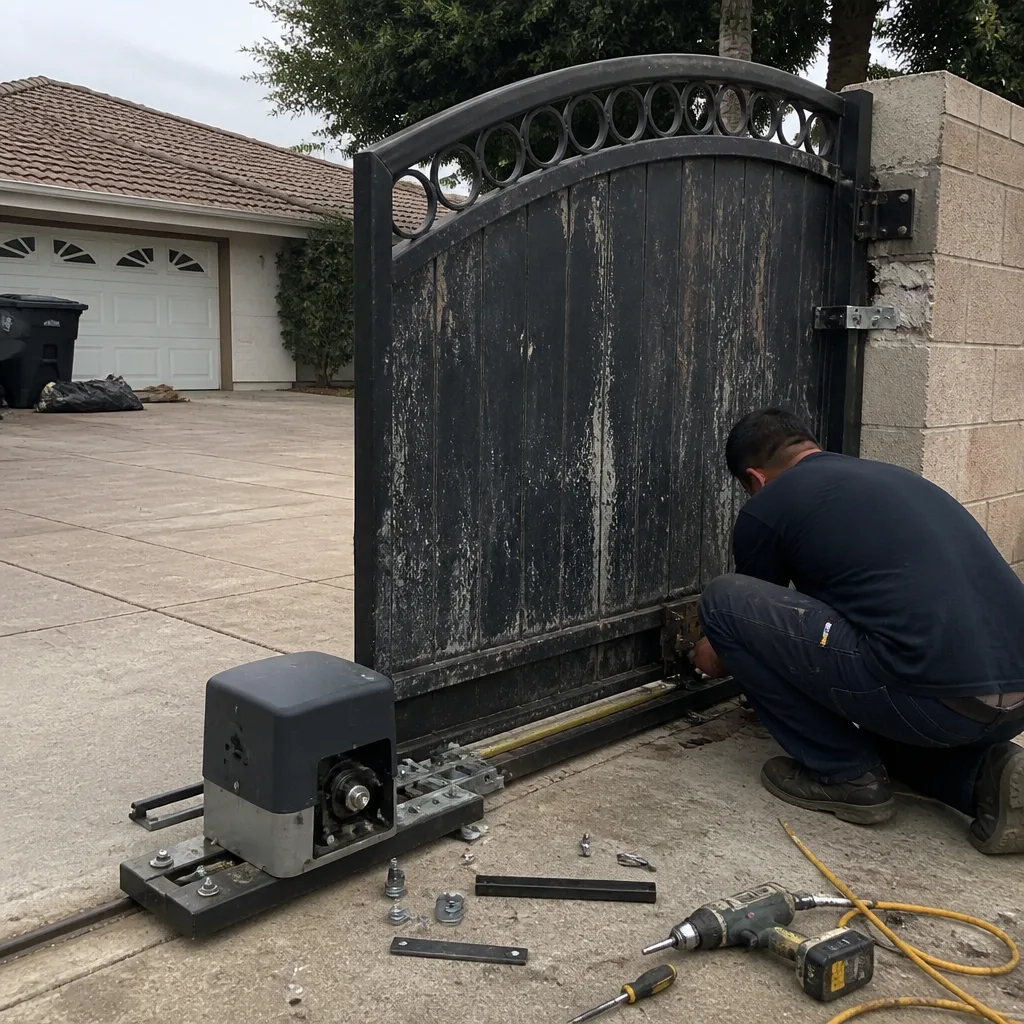
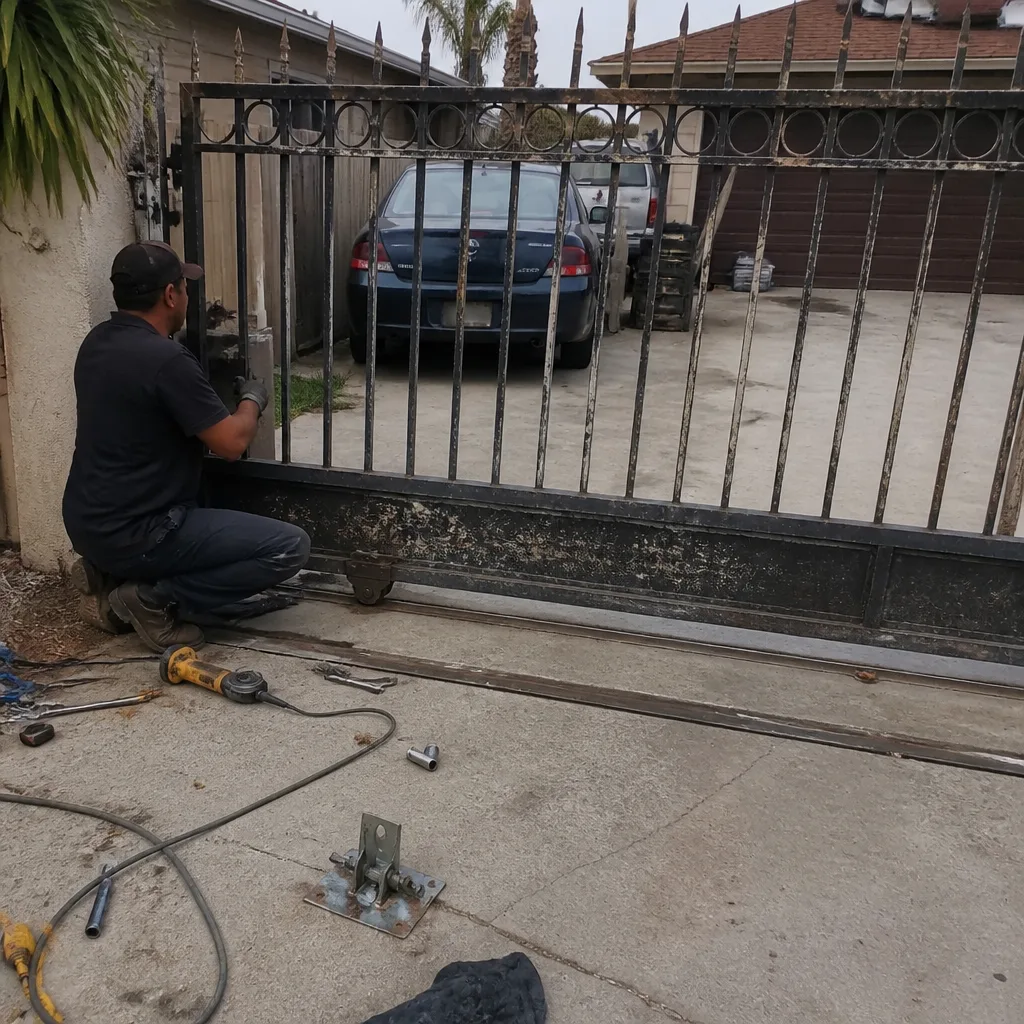 Before
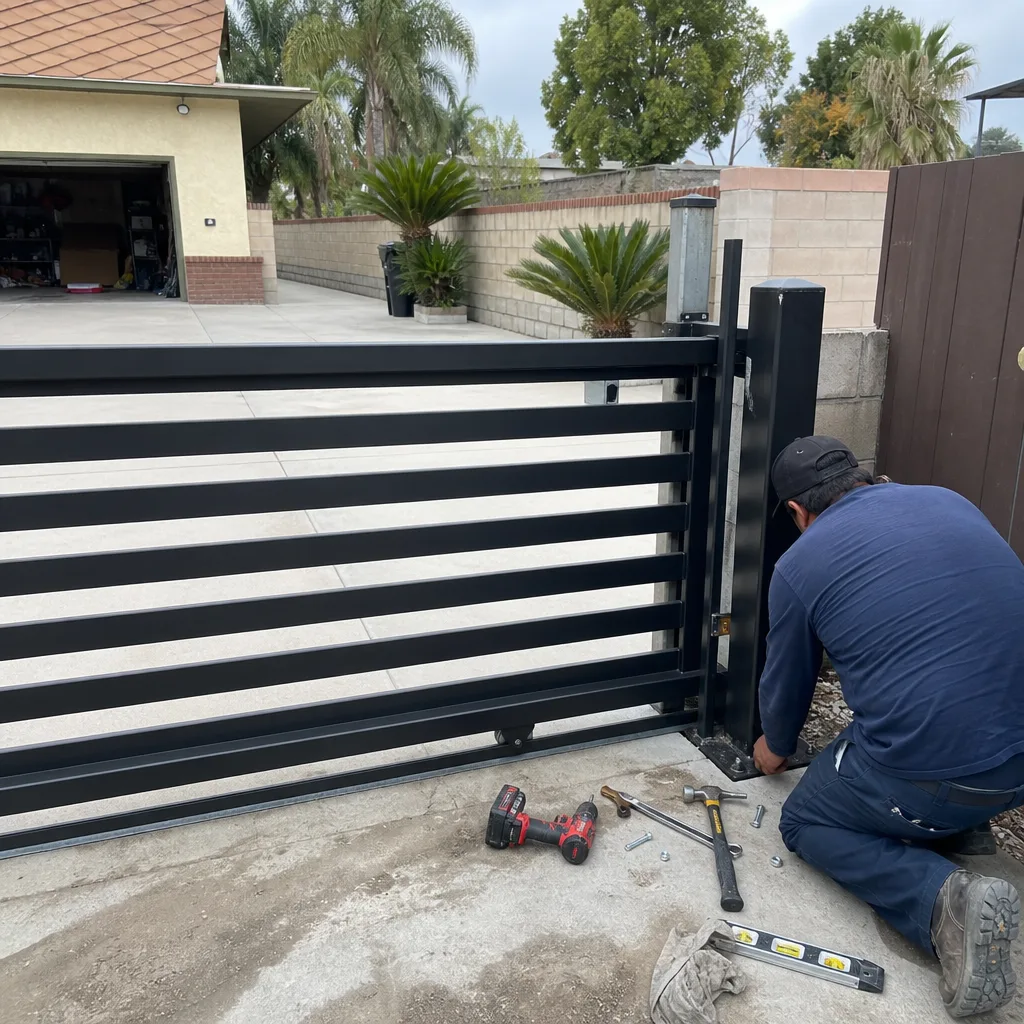
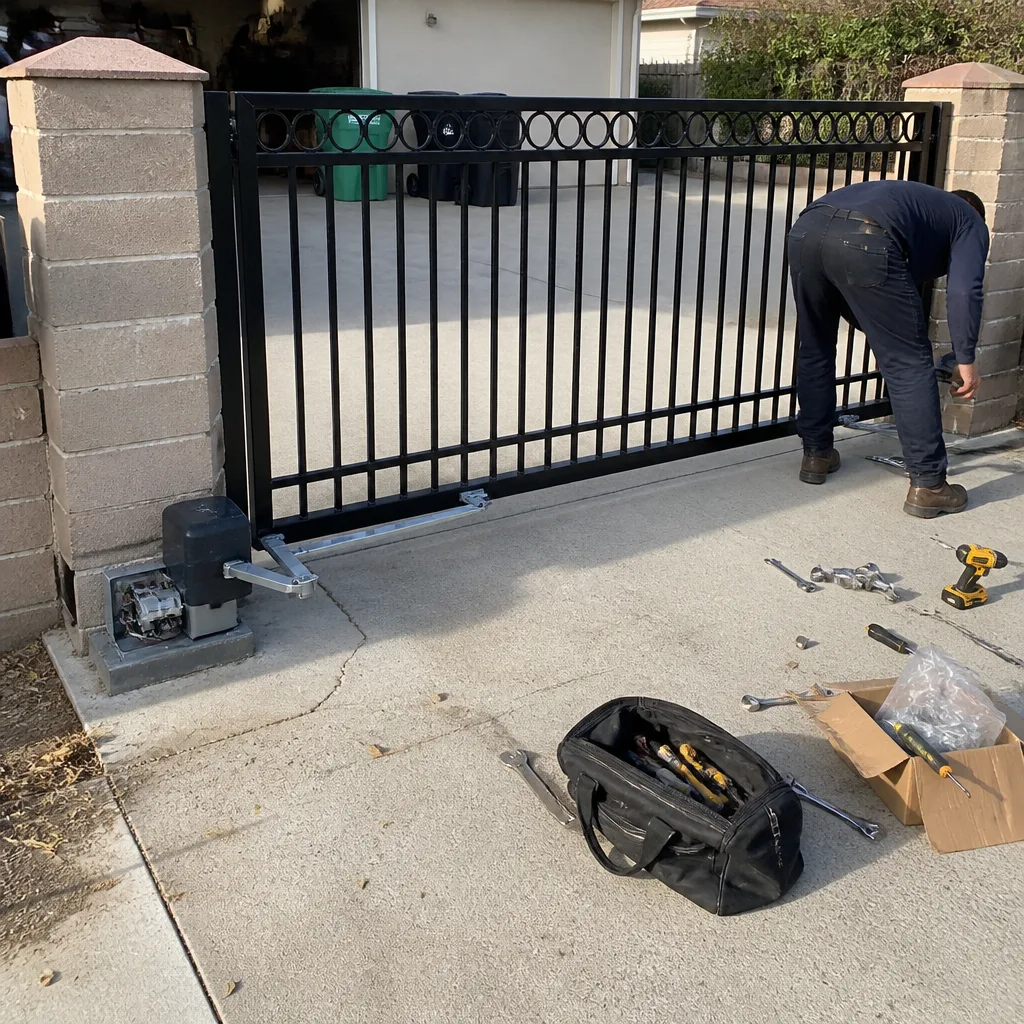 After
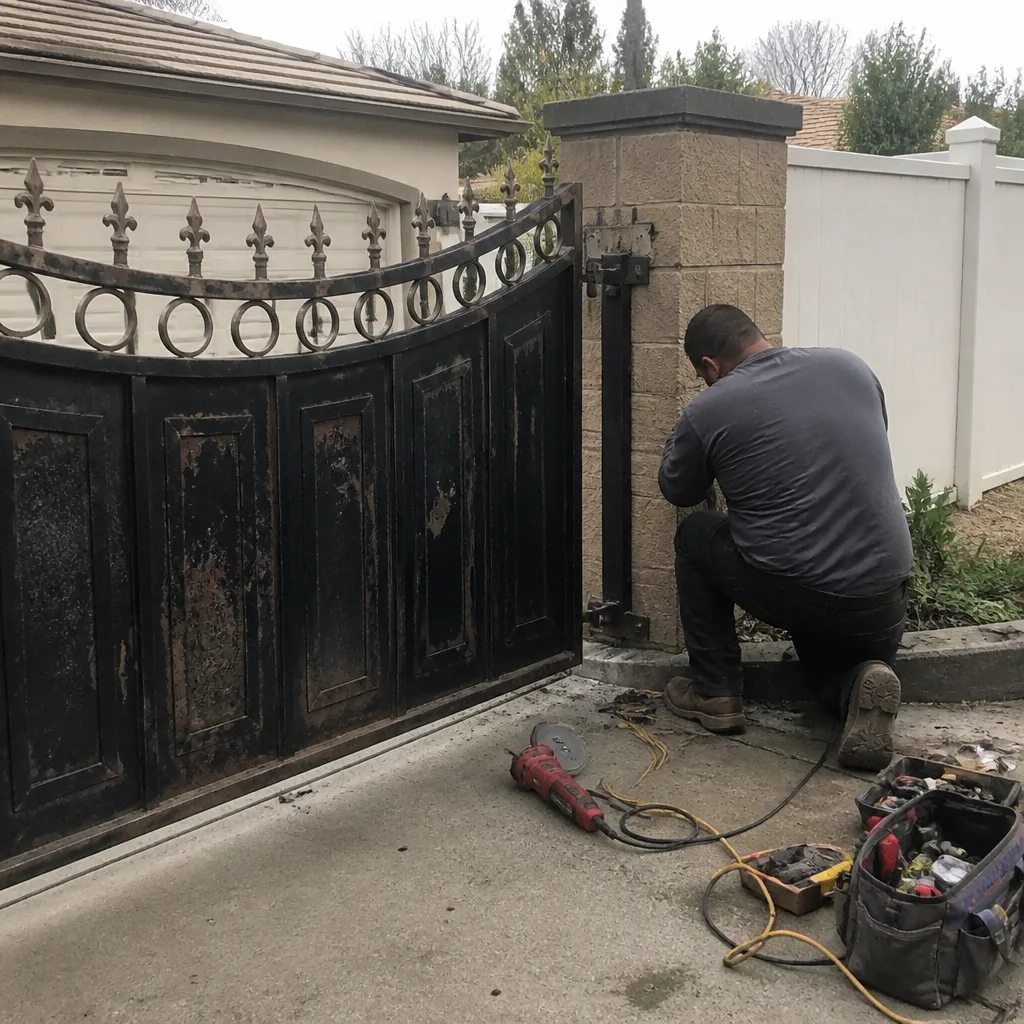 Before
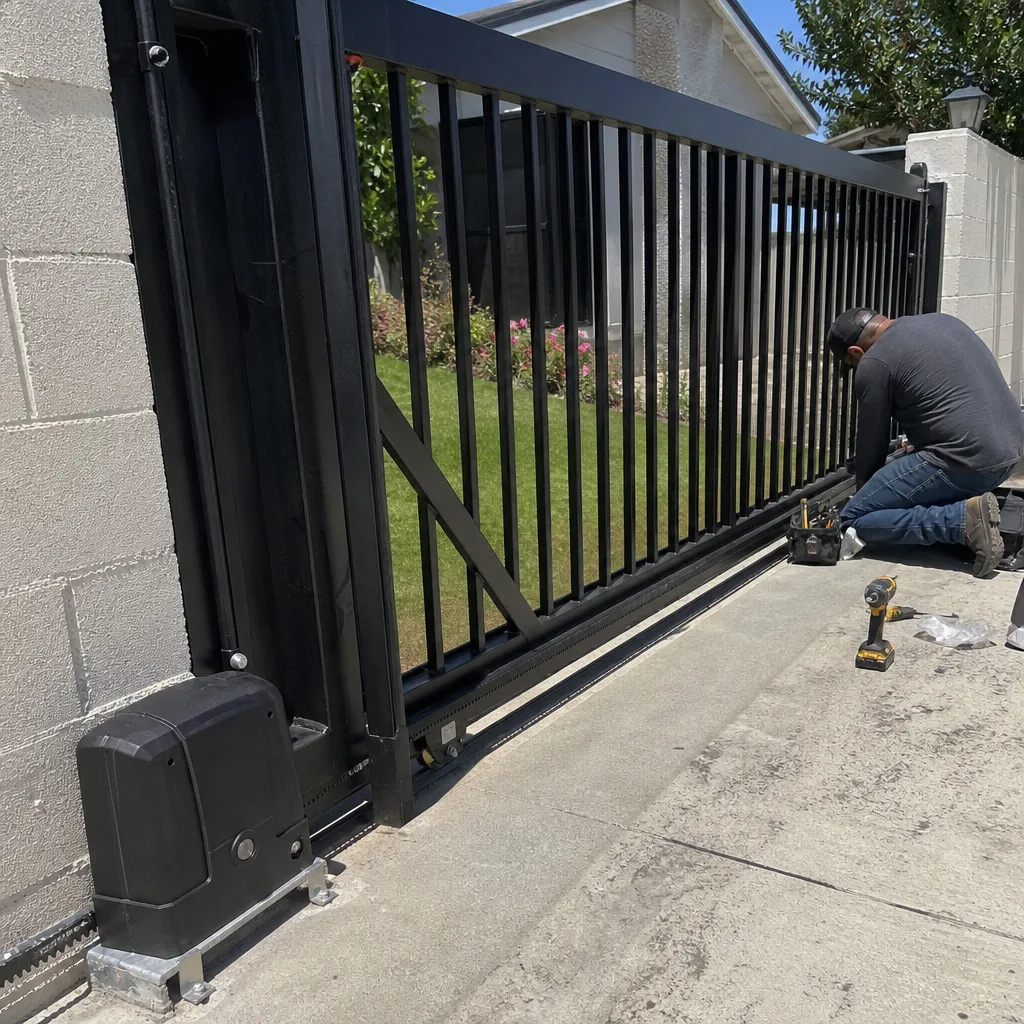 After
 Before
 After