
Last updated October 30, 2026
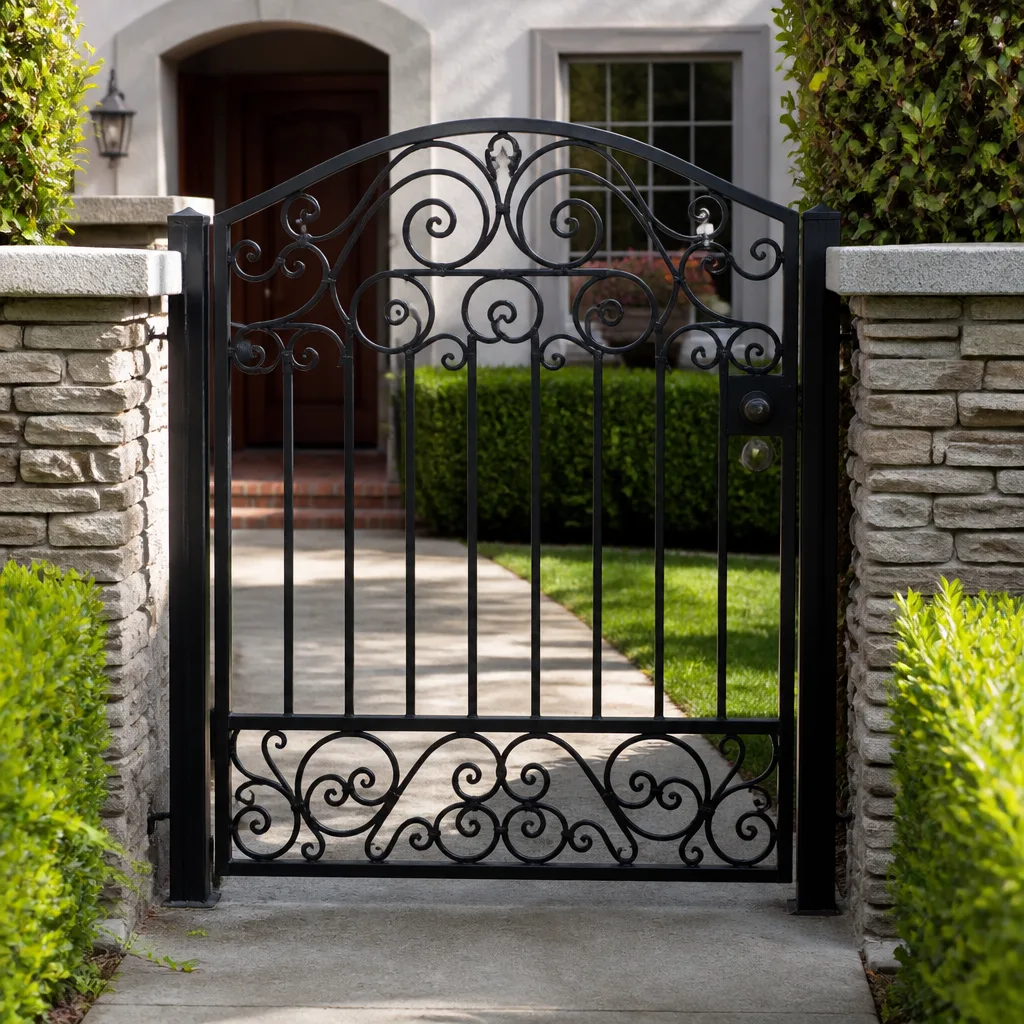 Wrought iron
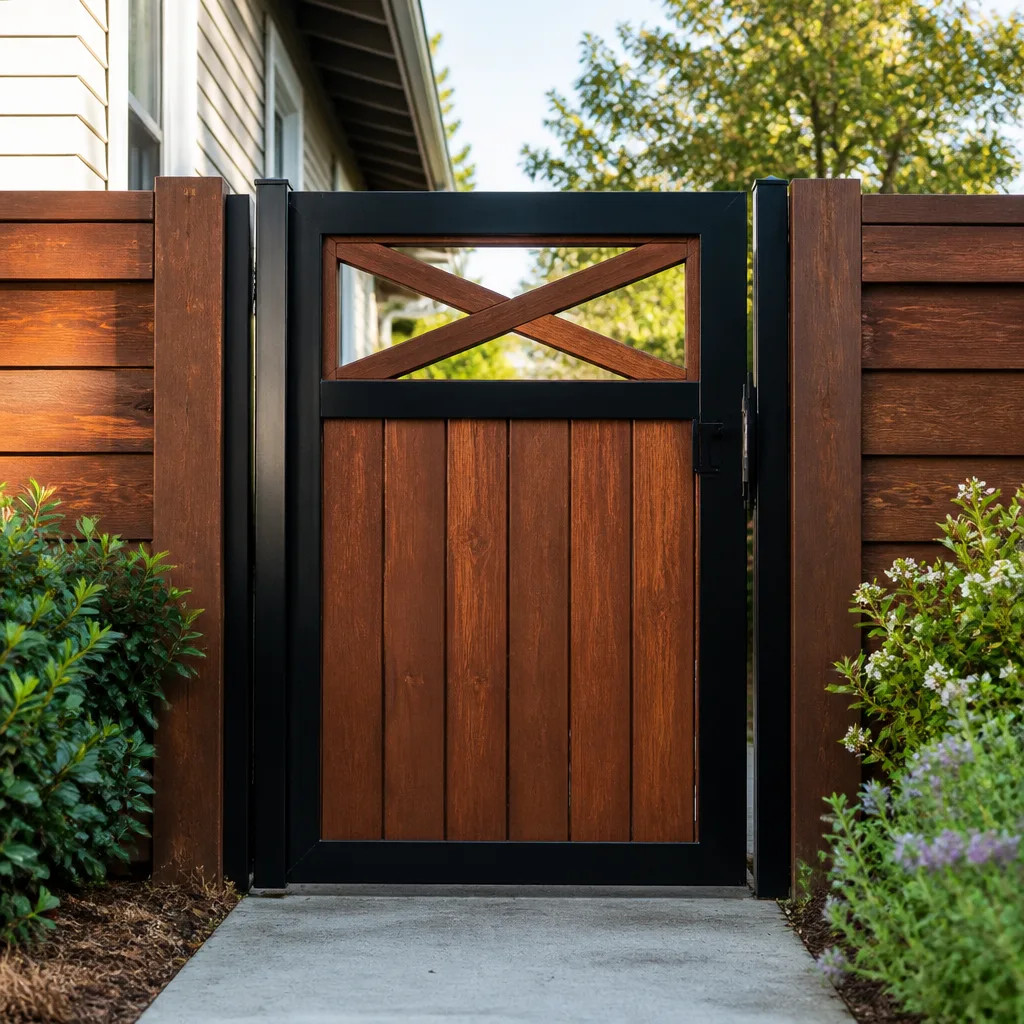 Wood & steel frame
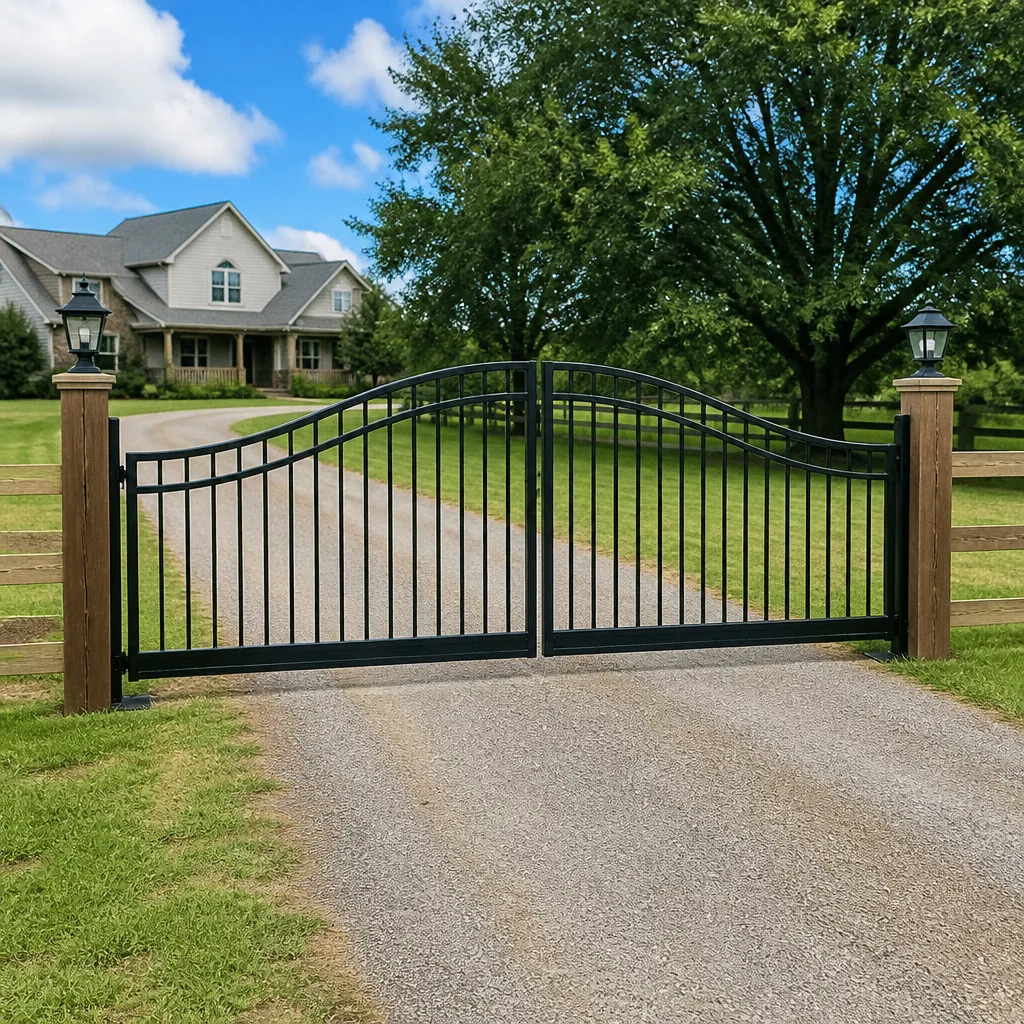 Farm & ranch
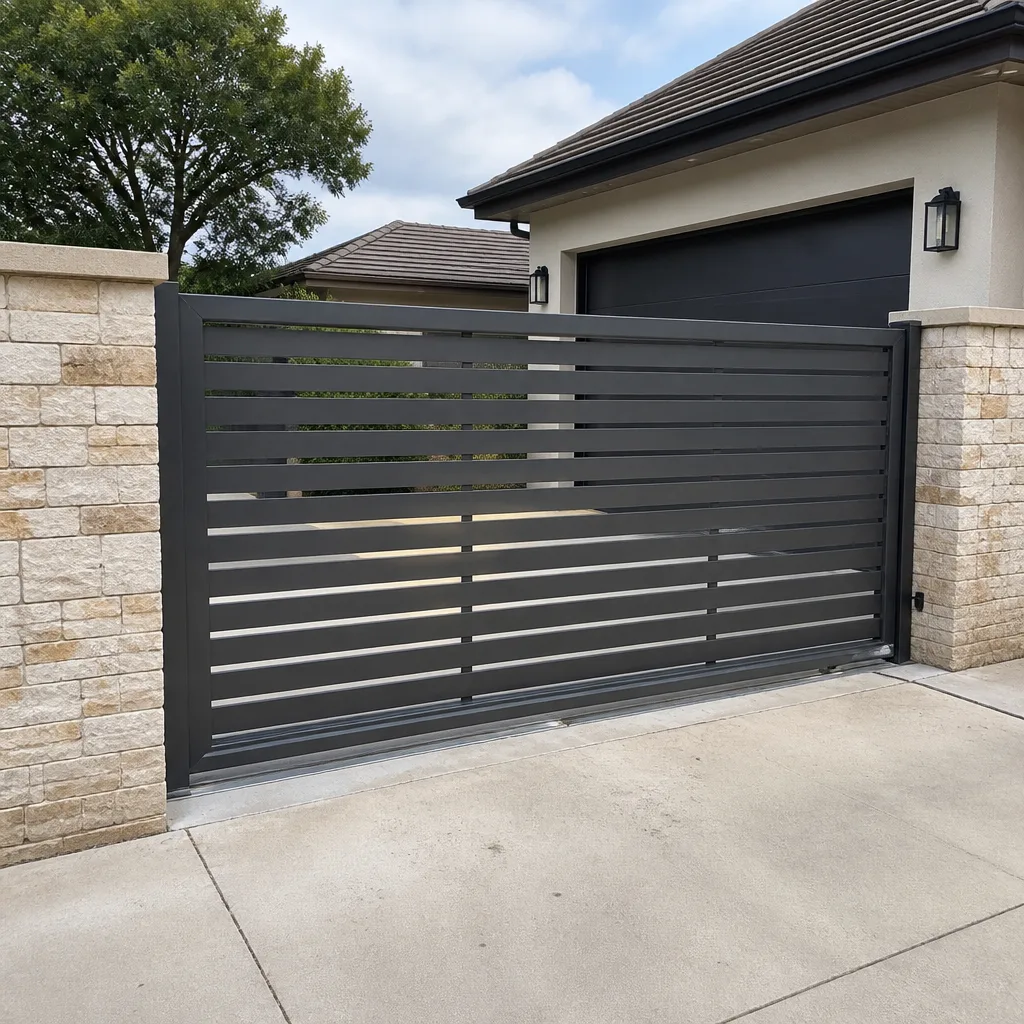 Sliding driveway gates
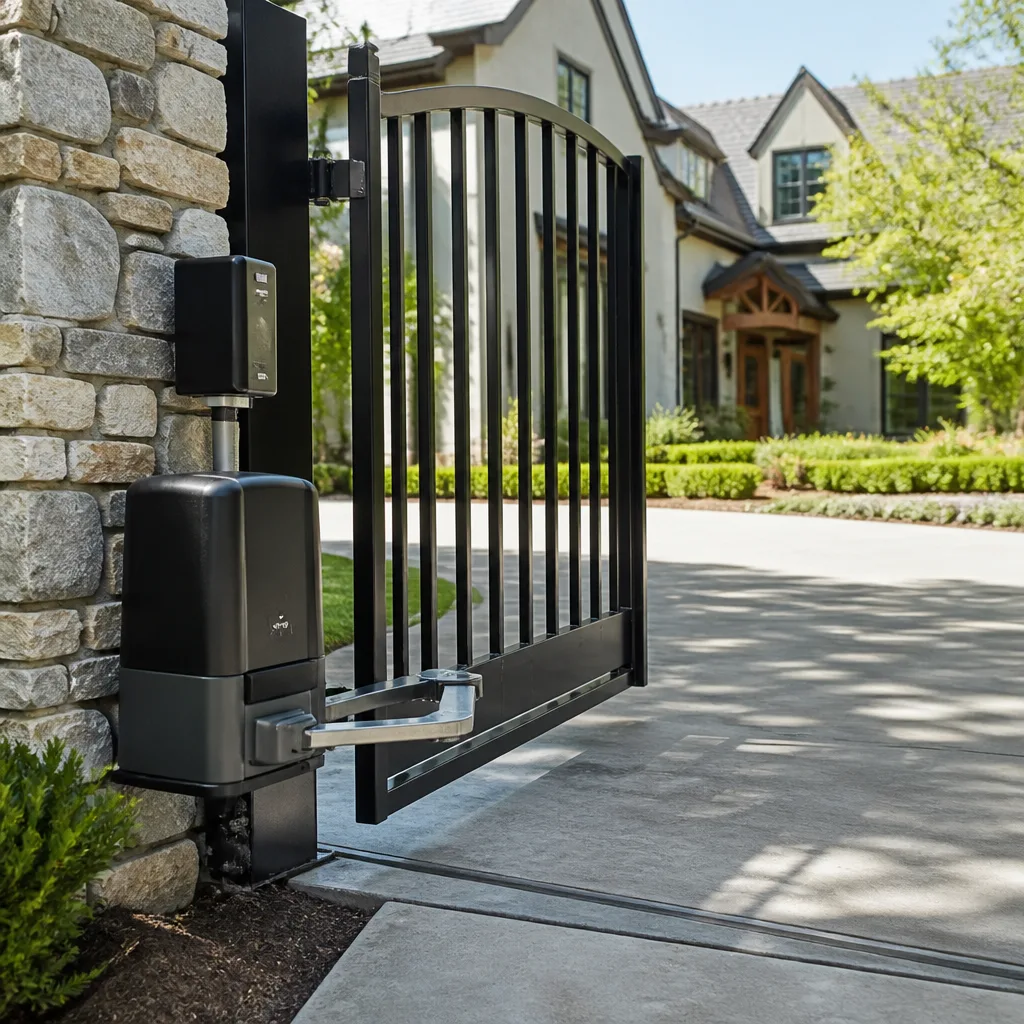 LiftMaster operators
Free on-site gate assessment - hinges, posts, and your LiftMaster or Nice gate operator checked before anything is quoted
The assessment is free and the quote is the invoice.
Get your free estimateThe Complete Guide to Gate Repair in Fontana
Here’s what most Fontana homeowners never hear: more than 60% of gate motor replacements performed by general handymen were unnecessary. The original motor worked fine. The real problem lived in a failed capacitor, a misaligned limit switch, or a corroded wire nut that should have taken an hour to repair. This guide breaks down the five root-cause failure categories behind almost every gate breakdown in Fontana, so you can identify your actual problem before you call anyone. If you’re dealing with a gate that won’t open, a motor that hums but doesn’t move, or an access system that suddenly stopped responding, you’re about to learn more than most technicians will ever explain.
Quick Answer
Gate repair in Fontana generally costs between $150 for a simple part swap (capacitor, limit switch, hinge) and $2,500 for a full automation system replacement, with most repairs landing in the $300 – $800 range. See our Gate Repair Cost Breakdown: The Fontana Homeowner’s Reference for 2026 for detailed pricing by repair type. The majority of gate failures trace to five root causes: heat stress on control boards, misaligned limit switches, corroded electrical connections, mechanical wear on hinges and rollers, and power supply faults. A proper diagnostic identifies which of these is actually failing before any part gets replaced.
Styles & brands we work with
Table of Contents
- The Five Root Causes Behind Most Fontana Gate Failures
- Mechanical, Electrical, or Automation: How to Tell Before You Call
- Why Fontana Heat Kills Gate Capacitors
- Repair Paths for the Operators Fontana Homes Actually Use
- Questions That Confirm a Root-Cause Diagnosis
- Why Brand Fluency Matters for Gate Repair
- Repair, Replace, or Install: Understanding the Full Gate Lifecycle
- Common Mistakes to Avoid
- When to Call a Professional
- Frequently Asked Questions
- The Bottom Line
The Five Root Causes Behind Most Fontana Gate Failures
Every gate breakdown lands in one of five categories. The trick is knowing which one before you spend money. We’ve diagnosed thousands of gates across Southern California, and the pattern holds in Fontana neighborhoods from Sierra Lakes to Southridge: heat-related electronics stress, limit switch drift, corrosion, mechanical wear, and power faults account for nearly every service call we see.
1. Heat Stress on Electronics and Control Boards
Fontana’s inland summers routinely push past 100°F in July and August. Control boards inside gate operator boxes can reach 140°F or higher when directly exposed to afternoon sun. Capacitors and integrated circuits degrade faster at these temperatures, causing intermittent failures that mystify homeowners: the gate works at dawn, fails at 3 p.m., then works again after sunset. That’s a thermal fault, not an end-of-life motor. The repair path is replacing the heat-damaged component and improving cabinet ventilation or adding a shade structure.
2. Limit Switch Drift and Misalignment
Limit switches tell your gate operator where to stop opening and closing. Over time, vibration, wind loads, and thermal expansion shift these switches by fractions of an inch. The result looks catastrophic: gate slams into the post, gate reverses before fully opening, or gate won’t close at all. A generalist sees a “bad motor” and quotes $1,200 plus labor. A specialist checks the limit switch first because that’s a $40 part and a 30-minute adjustment. In Fontana, where diurnal temperature swings can exceed 40 degrees between night and afternoon, limit switch drift is unusually common.
3. Corrosion on Electrical Connections and Hardware
Fontana sits in a hard-water region. Minerals in the municipal water supply and irrigation overspray accelerate corrosion on gate hardware: hinge bolts, earth-ground connections, and low-voltage wiring at keypad and loop detector terminations. We see corroded ground wires causing phantom opener activations, and oxidized keypad terminals producing “dead” keypads that aren’t actually dead. Sanding and resealing a $0.30 connector often resolves the issue.
4. Mechanical Wear on Hinges, Rollers, and Track
Gravity, weight, and years of cycle counts wear physical components. Steel gate hinges sag, roller wheels flatten, and cantilever rollers bind on their track. Homeowners notice the gate scraping, leaning, or refusing to latch. A severely sagging gate loads the operator motor with excess resistance, eventually burning out a motor that was perfectly healthy until the mechanical load increased. Sequencing matters here: fix the mechanical issue first, then assess the operator. The Estate Gate Repair home page outlines our full diagnostic approach.
5. Power Supply Faults and Voltage Drop
Gate operators run on specific voltage: most residential units use 120V AC input with 24V DC control circuits. A loose neutral, a failing transformer, or an undersized extension cord (often used temporarily, then never replaced) creates voltage drop. Operators under-volted by 10% overheat their windings and trip their thermal overload prematurely. The symptom is a gate that opens thirty feet, stops, then refuses to move for fifteen minutes. That’s not a broken gate. That’s a power problem.
Mechanical, Electrical, or Automation: How to Tell Before You Call
Before you dial anyone, spend five minutes determining which system is failing. This one step separates a $150 fix from a $1,200 mistake. Here’s how to diagnose by symptom.
Step One: Listen to the Operator
- Humming, no movement: Electrical power is reaching the motor but mechanical movement is blocked. Likely a capacitor failure (single-phase motors can’t start without it) or a jammed drive train.
- Clicking, no movement: Relay or contactor is engaging but power isn’t flowing through the circuit. Check for a tripped thermal overload or failed control board output.
- Silence: No power to the operator at all. Check the dedicated circuit breaker, GFCI outlet, or the secondary disconnect switch mounted near the operator.
- Grinding or squealing: Mechanical wear in the gear train, chain drive, or rollers. A lubrication interval and parts inspection is due.
Step Two: Test the Access Controls
If the gate works from the wall button but not from the remote, the operator and motor are fine. The failure lives in the remote transmitter, receiver antenna, or control board input terminal. If the gate opens from the remote but not the keypad, you have a keypad programming issue or a corroded wire run. If the loop detector fails (gate won’t open when your car pulls up), that’s an automation-layer component wired into the control board. Each has a distinct repair path and price tag.
Step Three: Check the Physical Gate
Manually disengage the operator (pull the release handle) and push the gate by hand. If it moves smoothly through the full travel, the mechanical side is healthy. If it binds, drags, or requires two hands, you found your problem. Any mechanical binding will transfer excessive load to the motor and cause premature failure. This is the single most overlooked diagnostic step in the industry, and it’s where most unnecessary motor replacements originate.
Why Fontana Heat Kills Gate Capacitors
Capacitors are the single most heat-sensitive component in a gate operator. They store the electrical charge that gives single-phase motors their starting torque. When the internal dielectric material breaks down from sustained heat exposure, the capacitor loses its ability to hold a charge. The motor hums but cannot start. The gate freezes halfway through its travel.
In coastal climates, capacitors last ten or twelve years. In Fontana’s high-desert heat, where ambient temperatures above 100°F are routine from June through September, capacitor life can shorten to four or five seasons. The pattern we see consistently: homeowners report gate failures clustered in mid-afternoon, the hottest part of the day. The gate works in the morning. It fails at noon. It recovers after dark. That heat-linked pattern is the capacitor signature.
The repair path is a capacitor replacement, typically $25 – $60 for the part and a service call to install it. A generalist who doesn’t recognize the thermal pattern will condemn the motor and sell a replacement. In Fontana, where heat-related capacitor failure is one of the most predictable repair jobs we perform, this misdiagnosis is the leading cause of unnecessary motor purchases. If your gate has ever worked perfectly at 7 a.m. and failed at 2 p.m., say that to your repair technician. It changes the diagnosis immediately.
Heat stress also reveals itself in control board behavior. Circuit board solder joints expand and contract with temperature cycles, eventually cracking and creating intermittent open circuits. These hairline fractures are invisible to the naked eye but detectable under magnification or with thermal imaging. An intermittent board failure looks identical to an intermittent motor failure, but one costs $150 to repair and the other costs $800 to replace. The difference is diagnostic expertise, not parts quality. For Camp Pendleton North residents dealing with similar issues, our Electric Gate Repair in Camp Pendleton North page covers the electrical side in detail.
Repair Paths for the Operators Fontana Homes Actually Use
Fontana’s residential gate landscape spans decades of construction. Homes from the 1980s and 1990s often carry older linear-arm operators from Linear and Viking, while newer construction frequently features Mighty Mule, Ghost Controls, or LiftMaster models. FAAC and BFT appear on higher-end estate properties and commercial installations. Knowing your operator brand shapes the repair path, because each manufacturer has known failure modes and parts availability profiles.
FAAC Hydraulic and Electromechanical Operators
FAAC units are workhorses on heavy ornamental iron gates, but their hydraulic models develop internal leaks that reduce operating pressure until the gate stalls mid-cycle. The symptom is a gate that opens slowly, loses power over weeks or months, then stops entirely. A repair path for FAAC includes assessing hydraulic fluid condition, replacing internal seals, and verifying relief valve settings. In Fontana’s dry climate, hydraulic fluid also breaks down faster than expected, so fluid service intervals matter.
BFT Swing and Slide Gate Operators
BFT operators frequently appear on apartment complexes and gated communities. Their gear-driven slide units experience wear on drive gears and idler wheels, producing a characteristic grinding sound and increased current draw. BFT control boards are sensitive to voltage spikes, which Fontana’s frequent summer thunderstorm season can aggravate. A BFT repair path often involves surge suppression at the board input and replacement of worn drive train components.
LiftMaster Slide Gate Operators
LiftMaster’s residential slide operators (the RSL12 and SL series) are common across Fontana’s newer subdivisions. Their known weak points are the built-in radio receiver, which can fail independently of the operator, and the hall-effect limit sensor that loses calibration after power interruptions. A LiftMaster repair path often starts with reprogramming limits and checking the receiver board before any mechanical work.
We service all of these plus BFT, Linear, Viking, Ghost Controls, DoorKing, Elite, and Mighty Mule. The brand matters less than the diagnostic discipline: identify the failing component, measure it, test it, then replace it. We work on the brand you already have, because replacing a nameplate should never substitute for fixing a connection.
Questions That Confirm a Root-Cause Diagnosis
When you call any gate repair company, ask these questions. The answers reveal whether you’re getting a diagnosis or a sales pitch.
- “Which specific component failed, and how did you test it?” A real diagnosis includes measurement: voltage readings at the motor terminals, ohm tests on the capacitor, resistance checks on the limit switch. If the answer is “the unit is old,” that’s not a diagnosis.
- “Did you check the mechanical alignment before condemning the motor?” This question alone filters out most commission-driven replacements. A technician who manually cycled the gate before touching the operator is doing the job right.
- “Can you show me the failed part and explain the failure mode?” A capacitor with a bulged top or a burned relay contact has a visible failure signature. You have the right to see the evidence.
- “Is the replacement part from the original manufacturer or aftermarket?” Aftermarket control boards often lack the protection circuits of OEM boards, shortening their life. For operators we service, OEM or equivalent-spec parts are standard.
- “What would have to be true for this repair to be unnecessary?” This framing question forces honesty. If the technician can’t describe a scenario where the motor wouldn’t need replacing, you’re likely getting upsold.
- “Will you quote the price before starting the work?” The price for gate repair should be quoted and agreed before any work starts. If a company won’t commit to a number in writing, find another company.
These questions aren’t adversarial. They’re how a smart Fontana homeowner protects themselves from the most common repair-industry failure mode: part-swapping without diagnosis. We hear the same stories every week from customers who paid a generalist thousands to replace a motor that only needed a $40 limit switch adjustment. For a broader look at what gate installation involves, see our Gate Installation in Camp Pendleton North guide.
Why Brand Fluency Matters for Gate Repair
Here’s a reality most gate companies won’t tell you: many are dealers for one or two equipment brands, and their repair advice reflects that bias. A technician whose company sells Viking operators will find reasons to sell you a Viking operator, even if your existing FAAC just needs a $12 microswitch. We don’t sell equipment brand loyalty. We sell working gates.
Multi-brand fluency means a technician has seen the failure patterns across competing manufacturers. A LiftMaster control board fails differently than a Viking board. A FAAC hydraulic system has different pressure behavior than a BFT gear drive. A technician who only knows one brand treats every failure like that brand’s failure, which leads to misdiagnosis. A technician who knows nine brands sees the pattern across them.
This matters in Fontana because the installed base is diverse. A neighborhood with hundred-thousand-dollar estate gates might run FAAC hydraulics. A 1990s-era suburban home on a half acre might have an original Viking linear arm. A new build in the northern foothills likely has a Mighty Mule or Ghost Controls on a solar-powered swing gate. If your service provider only stocks one brand’s parts, you’ll wait longer and pay more regardless of what’s actually broken.
We service equipment from FAAC, BFT, Linear, Viking, LiftMaster, Ghost Controls, DoorKing, Elite, and Mighty Mule. That’s not a marketing list. That’s our parts inventory and diagnostic library. When a Fontana customer calls us about a gate that stopped working, the first question isn’t “what brand is it?” The first question is “what is it doing?” From the motor to the control board, the brand is secondary to the behavior. Diagnose first, replace only what’s needed.
For customers in the Camp Pendleton area, our Gate Repair in Camp Pendleton North page covers the same brand-agnostic philosophy applied to that market.
Repair, Replace, or Install: Understanding the Full Gate Lifecycle
A gate system has three distinct phases of ownership, and each demands different decisions. Understanding which phase you’re in is the difference between a smart repair and a financial mistake.
Phase One: Active Repair
Your gate failed, and you need it working. This is diagnosis territory: identify the root cause, replace the failed component, verify the system operates correctly under load. Most repair jobs are this phase. The goal is restoring function at the lowest appropriate cost, not selling accessories.
Phase Two: Replacement
Sometimes repair doesn’t make sense. A twenty-year-old operator with a failed motor, a worn gear train, and an obsolete control board may need replacement before it fails again. But the decision requires an honest assessment: if the remaining components have useful life, replacing the entire unit is wasteful. If the platform is obsolete and parts are unavailable, continuing to patch it is the expensive choice. A specialist helps you see the threshold clearly.
Phase Three: Installation
New construction, a serious upgrade, or a property with no existing gate automation enters this phase. Installation is the most technically demanding work: concrete pad forming, post alignment, motor mounting, control wiring, loop detector placement, safety edge installation, and programming. This isn’t a weekend project for someone who owns a drill. A gate that closes on a car or a child changes lives permanently. Safety edges and photoelectric sensors should always be installed and tested by someone who understands the compliance requirements.
At every phase, the working philosophy remains the same: diagnose first, replace only what’s needed. Your gate, our specialty. We bring this discipline to everything from a $150 capacitor swap to a complete estate gate installation.
Common Mistakes to Avoid
- Replacing the motor before checking the capacitor. In Fontana’s heat, capacitor failure is dramatically more common than motor failure. A $40 capacitor test takes five minutes and saves $800 or more on an unnecessary motor replacement.
- Ignoring the mechanical side. A sagging gate or binding roller transfers excess load to the operator. Fixing the motor without fixing the mechanical issue is a repair you’ll pay for twice.
- Using an undersized extension cord as a permanent power source. We see this at least weekly. The voltage drop destroys operator electronics over time, and the failure is often misdiagnosed as a bad motor.
- Skipping the manual release test. If you can’t push the gate by hand when it’s disengaged, the problem is mechanical, not electrical. Skipping this test leads to unnecessary electrical parts replacement.
- Waiting until the gate fails completely before calling. Gates usually telegraph problems for weeks: slower operation, unusual sounds, intermittent behavior. Early diagnosis prevents $200 repairs from becoming $1,800 replacements.
- Buying a new operator from a brand dealer without a second opinion. Dealer bias is real. Get a brand-agnostic assessment before replacing a unit that might just need a control board repair.
- Quoting a price you didn’t agree to before work started. Any reputable gate repair company quotes the price and gets approval before touching your equipment. If they won’t, walk away.
When to Call a Professional
Gate repair involves high-tension springs, heavy moving panels, and line-voltage electrical components. A gate leaf can weigh four hundred pounds or more. A cantilever slide gate carries enough kinetic energy to cause serious injury if the drive system releases unexpectedly. We do not recommend homeowners attempt spring replacement, motor removal, or control board repair without professional training. The safety margin on automated gates is not a generous one.
Call a professional if your gate makes unusual sounds, moves unevenly, fails intermittently, or shows visible sag. Call if your access control stops responding consistently. Call if you see burned or discolored wiring anywhere in the operator cabinet. These are signs of specific, diagnosable problems that become more expensive with time. Estate Gate Repair offers free estimates in Fontana. Call (866) 893-2220 to schedule an assessment, and we’ll quote the price before any work starts.
Frequently Asked Questions
Gate repair in Fontana typically costs between $150 and $800 depending on the failed component. Simple fixes like capacitor replacement, limit switch adjustment, or wire repair land at the lower end. Full control board replacements or gear train rebuilds run $500 to $1,500, and complete operator replacements can reach $2,500 installed. The exact price depends on your operator brand, the failing component, and whether the issue is isolated or systemic. Call (866) 893-2220 for a free estimate with a quote before any work begins.
Intermittent failures tied to heat are typically caused by a failing capacitor or heat-stressed solder joints on the control board. Fontana’s afternoon temperatures push these components past their thermal limit. The part functions when cool and fails when hot. This pattern points to specific, repairable faults rather than motor failure.
We service equipment from nine major gate automation manufacturers, including FAAC, BFT, Linear, Viking, LiftMaster, Ghost Controls, DoorKing, Elite, and Mighty Mule. We’re brand-agnostic, meaning we repair the system you already have instead of selling you a replacement from a preferred manufacturer.
Most component replacements like capacitors, limit switches, and keypads are completed in a single service visit. Control board replacements may require ordering a specific part, which adds lead time depending on the manufacturer. Mechanical repairs like hinge or roller replacement often take half a day. We’ll give you a clear time estimate after the diagnosis is complete.
We don’t recommend working on gate operators yourself. Gate panels are heavy, drive systems are under tension, and the electrical components include capacitors that store dangerous charge even after power is disconnected. A trained professional has the equipment and knowledge to work safely and diagnose accurately.
We serve all of Fontana, including Sierra Lakes, Southridge, Walnut Village, and the newer developments in the northern foothills. We also provide gate repair services to surrounding communities like Camp Pendleton North.
The answer depends on the age of your system, the condition of the remaining components, and the availability of replacement parts. A twenty-year-old operator with a failed motor and an obsolete control board is a replacement candidate. A five-year-old operator with a bad capacitor is a repair job. A specialist can show you the specific evidence for either path before you commit.
The Bottom Line
Most Fontana gate failures aren’t mysterious. They’re predictable, diagnosable, and repairable when the technician knows what pattern to look for. Heat-stressed capacitors, drifted limit switches, corroded connections, worn mechanical components, and power faults account for the overwhelming majority of breakdowns. A proper diagnostic identifies the specific failure mode before any part is replaced, saving Fontana homeowners from buying motors they didn’t need and paying for repairs that didn’t work. Gate-only specialists who service multiple brands bring the diagnostic depth required to separate a $40 component failure from a $1,200 system replacement. When your gate talks, listen first. Then call someone who understands the language. For more guides & resources, visit our blog.
Contact Estate Gate Repair
If you’re dealing with a gate that won’t open, a motor that’s making noise, or an access system that’s stopped responding, we can diagnose the actual problem and give you a firm price before any work starts. From the motor to the control board, we repair your gate rather than selling you a replacement you don’t need. Call (866) 893-2220 for a free estimate in Fontana.
Written by the team at Estate Gate Repair, serving Fontana since 2015.
See the difference
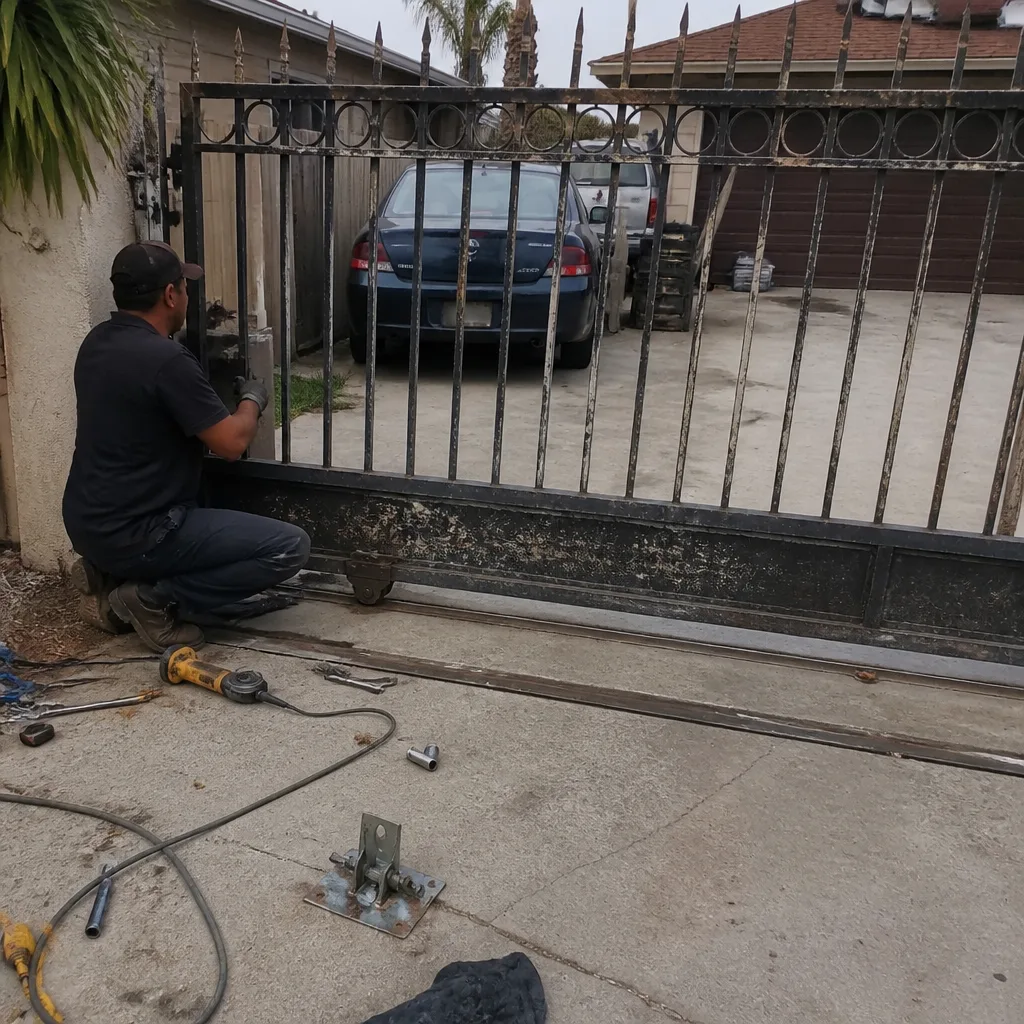 Before
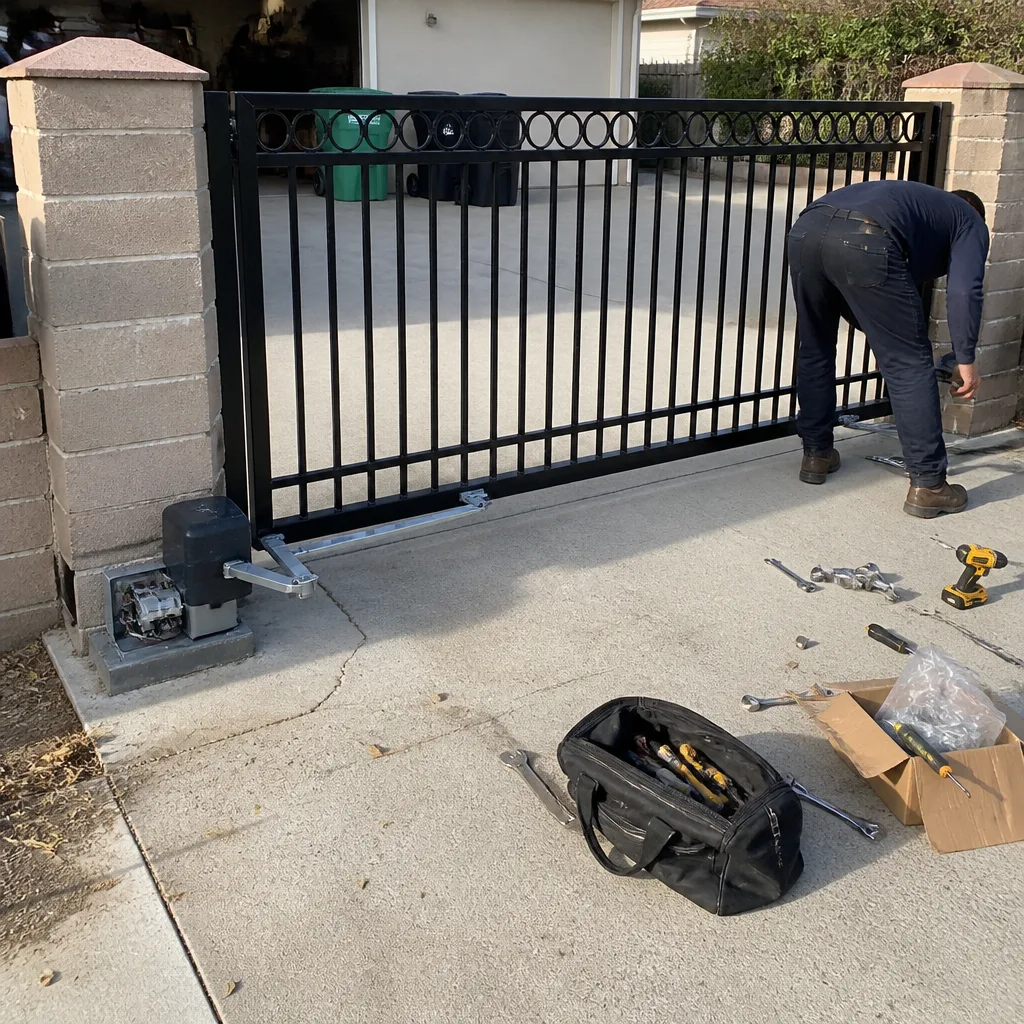 After
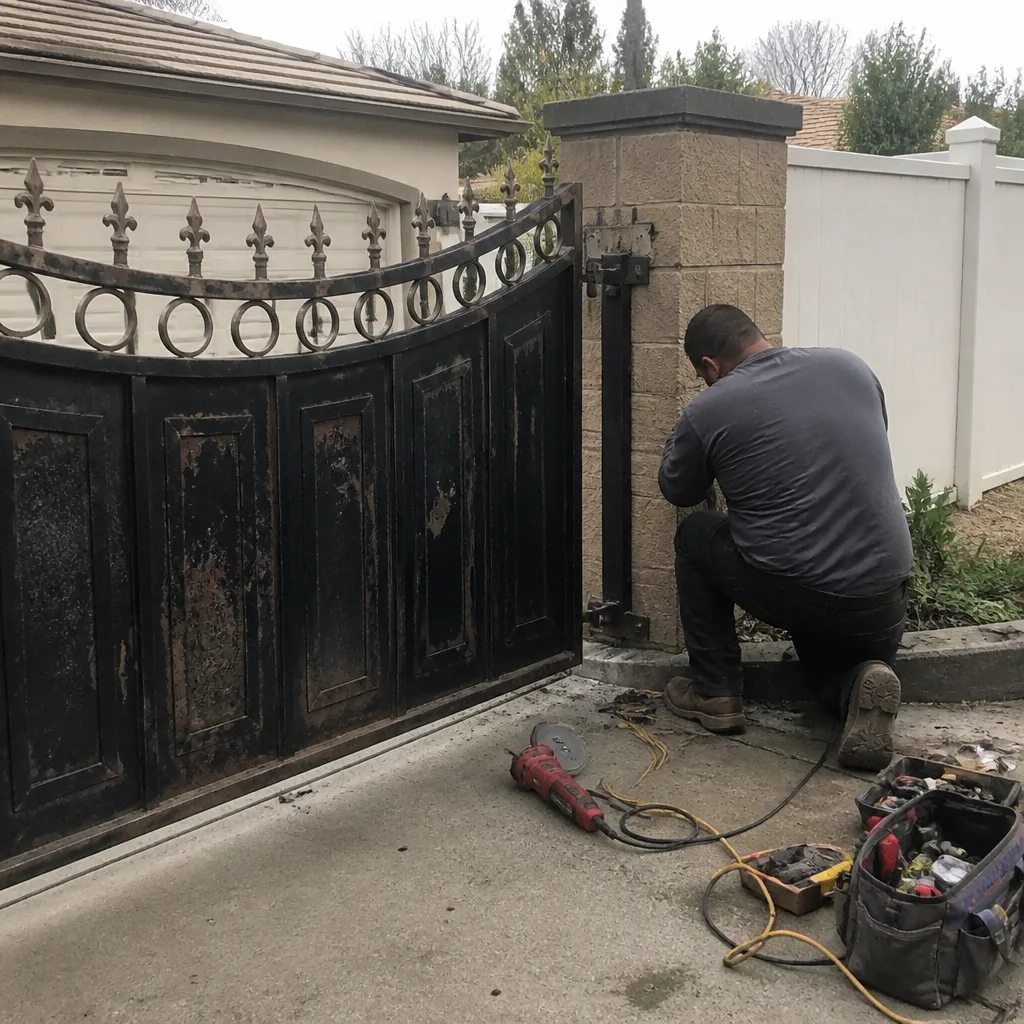 Before
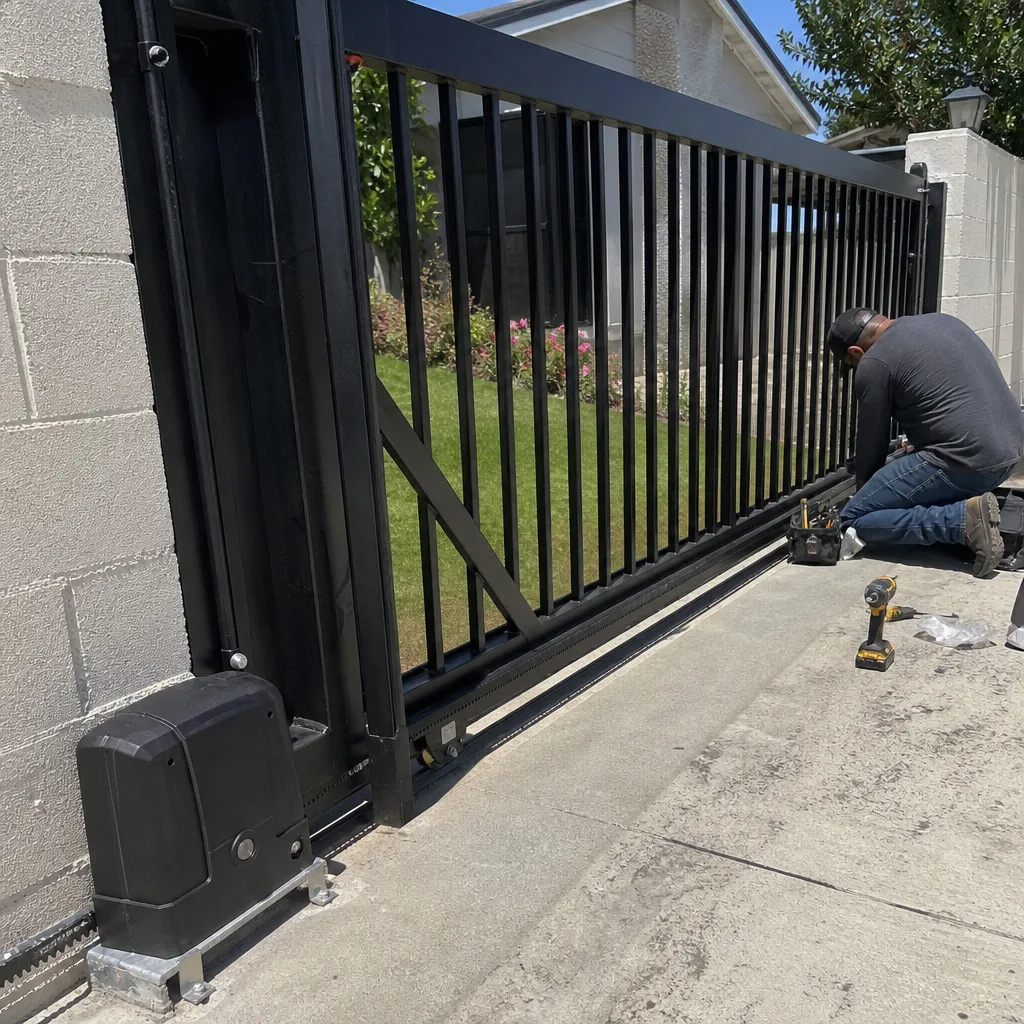 After
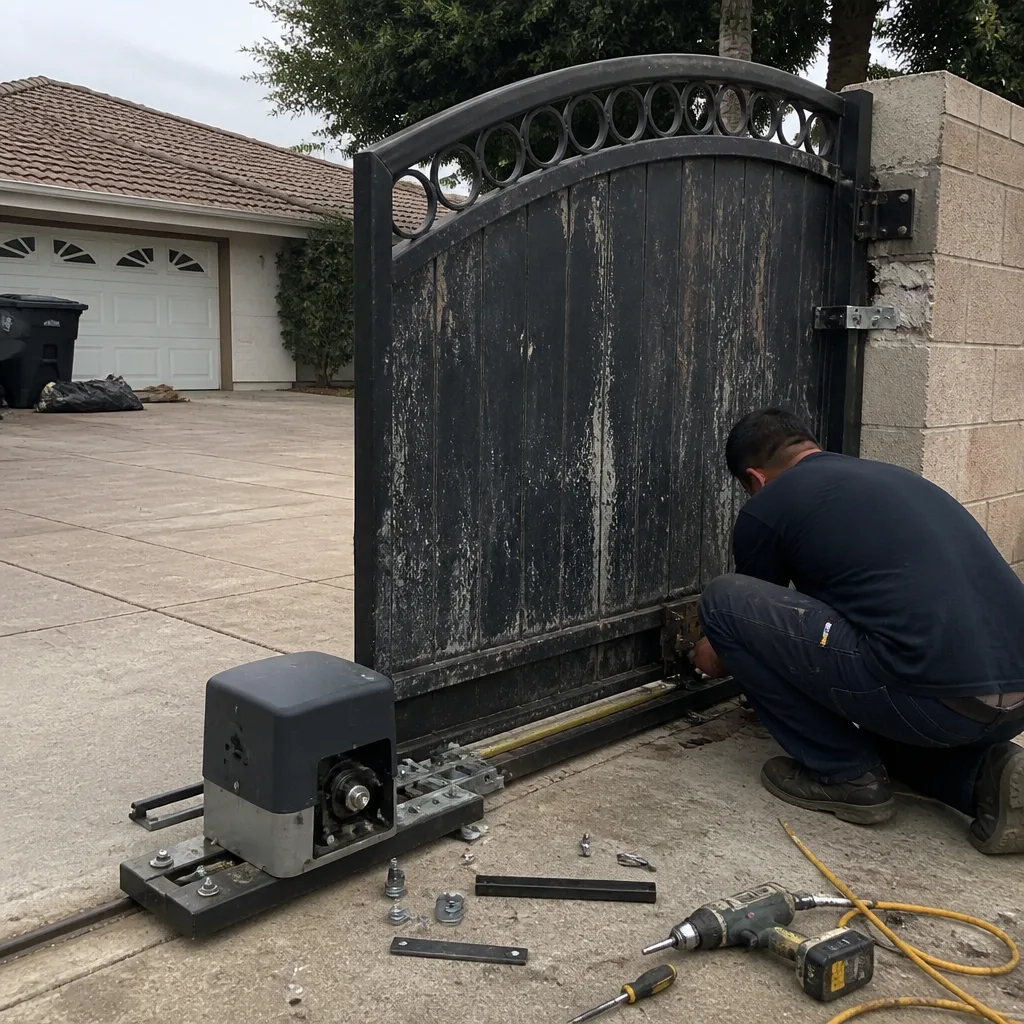 Before
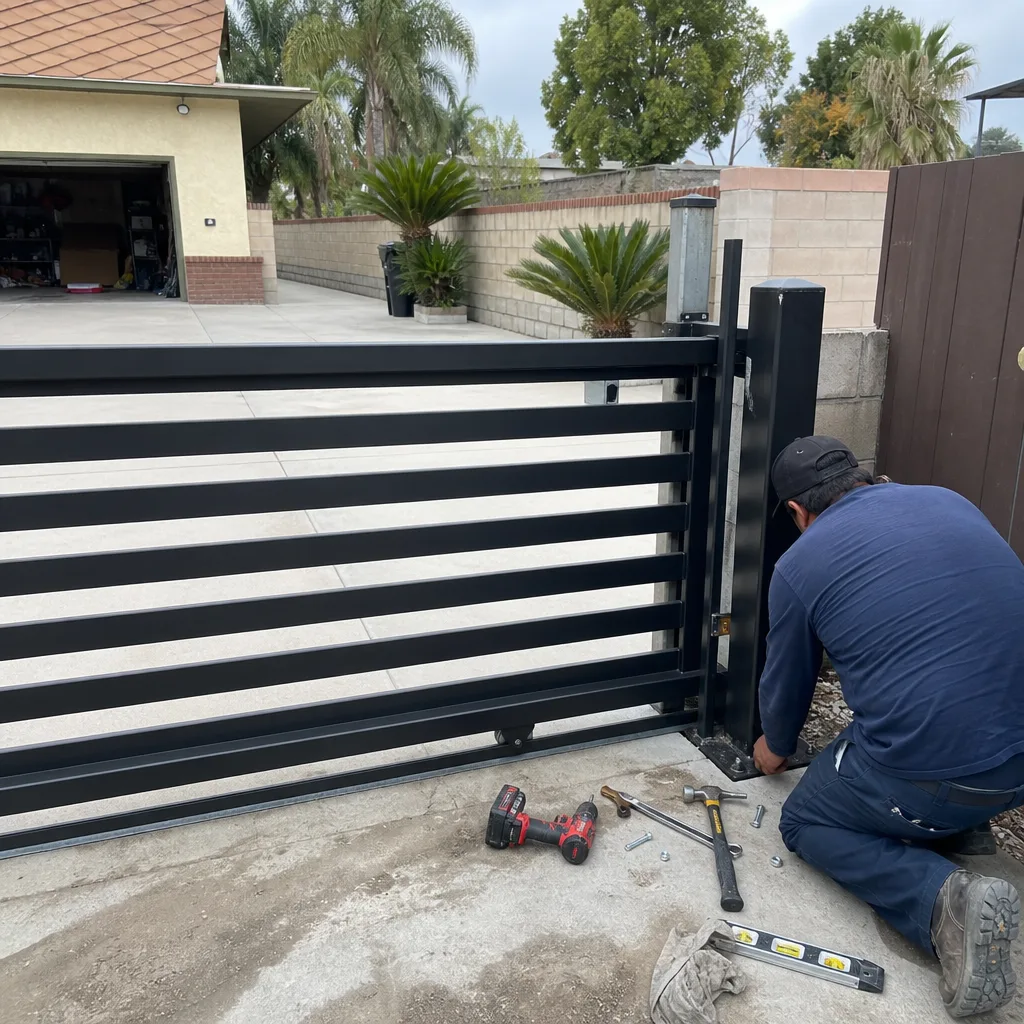 After