
Last updated October 30, 2026
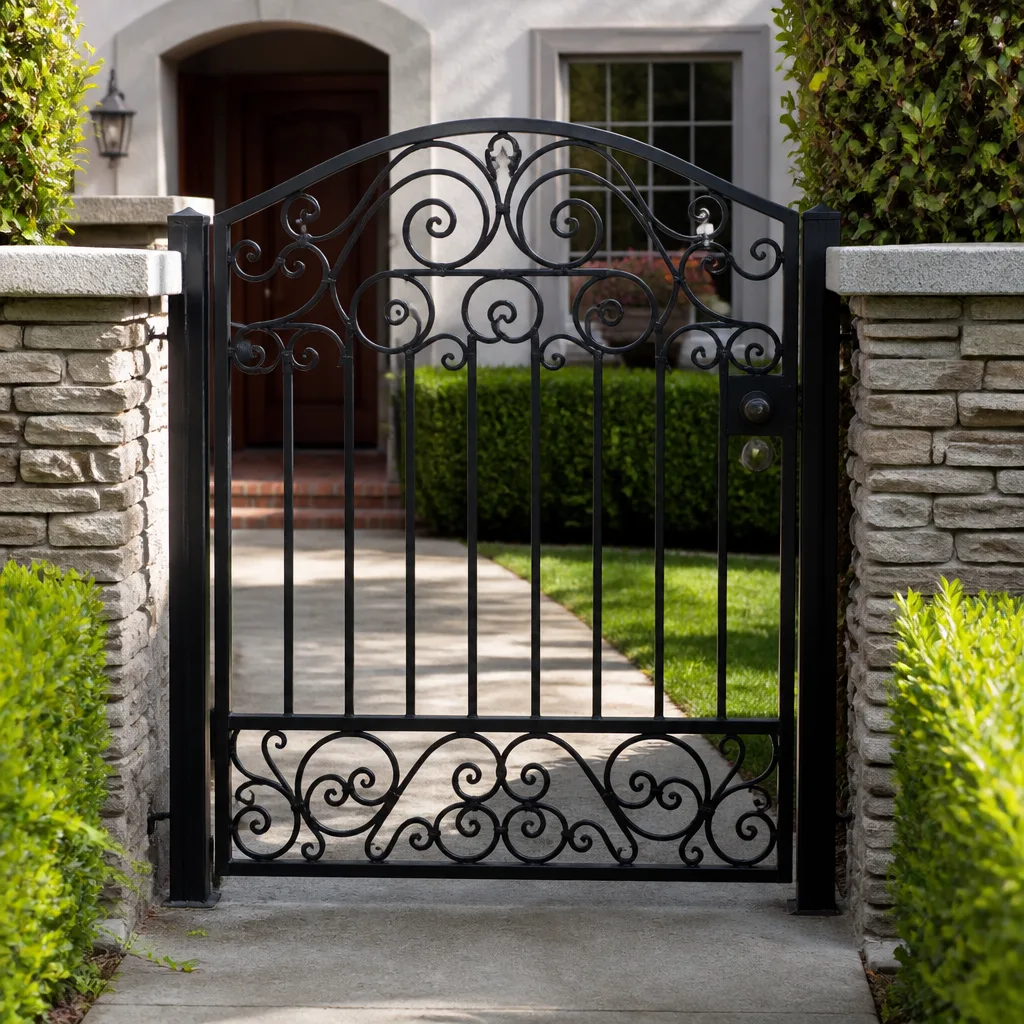 Wrought iron
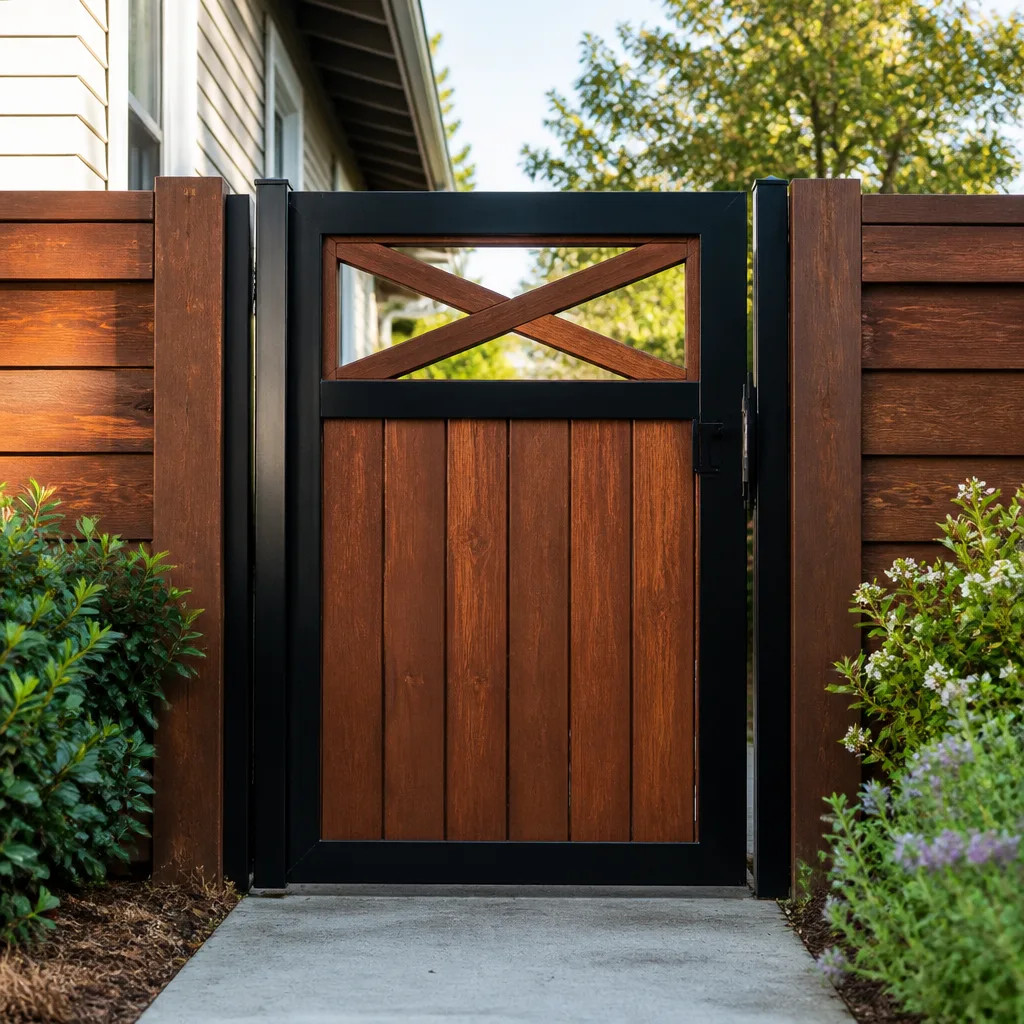 Wood & steel frame
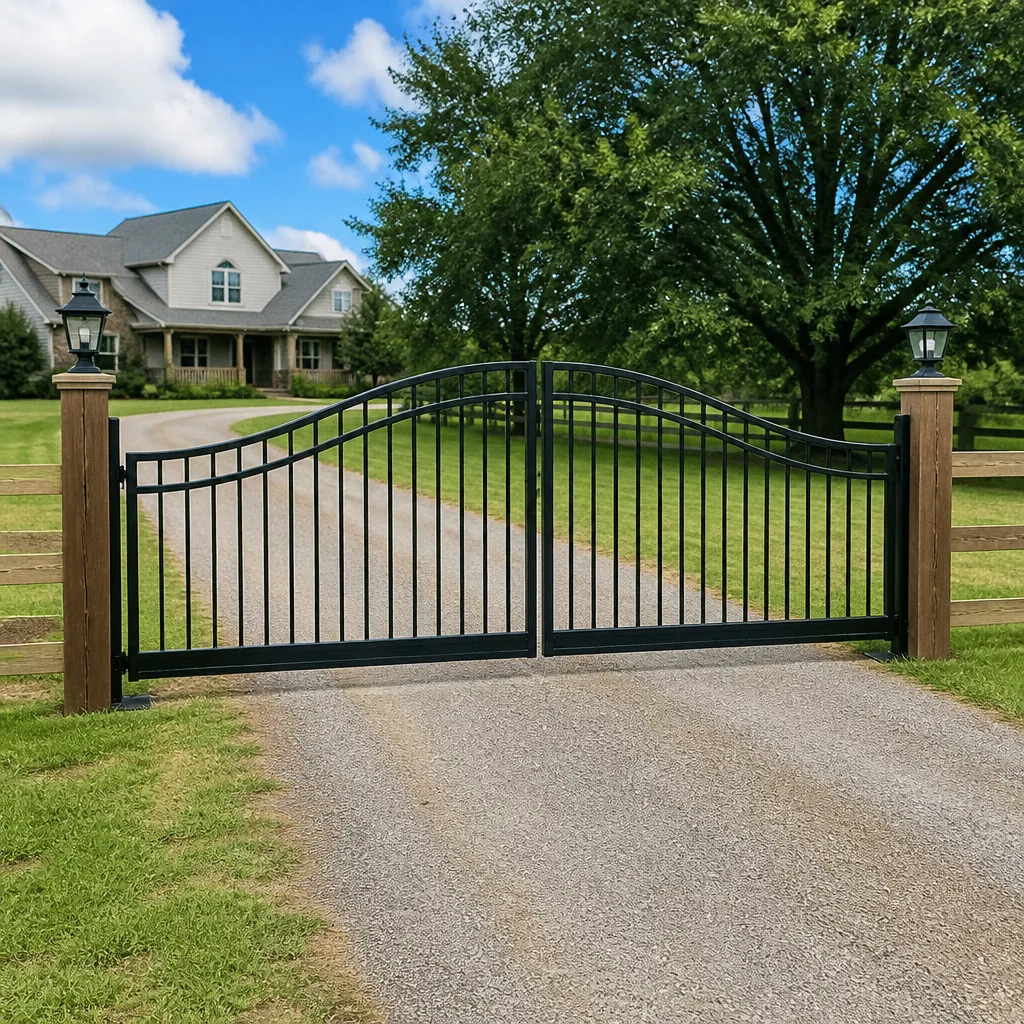 Farm & ranch
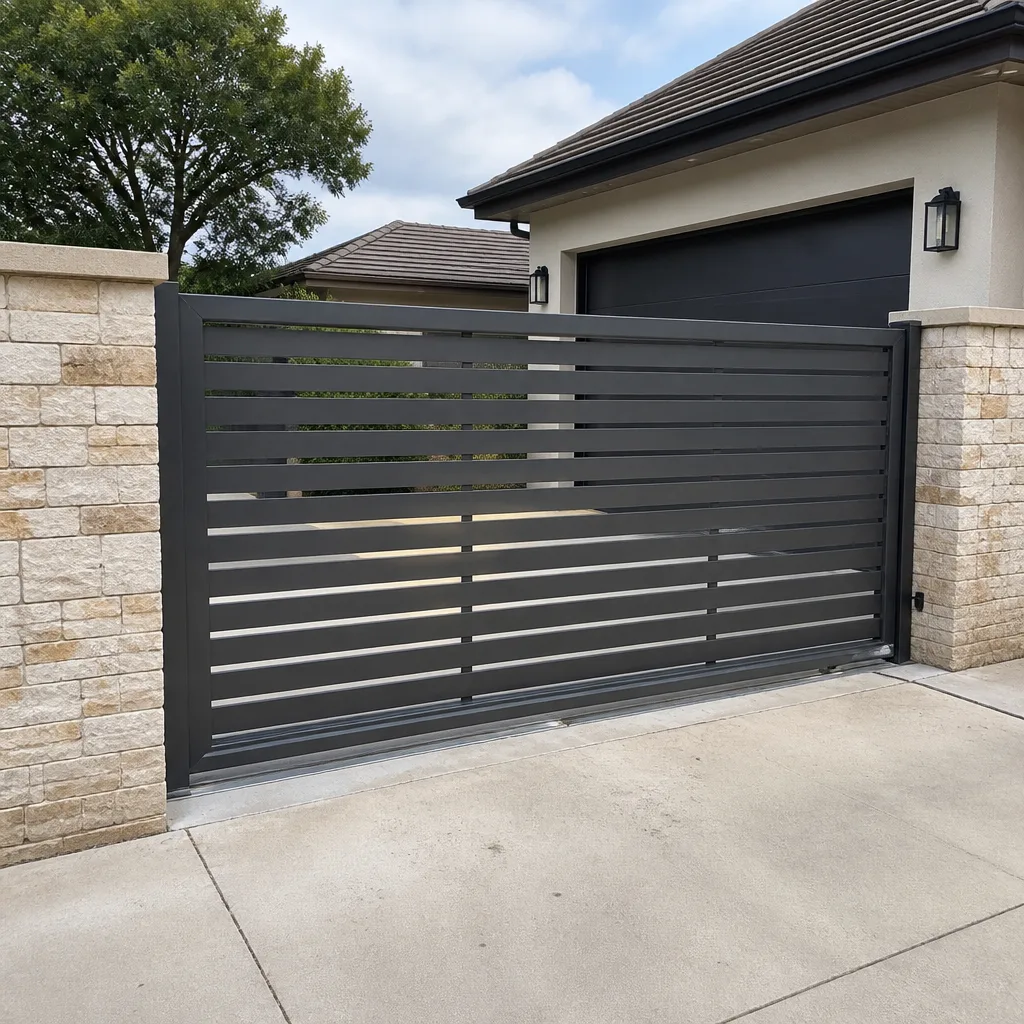 Sliding driveway gates
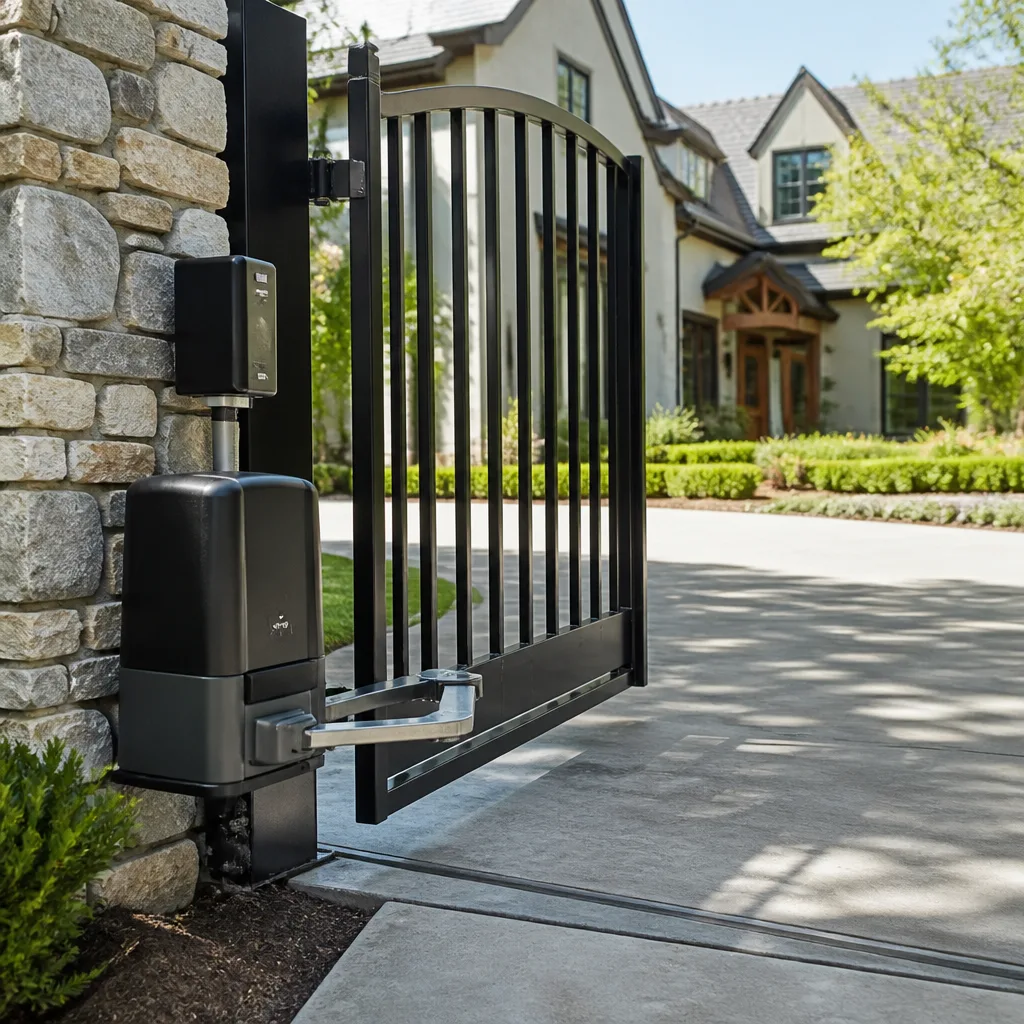 LiftMaster operators
Free on-site gate assessment - hinges, posts, and your LiftMaster or Nice gate operator checked before anything is quoted
The assessment is free and the quote is the invoice.
Get your free estimateGate Repair Warning Signs: A Fontana Homeowner’s Reference Guide
A gate that hesitates for two seconds before moving isn’t “a little slow” – it’s a capacitor that is 80% failed and will leave someone locked out within two to four weeks if not replaced. That’s the reality most Fontana homeowners discover too late. This guide walks you through the specific warning signs your gate gives you – weeks before it fails completely – and tells you exactly which ones demand immediate attention and which can wait for our Gate Repair services. Whether you’re running a LiftMaster on a Rancho Fontana estate or a Mighty Mule on a rural lot near Sierra Lakes, you’ll learn to read the symptoms before they strand you outside your own driveway.
Quick Answer
The five most common gate repair warning signs in Fontana are hesitation before movement, grinding or scraping noise during travel, partial travel (gate stops short or reverses), unexplained error codes on the keypad or control board, and shrinking remote range. Each points to a different root cause – failing capacitors, worn gear teeth, misaligned photo eyes or limit switches, logic board faults, and antenna or receiver degradation respectively. Hesitation and grinding require same-week service; a gate that stops partway is a safety failure that needs immediate attention.
Styles & brands we work with
Table of Contents
- Hesitation Before Movement: The Capacitor Warning
- Grinding, Scraping, and Metal-on-Metal Noise
- Partial Travel: When the Gate Stops Short or Reverses
- Error Codes and Blinking Lights: Reading the Control Board
- Remote Range Loss: The Gradual Shrink
- Fontana Heat and Gate Hardware: Local Failure Patterns
- How to Document Symptoms Before You Call
- Common Mistakes to Avoid
- When to Call a Professional
- Frequently Asked Questions
Hesitation Before Movement: The Capacitor Warning
When your gate operator receives a command – from the remote, the keypad, or the exit loop – and pauses for one to three seconds before the motor engages, that delay is not the system “thinking.” It’s a start capacitor losing its ability to hold and discharge the surge of electricity needed to spin the motor from a dead stop. On AC-powered operators, the start capacitor is one of the most common points of failure, and it fails on a predictable curve: the hesitation gets longer, then the motor hums without moving at all, then nothing happens.
In Fontana, this warning sign is particularly prevalent on older LiftMaster and FAAC swing gate operators installed during the building boom of the early 2000s. Those units have been cycling for fifteen to twenty years, and capacitors are consumable components with a finite lifespan – typically five to eight years. If your gate was installed before 2015 and you’ve never had a capacitor replaced, the two-second pause you’re noticing is your warning window.
What this means for scheduling: a hesitation that lasts under one second and doesn’t worsen over a two-week period can typically wait for a scheduled repair. A hesitation that’s growing longer week over week, or that occasionally results in a humming motor with no movement, should be treated as same-week service. The failure mode is total: when the capacitor goes, the gate simply will not move, and depending on the position of the arm when it fails, you’ll be locked either in or out.
Solar-powered operators like Mighty Mule and Ghost Controls don’t use large start capacitors in the same way – their issue is battery capacity (covered below), which shows a different set of symptoms. If you have a solar system and the gate hesitates, check your battery health before assuming a motor problem.
Grinding, Scraping, and Metal-on-Metal Noise
A healthy gate operator makes a consistent, low mechanical sound: the motor hum, the chain or belt drive, the gentle clunk of the limit switch. It’s a noise you hear every day and stop noticing. When that sound changes – when it becomes a grind, a scrape, or a rhythmic metallic complaint – something mechanical is wearing against something else, and it’s wearing faster every day you ignore it.
The three most common causes of grinding noise on Fontana gates:
- Worn gear teeth on the operator arm: The internal gears of a LiftMaster or BFT arm actuator are made of a softer metal or polymer by design – they’re the sacrificial component that protects the motor. When they wear, the mesh between the drive gear and the driven gear gets sloppy, and you hear a grinding or rattling that tracks with the gate’s movement speed.
- Dry or failing bearings in the hinge assembly: Every swing gate hangs on two or more hinge points. Over years of Fontana’s dry heat and occasional wind-driven dust, the grease inside those bearings breaks down and blows out. What’s left is metal riding on metal. This shows up as a screech or squeal that changes pitch as the gate travels through its arc.
- Cantilever wheel failure on slide gates: Slide gates in newer Fontana developments – Hunter’s Ridge, Gabion Ranch, the communities off Duncan Canyon Road – ride on cantilever wheels or a V-track system. When a wheel bearing seizes, the wheel stops rolling and starts sliding, which sounds like a flat tire being dragged across concrete.
The urgency signal here is the change in sound over time. A gate that’s always been a little noisy is probably a bearing issue that can be scheduled. A gate that was quiet last month and is now producing metal-on-metal grinding is actively destroying its own components – every cycle makes the repair worse. Same-week service is appropriate. The repair is typically straightforward: replace the worn gear set, repack or replace the bearings, or replace the seized wheel. But if you let it go, the damage migrates from a $15 part to a $400 operator assembly.
Boarding a broken gate is not a realistic option for most people. Gates are on the critical path of daily life – the school drop-off, the morning commute, the delivery that needs to reach the door. When operators fail catastrophically, homeowners have to decide quickly whether to repair or replace. Gate repair in Camp Pendleton North covers the same decision set that Fontana homeowners face: the math on repairing a fourteen-year-old arm versus replacing the whole operator, the lead time on circuit boards, and the labor that goes into a full swap versus a component-level fix. That same logic applies here.
Partial Travel: When the Gate Stops Short or Reverses
This is the warning sign that gets homeowners’ attention most quickly, because it looks like the gate has a mind of its own. The gate starts to open, travels eight inches or three feet, then stops. Or it opens fully, then reverses halfway through the closing cycle and opens again. Or it closes completely and then pops back open six inches, then closes again, over and over, like it can’t make up its mind.
None of those behaviors are the gate “glitching.” Each one is a specific control signal interrupting the cycle:
- Stops short during opening: The open limit switch is set wrong or failing. The operator thinks the gate has reached the full-open position and cuts motor power early. On a system that was working fine last month, this usually means the limit switch hardware has drifted or developed a dead zone.
- Reverses during closing without touching anything: This is the safety system doing its job – usually. The photo eyes near the gate path, or the edge sensors on the gate leaf itself, are detecting an obstruction that isn’t there. Dirt on the photo eye lenses, a misaligned beam, or a failing edge sensor strip will trigger a false reversal. But the same symptom can be caused by a motor drawing excess current when the gate binds on a warped post – the control board reads the current spike as physical resistance and reverses to protect the motor.
- Opens a few inches and stops: This is often the auto-close timer or the open limit logic failing on the circuit board. On BFT and Viking operators, a failed relay on the logic board can cause this exact partial-travel symptom.
In Fontana’s environment, partial travel on a swing gate is frequently the result of post movement. Clay-heavy soil expands and contracts with moisture changes – and while Fontana gets little rain, the irrigation that keeps lawns alive in places like Etiwanda and Rancho Fontana can cause enough soil swelling to move a gate post a few degrees out of plumb. The gate leaf no longer sits level in its hinges, the arm fights the change in geometry, and the motor reverses on the current spike. The warning sign you see is a reversal; the actual problem is in the ground.
A gate that reverses during closing is the highest-priority warning sign on this list. The safety system may be doing its job and preventing an injury, but a false-reversal condition also means the gate does not reliably secure your property at night. If you can’t close and lock your gate, the security function of the entire installation is compromised. Treat partial travel as next-day service.
Error Codes and Blinking Lights: Reading the Control Board
Every major gate operator manufacturer – LiftMaster, FAAC, BFT, Linear, Viking, Ghost Controls, DoorKing, Elite, and Mighty Mule – builds diagnostic signaling into its control boards. The problem for the average homeowner is that none of them use the same code language. A blinking light that means “obstruction detected” on a BFT means “battery low” on a Mighty Mule, and means “limit error” on a DoorKing.
What sends Fontana homeowners to this page is usually one of three situations: the keypad is showing a numeric code, the control board has a blinking LED in a pattern, or the remote does something unexpected – a double beep, a long vibration, a light on the remote itself. Here’s what to do with each:
- Numeric code on the keypad: Write it down, exactly as displayed. The specific number sequence maps to a specific fault in the manufacturer’s manual. Do not clear it before recording it. On LiftMaster operators, codes in the 4-0 to 4-9 range typically flag limit or force issues; on FAAC systems, a flashing “E” followed by a number is a fault log entry.
- Blinking LED on the control board: Count the blinks. The pattern (two blinks, pause, two blinks) is the code. Most residential operators use a blink-count system where each count corresponds to a fault page in the manual. A solid LED that used to blink normally, now blinking rapidly, usually means the board is in a fault or learn state.
- Gate beeps but doesn’t move: On LiftMaster and Elite operators, an audible chirp followed by no movement is often the battery backup testing itself or the motor’s thermal protection tripping. If it’s the middle of a Fontana summer afternoon – and the gate sits in full direct sun for six hours a day – thermal trip is a real possibility. The motor has overheat protection, and it will lock out until it cools down. That’s not a fix; it’s a relief valve. Repeated thermal trips mean the motor is working harder than it should be: binding hinges, low voltage, or a failing motor winding.
When you call a technician, the first thing they’ll ask is “what’s it showing you?” If you can say “LiftMaster LA400, three blinks on the board, and the keypad shows 4-3,” the diagnosis call takes minutes. If you say “it’s just acting weird,” well – the technician comes out anyway, but they’re starting from zero. We train our customers on this exact thing. The quality of the information you bring to the phone determines how fast the problem gets solved.
For Fontana homeowners with electric gate repair needs in Camp Pendleton North-style properties – older estates with legacy operators that predate the current diagnostic standards – error codes may not be present at all. Those systems fail mechanically before the electronics tell you why. Knowing which generation of control board you have changes how you interpret the symptoms.
Remote Range Loss: The Gradual Shrink
Six months ago, your remote worked from the corner of the street. Now it works from the driveway apron, and by “works” we mean you have to press the button twice and hold it pointed toward the house. That’s not a dying remote battery – though everyone checks that first, and you should too, because a $2 battery is the cheapest possible fix – it’s usually one of three things failing in the receiver path.
First: the antenna wire on the operator’s control board has broken, corroded, or fallen out of its strain relief. On a LiftMaster or FAAC operator mounted on a post in full Fontana sun, the antenna wire insulation degrades and cracks, and then water from the occasional heavy winter storm finds its way in. The receiver loses sensitivity, and range collapses from hundreds of feet to tens of feet.
Second: the receiver module itself is degrading. The RF receiver on older operators (pre-2010 DoorKing and Elite units especially) drifts off frequency as its components age. The remote and receiver are no longer perfectly in tune, which shows up as shorter range – not as intermittent function, which is what most people expect a “dying remote” to act like.
Third: something is physically blocking or absorbing the RF signal that wasn’t there before. In Fontana, the most common culprit is a new stucco wall with metal lath, a new solar array on the house roof, or an EV charger installed on the garage wall. Stucco lath and solar panels are both excellent RF shields. If you installed solar in the last year and your gate remote range dropped soon after, the panels may be partially shading the RF path from your parking spot to the operator.
Range loss is a scheduled-repair warning sign, not an emergency – unless it coincides with another symptom. A gate that opens fine from the wall keypad but poorly from the remote is a receiver problem. A gate that opens poorly from both the remote and the keypad is not a remote problem; it’s the operator’s controller or power supply. The distinction matters, and it’s one of the first questions we ask on the phone.
Fontana Heat and Gate Hardware: Local Failure Patterns
Fontana is hot. That’s not news to anyone who lives here. But what the heat does to gate hardware is specific, predictable, and rarely discussed in generic gate repair content written for a national audience. A gate in Seattle fails differently than a gate in Fontana, and a homeowner who understands the local pattern can spot trouble earlier.
Three Fontana-specific failure modes we see constantly:
- Swing gate post warping from thermal cycling: A steel gate leaf that’s painted dark – and half the gates in Fontana are, because black matches the wrought-iron look – can reach 160°F on a July afternoon, then drop to 60°F overnight. That 100-degree daily swing causes the metal to expand and contract. Over years, the gate leaf itself can warp slightly, and more importantly, the lag bolts holding the hinge plates to the post or the brick column can work loose. The symptom is a gate that sags visually, scrapes at the latch post, or develops a new gap at the top hinge. Homeowners often mistake this for “the gate is old,” but it’s usually fixable with hinge adjustment and re-torqued hardware.
- Solar panel degradation on solar operators: Mighty Mule and Ghost Controls solar systems are popular on the larger lots north of the 210 and in the unincorporated areas where running conduit to a gate is cost-prohibitive. Those small panels bake in direct sun year-round, and the polycrystalline cells lose efficiency faster in sustained high heat than in temperate climates. The panel still “works” – it’s just producing 60% of its original wattage, which means the battery never fully charges, which means the gate moves slower, hesitates, or dies entirely after a few cycles. The warning sign is a gate that works fine in the morning and struggles by evening, or a battery that needs replacing every year instead of every three to five.
- Exposed wiring insulation failure: The low-voltage wire from the control box to the keypad, and the wire to the photo eyes, is often run through PVC conduit, but just as often the final six to twelve inches are exposed where they exit the ground or the post. Fontana’s UV index in summer is brutal on wire insulation. After five years, the jacket cracks. After eight, it falls off in pieces. Then you get intermittent faults that only show up when the wire touches the grounded post – often triggered by wind or someone bumping the gate. This is a classic “works sometimes, doesn’t work other times” failure that drives homeowners crazy because it won’t hold still long enough to diagnose.
The takeaway for Fontana homeowners: your gate’s warnings are often weather-dependent. A symptom that appears only on the hottest afternoons, or only after a heavy Santa Ana wind event, is pointing to heat expansion or a loose connection – not a failing motor. Note what the weather was doing when the gate misbehaved. It’s another piece of information that makes diagnosis faster, as covered in our Seasonal Gate Repair Care for Fontana: Year-Round Homeowner’s Guide.
How to Document Symptoms Before You Call
This is the section that saves you money. A gate technician charging a truck-roll fee is charging for the first hour of their labor – the hour it takes to figure out what’s wrong by standing in your driveway and watching the gate cycle. You can compress that hour to ten minutes on the phone.
Here’s the step-by-step documentation process we recommend to every Fontana homeowner:
- Write down the exact symptom, not your interpretation. “Gate stops six inches from closed and reverses” is a fact. “The gate is broken” is an interpretation. Facts tell the technician what to look for. Interpretations leave them guessing.
- Note when it happens. Time of day matters. First cycle of the morning? After it’s been in full sun for hours? Only when the remote is used, never the keypad? The “when” is often the diagnostic key.
- Take a thirty-second video with your phone. Film the gate doing the thing it does wrong. Hold the phone still, get the whole gate in frame, and let the cycle play out. Do not narrate over it. A technician can read a video of a gate reversing faster than they can parse a homeowner’s description of it.
- Photograph the operator label plate. The metal tag on the side of the operator housing has the manufacturer name, model number, and serial number on it. A clear photo of that tag tells us everything about what we’re working on before we arrive – the model, the voltage, the production year if it’s encoded, and whether it’s a unit we stock parts for.
- Count the blinks. If the control board has any blinking LEDs, film them for ten seconds. The blink count and timing are meaningful, and a video captures them more accurately than a written note.
- Record what you’ve already tried. New remote batteries, keypad code re-entry, a power cycle at the breaker. We don’t need you to try to fix it – actually, we’d rather you didn’t – but knowing what’s been done tells us what variable changes came before what symptom changes.
Do not disassemble anything. Do not open the control box if it’s sealed. Do not adjust the limit switches yourself just to “see what happens.” A swing gate arm is under tension even when the gate is stationary, and the release mechanism on most operators is designed to be operated by someone who knows which direction the gate will swing when it’s disengaged. The documentation you gather from the outside is all a technician needs for a ninety-second phone diagnosis.
Common Mistakes to Avoid
- Lubricating a grinding gate with WD-40. WD-40 is a solvent, not a long-term lubricant for gate hardware. It strips whatever grease is left in the hinge and leaves the bearing drier than before. Use lithium grease on hinges and white lithium or silicone on slide tracks – and if the grinding returns within days, the hardware is beyond lubrication and needs replacement.
- Adjusting the limit switches without marking the original positions. If you move the open or close limit screw even a quarter turn without marking where it started, the technician now has to re-time the entire travel cycle from scratch. What might have been a $90 limit switch replacement becomes a full re-programming. We’ve had to re-tune gates in Fontana where a homeowner’s adjustment left the gate slamming into the post at the end of every cycle.
- Ignoring a gate that only acts up “once in a while.” Intermittent failures are the most expensive kind, because they become permanent failures at the worst time. A gate that fails once every twenty cycles is giving you a diagnostic glimpse – document it, and get it checked before the intermittent becomes constant.
- Replacing the remote because the range is short. Range loss is usually the receiver or the antenna, not the transmitter. A new remote rarely fixes it, and now you’re out the cost of a remote and still have the original problem. Test with the keypad first: if the keypad works fine from two feet away and the remote doesn’t work from twenty feet, it’s a receiver-path issue.
- Assuming a solar gate’s problem is the panel when it’s usually the battery. Batteries in solar operators wear out – that’s their job. If the panel is outputting properly and the battery is dead, replacing the panel wastes money. A technician can test panel output in two minutes with a multimeter; it’s part of every diagnostic call we run on solar systems in Fontana.
- Waiting until the gate fails completely before calling. This is the big one. Every warning sign above is cheaper to fix than the catastrophic failure it predicts. A $40 capacitor is a cheaper problem than a burned motor winding. A $15 bearing is cheaper than a snapped hinge pin that bends the gate leaf. Reading the warning signs is not optional maintenance – it’s how you avoid the thousand-dollar version of the repair.
When to Call a Professional
Call a professional when the warning sign involves any of these: a gate that reverses during closing without touching anything, a grinding sound that’s getting worse by the week, a hesitation that’s now accompanied by a motor hum, any spark or burning smell near the operator, or a gate that has come off its track or sagged so the latch no longer engages. These are conditions where continued cycling actively damages hardware, and none of them self-correct.
Also call when you’ve got a documented symptom you can’t diagnose. We don’t expect every Fontana homeowner to know what a failing hall-effect sensor sounds like. What we do expect is that you’ll bring us the video, the blink count, and the model number, and we’ll do the rest. Estate Gate Repair offers free estimates in Fontana – call (866) 893-2220 and describe what you’re seeing. We work on the brand you already have, and if we can diagnose it over the phone, you’ll know what the fix costs before we ever dispatch a truck.
Frequently Asked Questions
Gate repair in Fontana typically runs $120 to $450 depending on the component: capacitor and limit switch replacements sit at the lower end, gear train and control board replacements land in the middle, and full operator replacement runs higher. The price you pay depends on the brand, the part lead time, and whether the diagnosis is phone-based or requires a truck roll. Call (866) 893-2220 for an exact quote – estimates are free, and we quote before any work is done.
Same-week service is realistic for most mechanical repairs on common brands; same-day depends on the specific part and whether it’s a unit we stock for – LiftMaster, FAAC, BFT, Linear, Viking, Ghost Controls, DoorKing, Elite, and Mighty Mule. Emergency lockouts take priority in our schedule. If your gate is stuck open and can’t be secured, say so when you call (866) 893-2220 and that context moves you to the front of the line.
On a solar-powered operator, that pattern usually means the battery is no longer holding a full charge – the panel generates just enough to cycle the gate after a full night of rest, but not enough to recover after a day of use. On an AC operator, the same pattern can mean the motor is losing efficiency as it heats up through the day, or the circuit has a voltage drop under load when the house’s power draw is highest. Either way, it’s a warning sign, not a quirk: the failure is progressing.
We service nine major gate automation brands: LiftMaster, FAAC, BFT, Linear, Viking, Ghost Controls, DoorKing, Elite, and Mighty Mule. That covers essentially every residential and light-commercial gate operator a Fontana homeowner is likely to own. We’re a gate-only specialist – from the motor to the control board, gates are the only trade we practice, and our parts inventory is built around the brands we service. We don’t steer you toward a new operator unless the math supports it, and we diagnose first to replace only what’s needed.
We handle the full gate lifecycle: repair, electric gate repair, and installation. If a repair reveals that your operator has reached the end of its service life – which is typically twelve to eighteen years in Fontana’s climate – we can quote a replacement installation in the same call. Starting with a repair relationship means your installer already knows your site, your post geometry, and your wiring, which reduces the surprises on installation day.
At minimum: check hinge bolts for looseness, lubricate hinges and slide tracks with proper grease, test the photo eyes by passing an object through the beam during a closing cycle, inspect the antenna wire for insulation cracking, and note any change in the gate’s sound or speed. The single best thing you can do is film your gate cycling once in January and once in July – a baseline video makes subtle changes obvious a year later. Most Fontana homeowners do none of this until a symptom appears, which is why we wrote this guide and offer more guides & resources.
The Bottom Line
Your gate tells you what’s wrong weeks before it fails. The hesitation is a capacitor. The grinding is worn gears or dry bearings. The partial travel is a limit switch, a photo eye, or a post that’s moved. The error code is the control board talking; the shrinking remote range is the receiver or antenna. In Fontana, the heat adds its own predictable failure patterns: warped posts, degraded solar panels, cracked wire insulation. Document what you see, don’t try to fix it yourself, and call before the intermittent becomes permanent. The warning signs are the cheapest repair opportunity you’ll ever get. Estate Gate Repair is here when you need us: (866) 893-2220, free estimates in Fontana, diagnose first, replace only what’s needed. Estate Gate Repair home.
Written by the team at Estate Gate Repair, serving Fontana since 2015.
See the difference
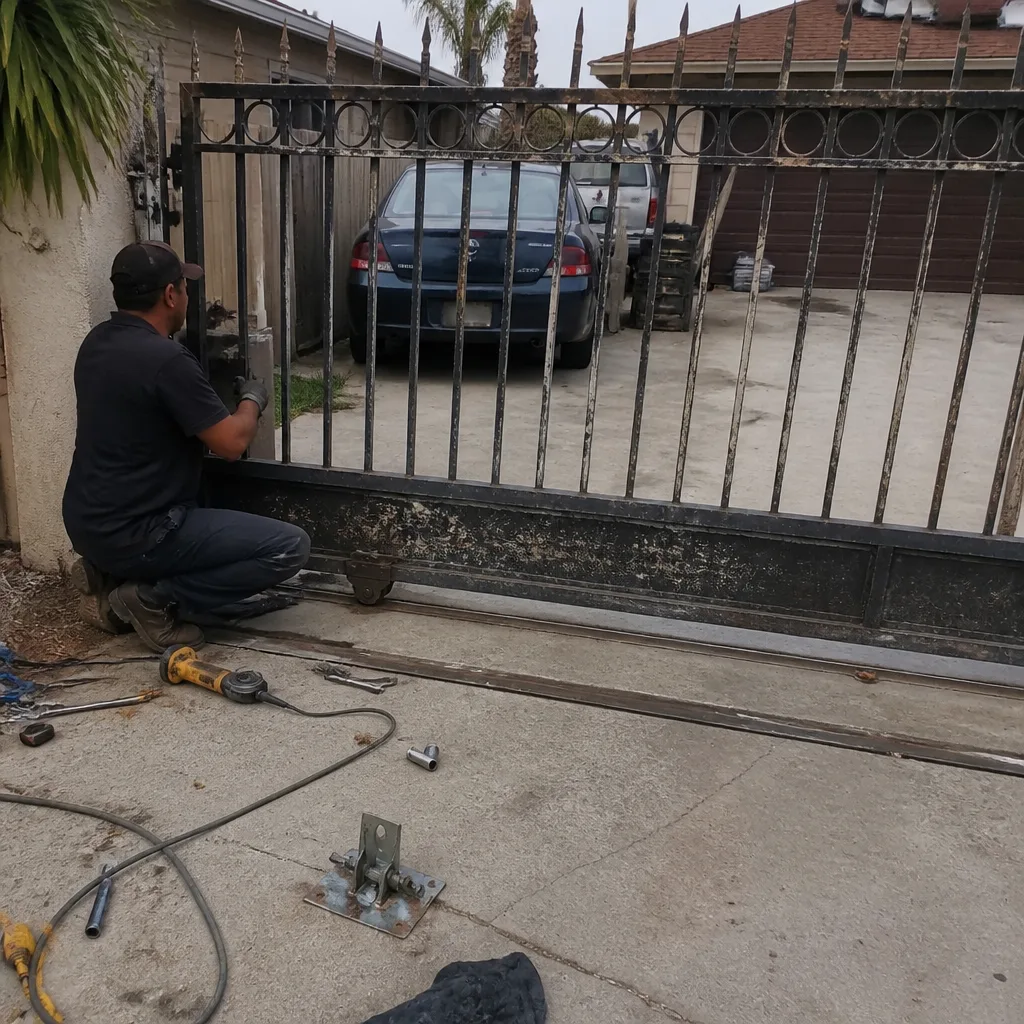 Before
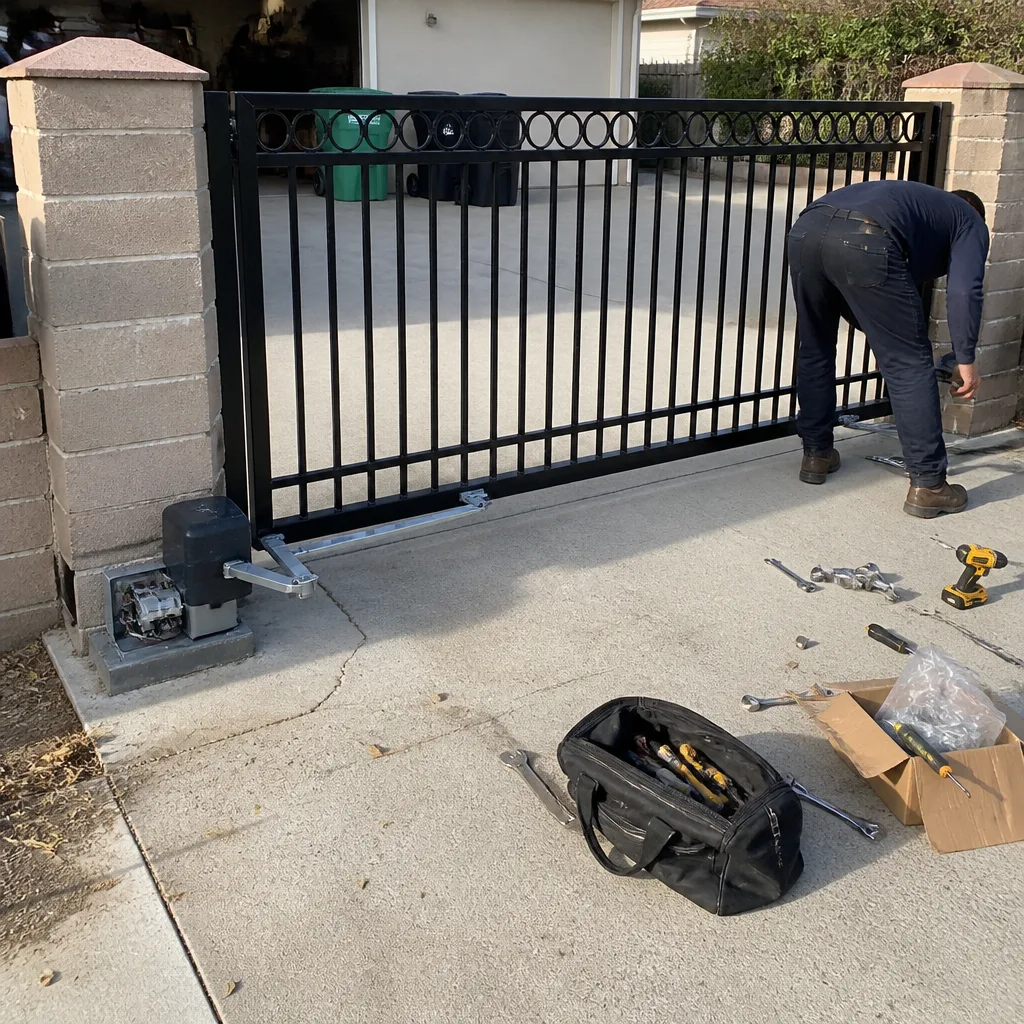 After
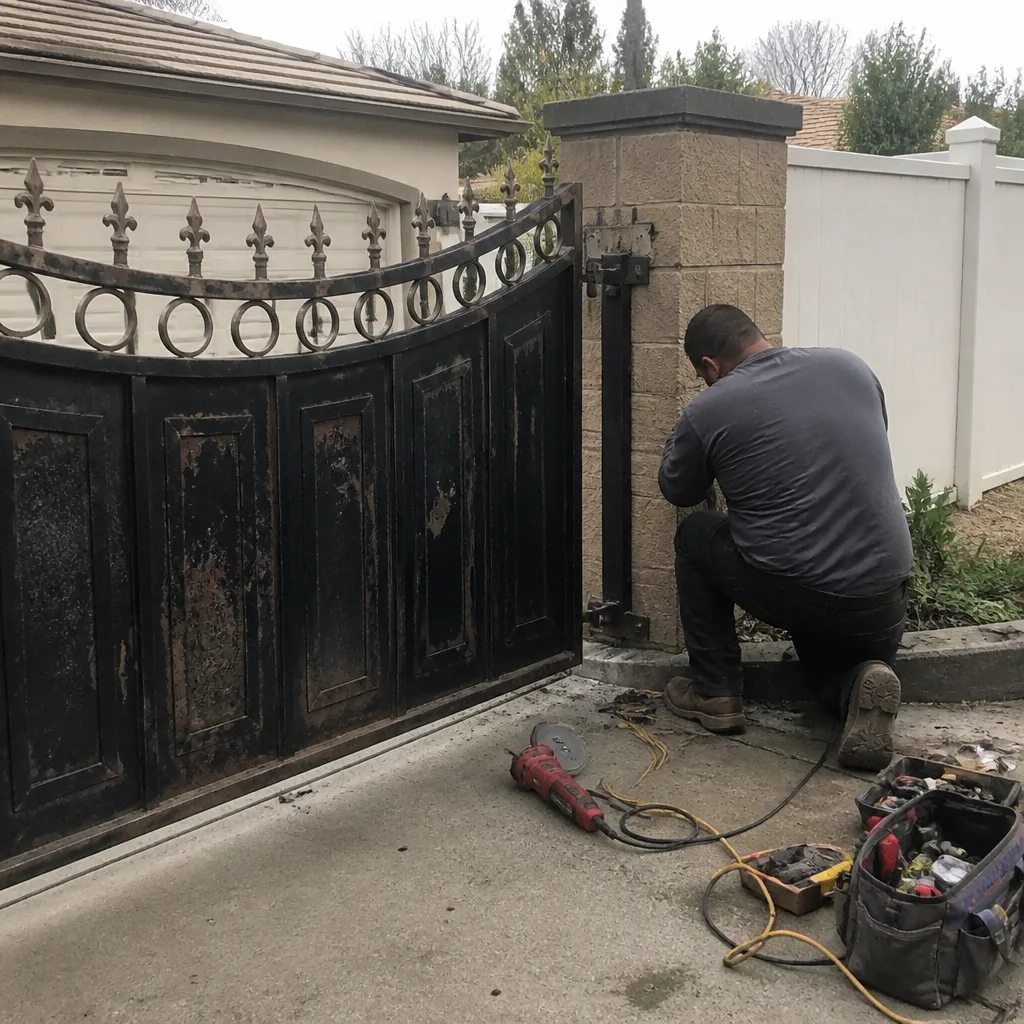 Before
 After
 Before
 After